
Here’s a summary of the upcoming change from Euro NCAP (European New Car Assessment Programme) on vehicle controls — what it means, why it’s happening, and how it will affect car makers and buyers.
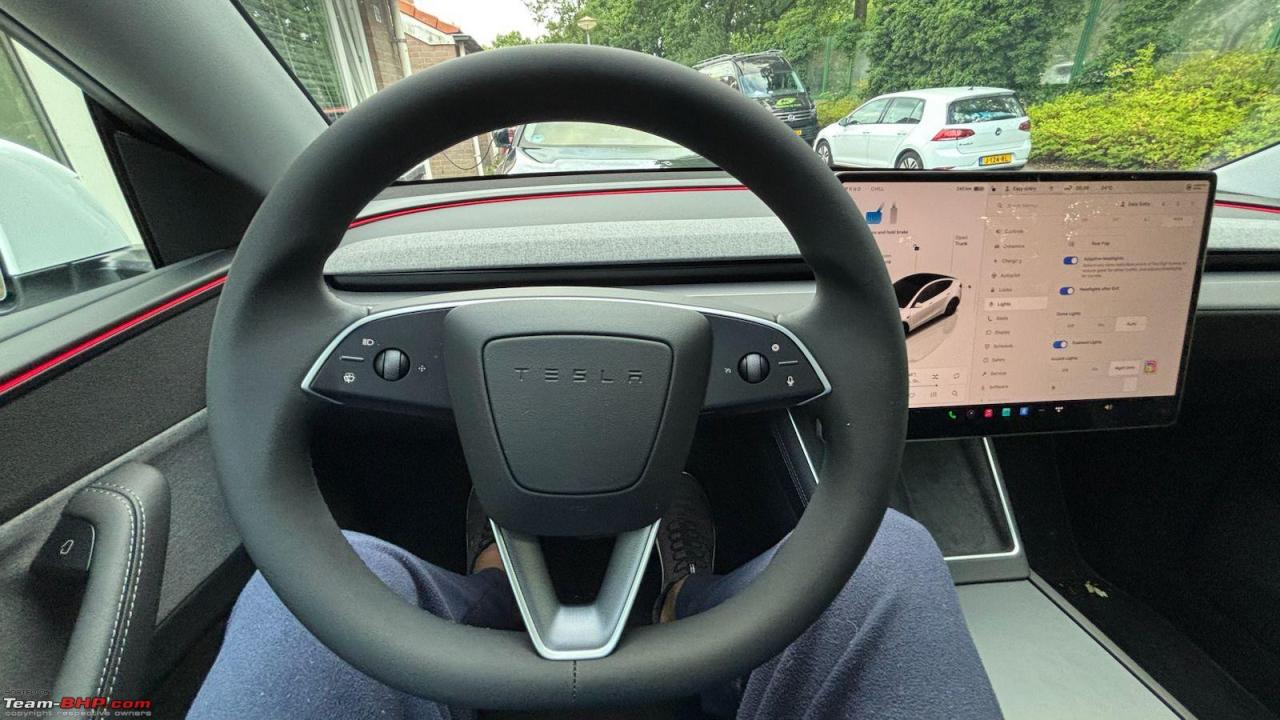
What’s Changing
From January 2026 onward, Euro NCAP will deduct safety points in its rating scheme for vehicles that do not provide physical (tactile) controls for certain critical functions.
Specifically, the functions identified include:
- Horn
- Indicators (turn signals)
- Hazard lights
- Windscreen wipers
- Emergency SOS call button
While a 5-star rating will remain possible without physical buttons initially, the new rule means the floor has moved: vehicles relying solely on touchscreen-based controls will face a handicap in scoring.
In the “Safe Driving” category of Euro NCAP, driver controls (which include these physical control elements) count for a portion of points. E.g., the “Driver controls” sub-item is allocated 5 points in one breakdown.
The programme also plans to raise benchmark thresholds:
- In 2026, a car must meet at least 60% of the Safe Driving criteria to earn 5 stars.
- That threshold increases to 70% in 2027 and 80% in 2028.
Why The Change
Several reasons underpin Euro NCAP’s decision:
- Driver distraction reduction: The logic is that physical buttons allow drivers to use tactile/muscle-memory rather than look at the screen, which reduces “eyes-off-road” time. Euro NCAP cites research that touchscreen tasks can divert attention substantially (5-40 seconds per task) compared with physical controls.
- Safety-critical functions must be quickly accessible: Functions like hazard lights or horn are often needed in urgent moments — having a dedicated physical switch reduces ambiguity or delay. Euro NCAP says these controls must be “easily accessible and clearly visible”.
- Countering minimalist interior trends: Many modern cars have moved to large touchscreens and minimalist cabins with few or no physical controls. Euro NCAP sees this trend as a safety risk.
Implications For Car-Makers and Consumers
- Car manufacturers will need to revisit cabin-control hardware design. Cars that are largely “screen-only” for many vehicle controls might need to add physical buttons/stalks/switches or risk a lower Euro NCAP rating.
- The business cost is non-trivial: redesigning interfaces, adding sensors for driver monitoring, and reworking the user experience take time, money, and supply-chain changes. Euro NCAP itself notes this may “push costs and extend launch timelines”.
- For buyers, a vehicle that lacks physical controls might still be safe, but may score lower in the rating, and the rating influences consumer perception. Especially in Europe, many buyers check the Euro NCAP star rating.
- The rising thresholds in 2027/2028 mean that even if a model passes under the 2026 rules, future models may need dedicated physical controls simply to maintain competitiveness in ratings.
What This Doesn’t Mean
- This rule change does not mean a car automatically fails or cannot achieve 5 stars if it lacks physical buttons — it just makes achieving the highest score more difficult in practice. For 2026, the 60% safe driving threshold remains reachable.
- It is focused on key controls (horn, indicators, hazard lights, wipers, SOS) — it does not necessarily mandate physical controls for all vehicle systems (eg, infotainment, climate may still be touchscreen-based) under this rule, as reported.
- These are voluntary ratings (Euro NCAP is voluntary) rather than regulatory mandates (though manufacturers value the ratings strongly).
Broader Significance
This shift signals a broader re-emphasis on ergonomics and human-machine interface safety in vehicles. As vehicles become more connected, more software-driven, and with fewer mechanical parts, regulatory/safety regimes (like Euro NCAP) are increasingly recognising that human factors matter just as much as crash performance. Buttons and physical controls may seem old-school, but their return suggests there’s a safety benefit in good old tactile feedback, especially in urgent scenarios.
For markets like India, this is also a reminder that vehicle manufacturers targeting global markets (including Europe) may bring in hardware upgrades (physical switches) to align with Euro NCAP Norms — potentially impacting variant specification and cost.
Summary
- From Jan 2026, Euro NCAP will begin deducting points for cars that do not incorporate physical buttons/dials/stalks for the horn, turn-signals, hazard lights, wipers, and SOS.
- The driver controls section (one component of safe-driving criteria) is explicitly affected.
- The change is motivated by reducing driver distraction and ensuring critical vehicle functions are always easily and intuitively accessible.
- It doesn’t eliminate touchscreen functionality, but places a premium on physical fallback controls for safety-important tasks.
- For automakers and consumers, this means: physical controls are back in vogue (or will need to be), and vehicles lacking them might face lower safety scores — which can influence purchase decisions.