
The “0 Series” family anchors Honda’s new electric-vehicle offensive — a fresh EV platform and brand architecture developed around the mantra “Thin, Light & Wise”. Among the first models in that line‐up is the 0 Series SUV, which, according to Indian reports, is set to arrive in India in 2026.
What We Know So Far
Platform & Positioning
- The 0 Series SUV is built on a dedicated born-electric architecture from Honda, rather than being an ICE conversion.
- Honda describes the design approach as “Thin, Light & Wise,” meaning that body and battery packaging are optimized for efficiency, weight reduction, and internal space.
- In India, the vehicle will be imported as a CBU (completely built-up) initially ― at least for the 2026 launch.
Design & Features
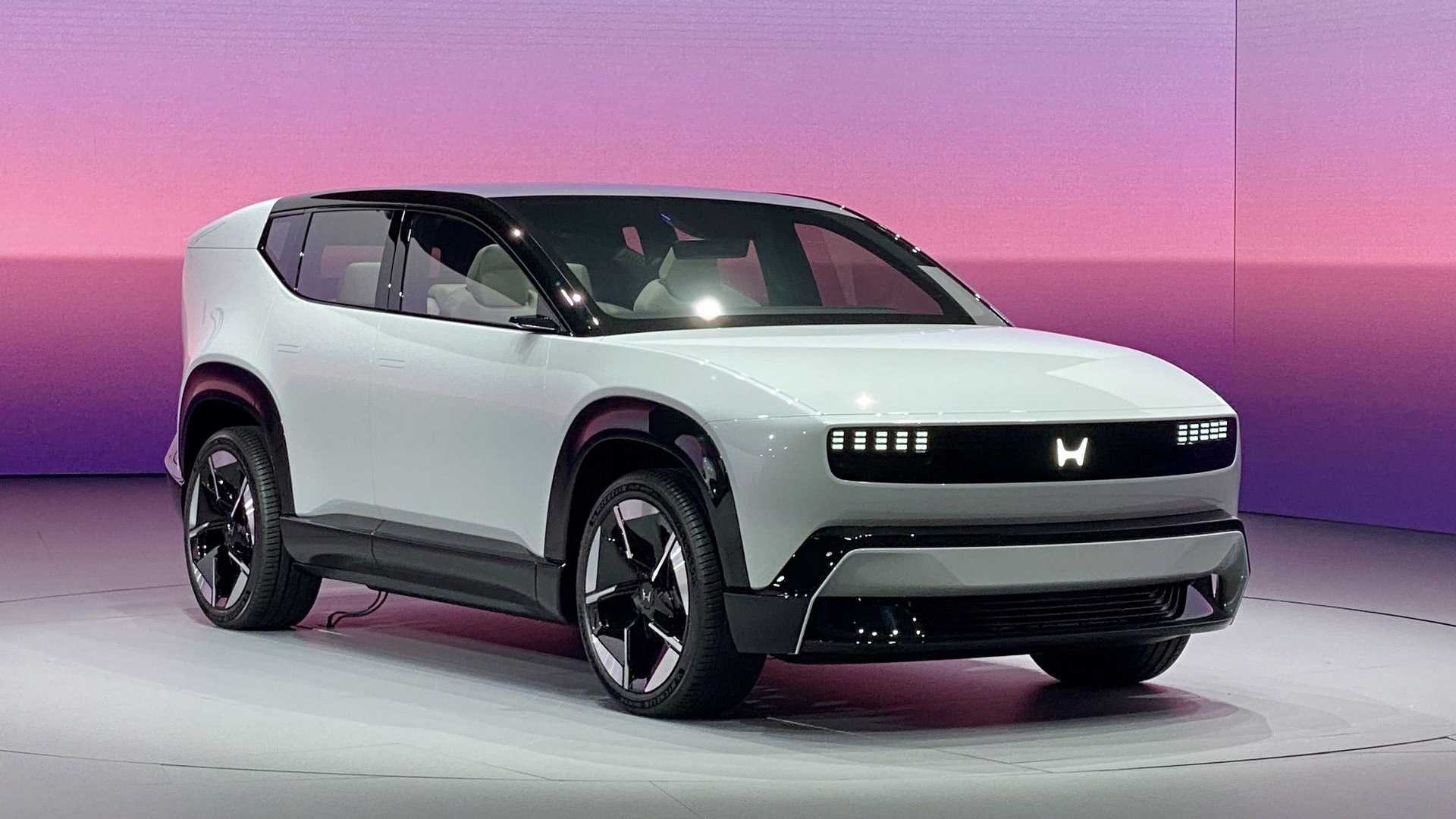
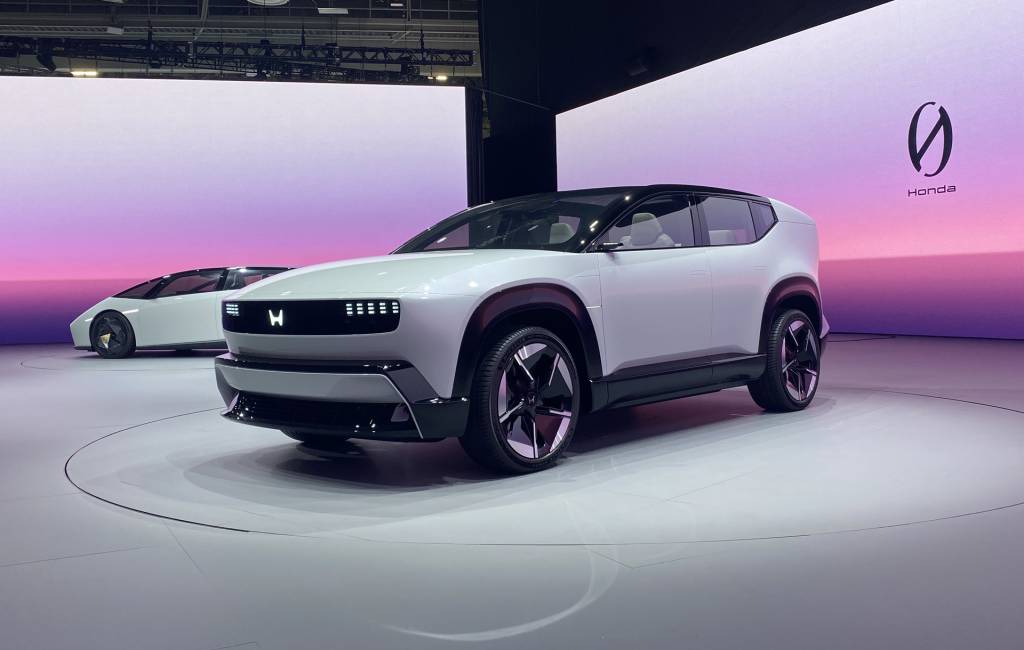
- The prototype showcased earlier featured a relatively upright stance, a large glasshouse for better cabin visibility, and a layered bumper design with an aero focus.
- The front appears to incorporate a slim hood, tall cabin, large windows, and a squared-off rear section (almost MPV-ish).
- Key design elements: U-shaped tail-lamps, large rear window, minimal sharp lines, smooth contours for aerodynamic benefit.
Technical Highlights (Expected)
- Although full specifications for India are yet to be revealed, Honda has indicated battery sizes in the 80-100 kWh range for global variants of the 0 Series.
- The SUV will offer both RWD and AWD configurations in the global context; exact variants for India are unconfirmed.
- On the concept side, early reports for the smaller “0 α” version (not the main 0 Series SUV) mention 65-75 kWh LFP battery options for hot-climate suitability (India relevance).
- Advanced tech focus: “software-defined vehicle” architecture, zonal electrical/electronic system, OTA updates, and a new Honda OS for the 0 series.
India-Specific Outlook
- The timeline: Launch scheduled for 2026 in India, making it one of the early entrants of this next-generation EV family in India.
- Market positioning: This will likely play as a premium offering in the electric SUV space — serving as a halo product for Honda’s EV ambitions in India.
- Competition will include upcoming EVs in India: e.g., the Tata Curvv EV, Maruti Suzuki e-Vitara, Hyundai Creta EV, Mahindra BE 6, and others.
- Pricing in India is not yet confirmed, but given the import route and premium focus, a higher price bracket is expected.
Implications & Key Considerations for Buyers
- Import route & cost: Since it’s arriving as a CBU initially, on-road cost in India is likely to include significant duty/tax overhead — so buyers should anticipate premium pricing.
- Charging & range: If global battery targets hold, a ~500 km or more range (or Indian-cycle equivalent) is feasible, which aligns well with Indian usage patterns.
- Infrastructure & support: Honda’s charging ecosystem readiness, after-sales network, and service ability will matter significantly in India’s EV uptake.
- Tech & usability: A focus on software-defined vehicle and OTA updates will be a competitive advantage, but how it translates in India (network, data costs, service readiness) remains to be seen.
- Competition timing: With many rivals launching EVs in the 2025-26 window, Honda’s 2026 launch may give it a head-start if executed well, but it also raises questions of market response and pricing competitiveness.
- Import vs local production: Since initial units are CBUs, localisation levels may be low; over time, local production could improve cost and service.
Why This Matters
For Honda, the 0 Series SUV marks a strategic pivot toward EV dominance, aligning with global moves to shift entirely to battery- and fuel-cell EVs by 2040. For the Indian market, this model represents a statement: Honda is serious about EVs in India, and not merely playing catch-up. It also adds another credible option for Indian buyers in the premium electric SUV segment, which is still relatively young but rapidly growing.
Summary
The 0 Series SUV from Honda is shaping up to be a high-visibility, high-technology electric SUV for India’s coming EV era. Its 2026 arrival places it ahead of many peers, but several details remain to be disclosed — pricing, local specifications, battery & motor options for India, localisation level, and after-sales ecosystem. For buyers looking to invest in a premium EV in India’s SUV segment, this will definitely be a model to monitor closely.