
Here’s a write-up on the situation of Bajaj Pulsar NS400Z and Dominar 400 prices remaining unchanged despite the recent GST hike:
Background: GST Change and Its Impact on Motorcycles
In September 2025, the Indian government revised the Goods & Services Tax (GST) structure for two-wheelers. Under the new rules:
- Motorcycles under 350 cc have seen their effective GST rate reduced (from 28 % to 18 %), making many popular commuter and mid-capacity bikes cheaper.
- Motorcycles above 350 cc have been moved into a higher GST slab — now taxed at 40 %. Formerly, many of these bikes had an effective tax burden (including cess, etc.) in the 31 % range.
This change meant that all high-displacement bikes (350cc+) were expected to see significant price increases — unless manufacturers chose to absorb the additional cost themselves.
Bajaj’s Decision: Prices Held Steady
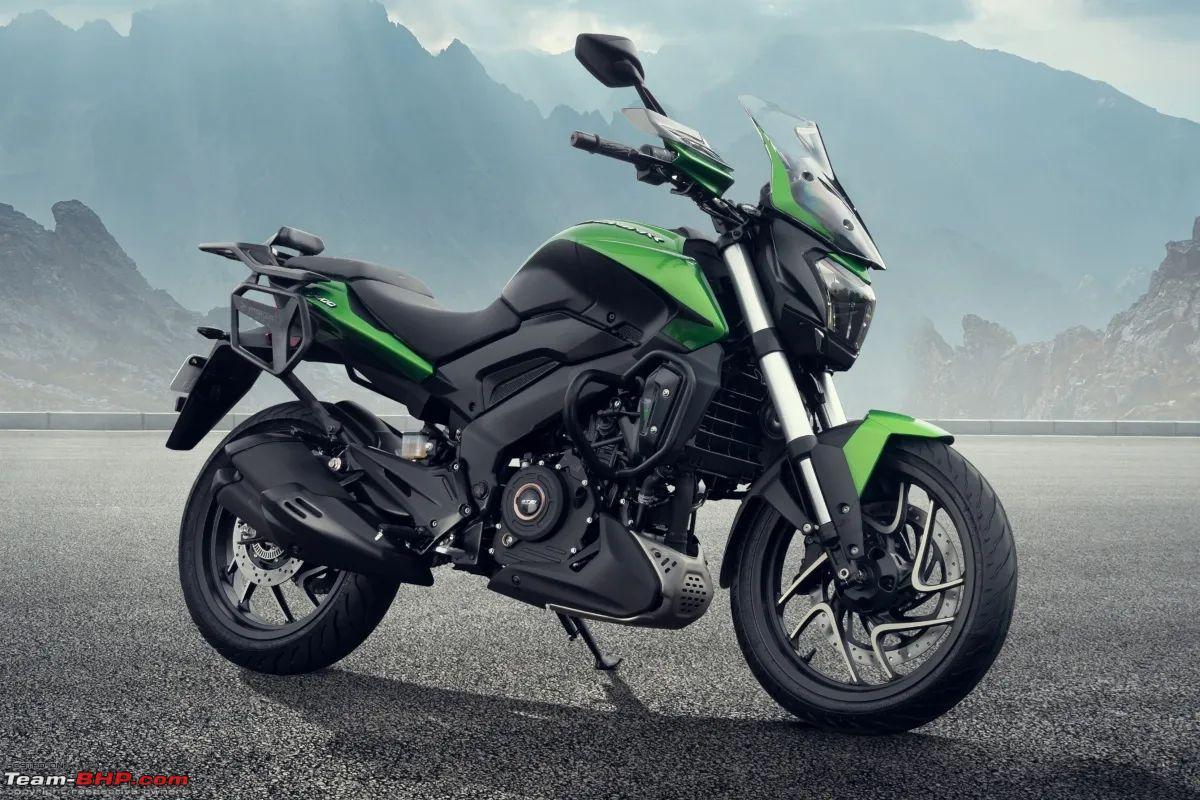
Despite the shift in taxation, Bajaj Auto has opted not to increase the ex-showroom prices of its two key 400cc motorcycles:
- Pulsar NS400Z
- Dominar 400
Instead of passing on the added tax burden to buyers, the company has decided to absorb the extra cost.
This is not entirely unprecedented: Bajaj has done something similar for its KTM and Triumph bikes manufactured in India, keeping their prices unchanged despite the GST hike.
In its communication, Bajaj notes that had it applied the full impact of the new GST rates, both bikes would have seen price increases of around ₹20,000 (approximately, depending on variant and state).
Current Pricing (Ex-Showroom)
As things stand (post-GST change), but with prices held constant:
- Pulsar NS400Z is priced at ₹1,92,000 (ex-showroom)
- Dominar 400 is priced at ₹2,39,000 (ex-showroom)
These prices apply in Delhi (and likely other metros) — though local state taxes, registration, and transport costs will vary.
Notably, Bajaj’s move positions the NS400Z as a value proposition in the 400cc space. Because it kept its pricing despite the GST increase, it effectively becomes more competitive versus alternatives that may raise their costs.
Why Bajaj May has chosen to absorb
Here are a few likely reasons and implications behind this decision:
Maintain Market Momentum During the Festive Season
The timing of the GST changes overlaps with India’s festive season, when motorcycle purchases often spike. A price hike might have dampened demand. By holding prices, Bajaj can preserve buyer sentiment.
Competitive Advantage
If rivals in the 350cc+ business (like Royal Enfield) increase prices, Bajaj can claim a more attractive value proposition.
Strategic Absorption (at Least Temporarily)
Bajaj may be treating this as a limited-time buffer — absorbing the cost in the short run to keep sales healthy, with a plan to revisit pricing later. The company has not publicly committed to how long it will hold these prices.
Portfolio Balancing
While the 400cc models are being held steady, Bajaj has passed on the benefits of GST reduction fully to its sub-350cc models, making those even more affordable. This helps with volumes and brand reach.
Brand Reputation & Customer Goodwill
Choosing to absorb a tax hike is a gesture that sends a strong message to customers — that the company is not purely profit-driven. It may help with brand loyalty and marketing narrative.
Risks, Caveats, and What To Watch
- Margin pressure
Absorbing the tax hike eats into manufacturer margins. If input costs or logistics costs also rise, this could squeeze profitability. - Finite timeframe
There is no guarantee that the unchanged pricing will last indefinitely. At some point, Bajaj may have to adjust prices or absorb costs further depending on market conditions. - State-level taxes and pricing variance
The ex-showroom price is one part; the eventual on-road price differs by state (registration, road tax, etc.). Some of those components may still move. - Rivals may respond
If competitors raise prices, Bajaj’s move gives them an edge — but those rivals might eventually counter with discounts, feature additions, or pricing strategies. - Consumer expectations
Buyers may expect such “absorption” moves to apply across the board, putting pressure on Bajaj to maintain discipline across its portfolio.
Outlook and Implications
By holding the prices of the NS400Z and Dominar 400 steady despite a steeper GST slab, Bajaj is banking on preserving momentum and competitive edge in the high-capacity motorcycle segment. For prospective buyers, this provides a window of stability—even when the tax landscape becomes more aggressive.
It will be interesting to see:
- How long will Bajaj maintain these prices
- Whether other manufacturers follow suit (or raise theirs)
- How does this influence sales numbers in the 350cc+ segment over the coming months
If you like, I can also compare how rivals (e.g., Royal Enfield, KTM, Triumph) are handling their pricing post-GST hike, or project what the true cost implications are for buyers. Do you want me to add that?