
Huawei-backed AITO has formally announced its first global lineup, unveiling three electric SUVs aimed at different price bands and regions as it steps beyond its home market of China.
The trio—branded AITO 5, AITO 7, and AITO 9—was presented at IAA Mobility 2025 in Munich, with the company positioning them as a coordinated family that mixes premium software, extended-range powertrain options, and region-specific tuning.
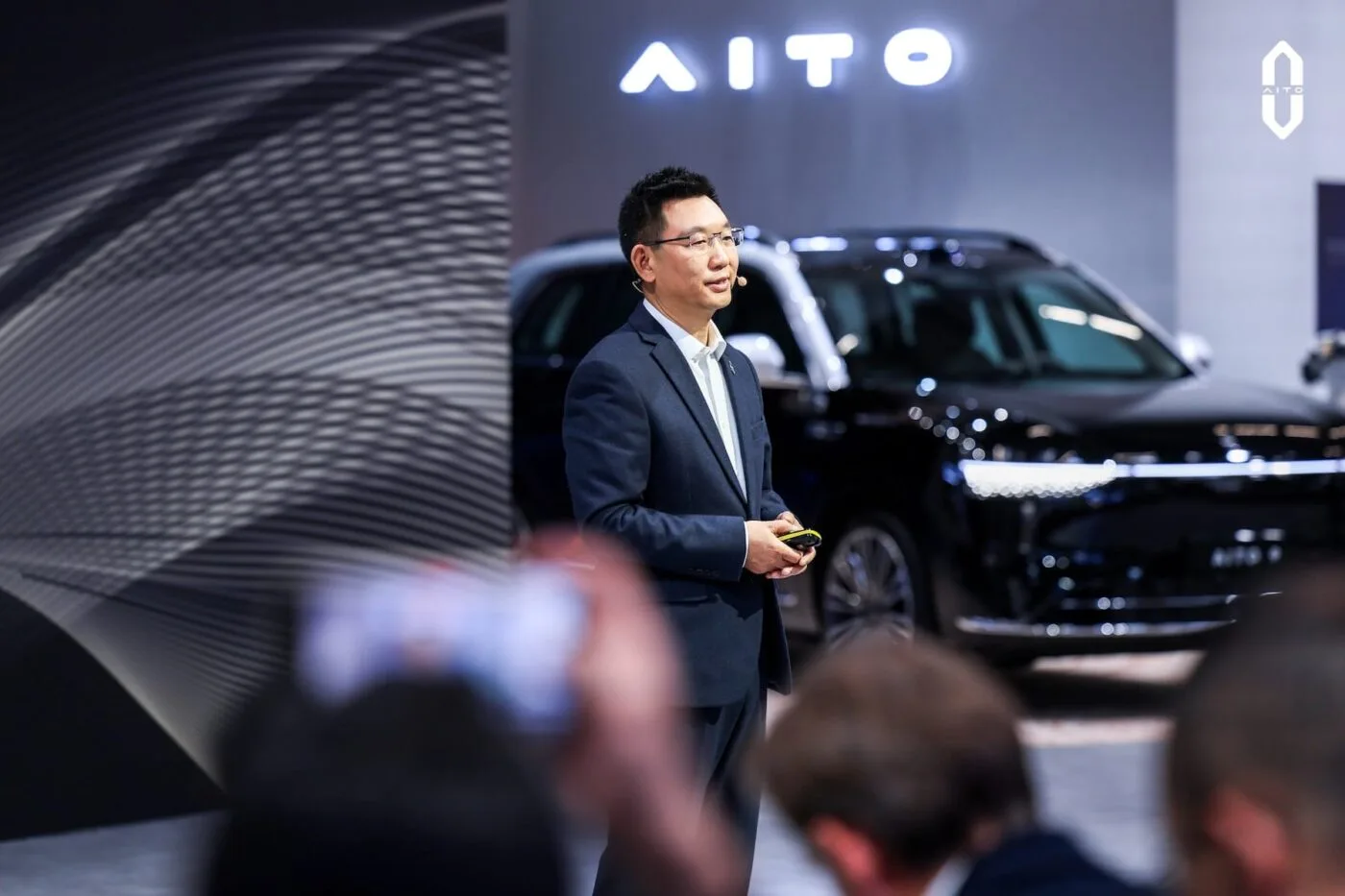
AITO says the first wave of international deliveries will focus on the Middle East, where the models have already cleared market-entry certification, before rolling out to additional markets, including Europe.
What AITO is Launching—and where
AITO’s “5–7–9” naming communicates a simple walk-up through size, tech, and luxury content. The company describes the AITO 5 as the most accessible member of the family, the AITO 7 as the mid-sizer for families, and the AITO 9 as the flagship.
At IAA, these vehicles were showcased as the brand’s global product range rather than China-only models, which marks a strategic pivot for the Huawei–Seres partnership that created AITO in late 2021. Notably, AITO emphasized that Middle East variants of all three models are ready and validated, underscoring its “glocal” strategy: engineer centrally, certify locally, and launch in high-growth EV regions first.
For European audiences, AITO used Munich to preview configurations tailored to local tastes and regulations. Coverage out of the show highlights that the brand will lean on range-extended EV (EREV) options—battery-electric driving with an onboard generator—to ease charging anxiety while it builds brand recognition and service networks. That approach mirrors how several Chinese automakers first cracked their domestic markets and could help AITO stand out in Europe’s crowded midsize SUV class.
Why the Trio Matters
Launching three models at once is unusual for a newcomer, but it’s a deliberate signal. First, it gives AITO a laddered lineup that can meet different price points without sending shoppers to another brand. Second, it allows the company to reuse a software-first cockpit and driver-assistance stack across different body sizes, pushing scale advantages in infotainment, ADAS, and over-the-air update cadence.
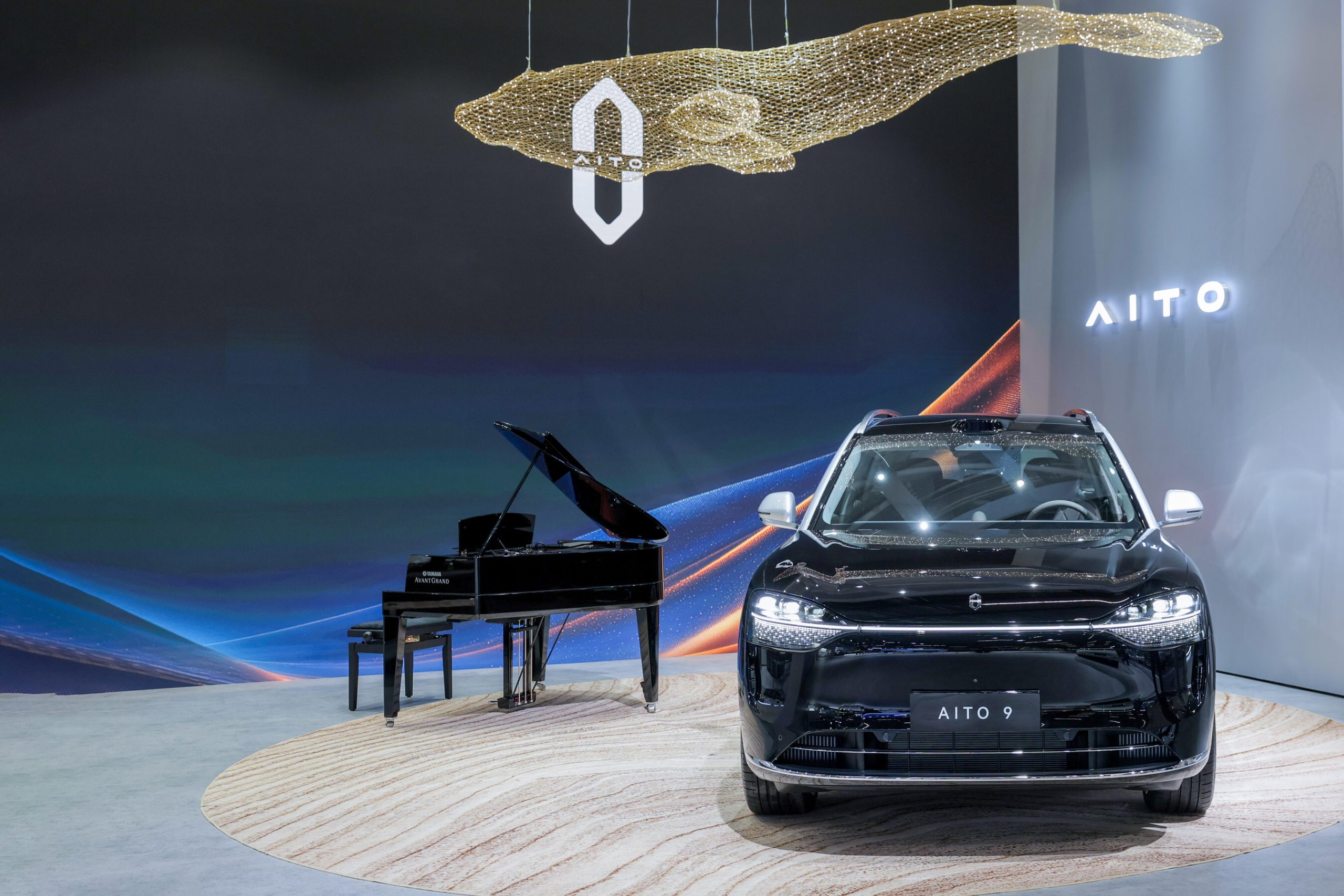
Third, it lets distributors in new regions pick the mix that fits local incentives and charging infrastructure maturity. All three points were front and center in AITO’s IAA communications, which framed the move as a “new luxury” proposition built on intelligent software and high perceived value.
The Tech Pitch: HarmonyOS and Smart Features
AITO’s most distinctive lever is software. The company is leaning hard on Huawei’s HarmonyOS-based cockpit and ecosystem integration—think seamless phone-to-car continuity, large-format touch interfaces, app portability, and voice-first controls.
The software narrative is familiar to drivers in China, but it’s still a differentiator in many export markets where in-car operating systems are often fragmented or underpowered. Reports covering the IAA debut specifically call out HarmonyOS integration and the broader “smart mobility” angle as AITO’s way of redefining luxury beyond leather and chrome. For buyers who care about a consumer-electronics-grade UI and quick updates, that pitch could resonate. (AInvest)
Powertrains and Positioning
While AITO is not abandoning pure battery-electric configurations, the brand is candid about the role of EREVs as it expands. European show reporting notes that the 5/7/9 will feature extended-range options alongside BEV setups, giving dealers flexibility to address charging concerns, long-distance use cases, and fleet TCO requirements.
In practice, that means most day-to-day driving is electric, with the range extender stepping in for long trips—an approach that can shrink total battery size (and cost) without compromising usable range. It’s a pragmatic path at a time when many markets are tightening emissions rules but still have uneven fast-charging coverage.
Market Sequencing and Branding Quirks
If you’ve followed AITO in China, you’ll recognize the familiar “M” names (M5, M7, M9). At IAA Mobility, some outlets described the global models without the “M,” referring to them as AITO 5, 7, and 9, while other coverage retained the M-prefix—evidence of a branding transition as AITO adapts for overseas markets.
Either way, the metal is the same family: a compact-to-full-size SUV intended to cover the heart of global demand. Expect the company and its distributors to settle on the naming consistently as regional launch campaigns kick off. Geographically, the Middle East gets priority—an increasingly common pattern as EV brands target fast-growing, infrastructure-investing markets with relatively frictionless certification paths.
AITO says all three new models have obtained UAE market-entry certification, and it has been completing validation in additional Gulf markets—signals that retail and service partners are already in place. From there, Europe is next in line, with the IAA presence functioning as both a brand introduction and a distributor/press immersion.
Competitive Context
AITO’s move lands amid a flurry of EV announcements at Munich from legacy and Chinese brands alike. That context matters: European incumbents are racing to refresh lineups and cost structures, while Chinese automakers bring aggressive value, tech-forward interiors, and fast update cycles. For AITO, the differentiators will likely be:
- Cockpit software (HarmonyOS continuity and app ecosystem).
- Choice of BEV and EREV powertrains to match regional infrastructure.
- Hardware value density (ADAS sensors, large displays, premium audio) at a given price point.
If AITO can convert those talking points into reliable ownership experiences—accurate range, stable software, responsive service—its three-model launch gives it a credible shot at mindshare in the midsize SUV sweet spot.
Risks and What to Watch Next
Two near-term uncertainties are worth tracking. First, nomenclature clarity: whether AITO standardizes the non-“M” global names (5/7/9) or sticks with M5/M7/M9 across markets. Mixed reporting from Munich suggests a transition phase that could confuse buyers if not resolved in marketing and badging.
Second, spec transparency: because IAA served as a debut stage, detailed WLTP ranges, DC fast-charge curves, and region-specific ADAS feature sets were still dribbling out. Expect fuller spec sheets—and pricing—on a per-market basis as launch windows firm up. Media at Munich framed the reveal as a global product lineup announcement rather than a conventional on-sale start.
Long-term, AITO’s success will hinge on the durability of its “glocal” model: pairing Huawei’s software strengths with Seres’ manufacturing and then tailoring after-sales, financing, and charging partnerships to each country. The brand has momentum at home—AITO crossed the 400,000-unit production mark in 2024—and the SUV-heavy portfolio aligns with global demand patterns. If its first Middle East rollouts go smoothly and early European pilots validate the EREV strategy, AITO’s three-car salvo could become the backbone of a sustained international push.
Summary
AITO didn’t just show a single halo car in Munich; it introduced a full, three-tier global lineup with software-led differentiation and market-specific powertrain flexibility. The initial Middle East focus, upcoming European entries, and HarmonyOS experience form a coherent plan: lead with intelligence, reduce charging friction with EREVs where needed, and scale quickly through a common technology stack. If execution matches the promise, AITO 5, 7, and 9 could make the Chinese brand a serious new player on the global EV stage.