
India’s recent GST rejig for two-wheelers — which reduced the tax on motorcycles up to 350cc while sharply increasing it for bikes above that threshold — has created one of the more unusual pricing dynamics the market has seen in years.
In a move that caught many by surprise, Bajaj Auto has reportedly decided to absorb the higher GST on India-made Triumph and KTM motorcycles above 350cc, meaning those models will not see an immediate price increase for customers even though the tax burden on that segment has risen.
What Changed in the Tax Slabs
At the heart of this is a tax-policy decision by the GST Council: two-wheelers with engine displacements up to 350cc now attract 18% GST (down from 28%), while bikes above 350cc have been moved into a higher luxury/sin-tax slab of 40% GST (up from roughly 31% or the earlier effective rates).
The new structure came into effect in late September 2025 and was explicitly framed to make mass-market commuter motorcycles and scooters more affordable while taxing premium motorcycles more heavily.
That change alone would normally produce a neat bifurcation: big price cuts across the mass-market (benefitting the majority of volume sales) and notable price increases for larger-capacity bikes (hitting premium and aspirational buyers). Brands were expected to pass those numbers straight to buyers — but Bajaj’s reported decision to swallow the GST increase for some locally made KTM and Triumph models interrupts that tidy outcome.
What Bajaj is doing — and which models are affected
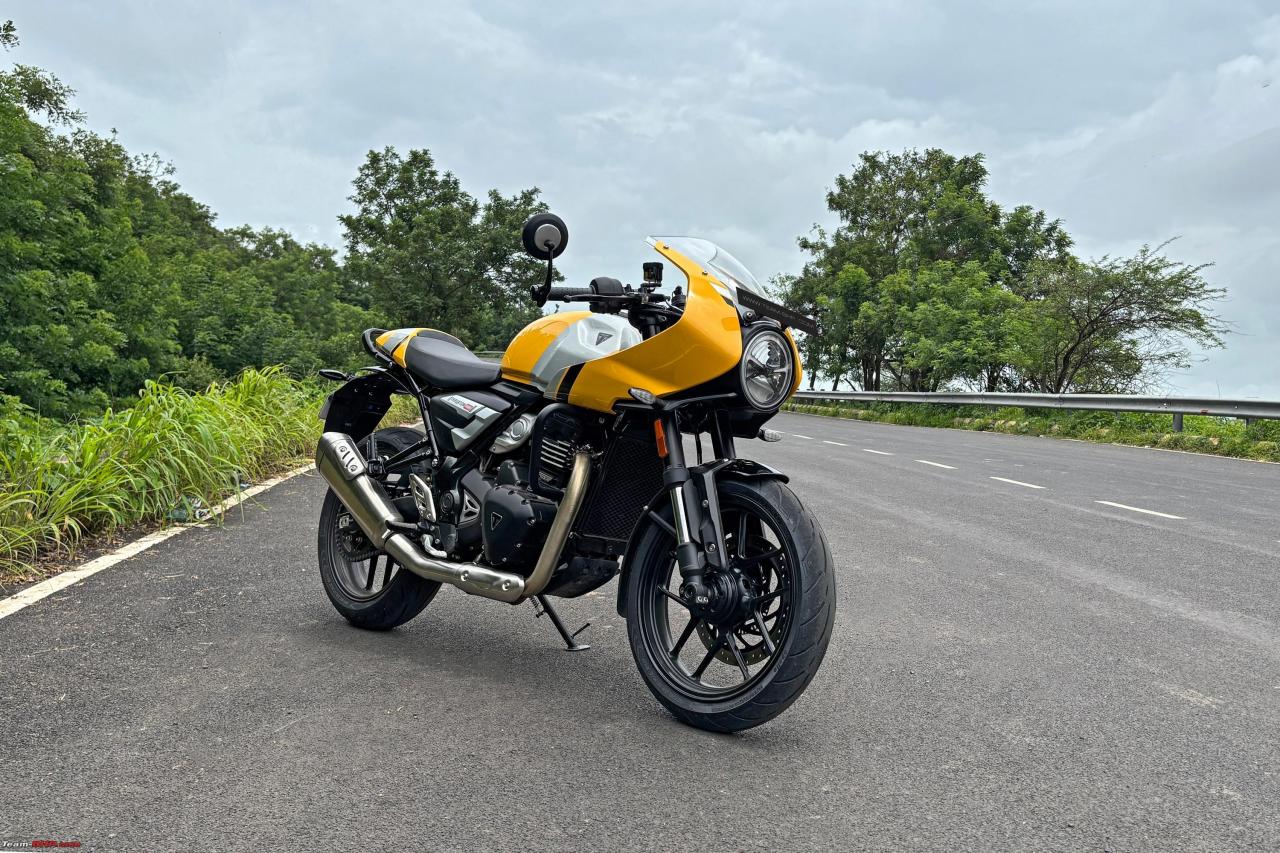
According to vehicle press reports, Bajaj Auto — which manufactures certain KTM and Triumph bikes under license in its Indian facilities — will not raise the on-road prices of those India-made KTM and Triumph models despite the higher GST slab on >350cc machines.
In short, the company will forgo passing the incremental GST cost to retail customers, at least initially. The coverage mentioned specifically refers to locally manufactured models (for example, popular KTM 390-series and Triumph models in the small-premium segment).
Why would Bajaj absorb the GST hike?
There are several plausible strategic reasons behind such a choice:
- Protecting demand during the festive season. The new tax rules took effect right before India’s major festival-buying window. Absorbing the hike helps Bajaj keep showrooms busy and maintain momentum for KTM/Triumph sales when buyers are most active. Price visibility during festivals can make or break quarter numbers.
- Market positioning and brand stewardship. KTM and Triumph are aspirational brands in India. Sudden, sharp price jumps can erode demand or push undecided buyers away. Bajaj may prefer to protect the long-term brand equity in the market rather than squeeze a short-term, visible price increase.
- Manufacturing and localization advantage. Because these particular KTM and Triumph models are assembled or produced in India (benefiting from localized supply chains), the incremental GST is only part of the price calculus. Bajaj might be able to mitigate the margin impact by optimizing costs, using short-term promotional funds, or deferring model-year changes.
- Competitive dynamics. If competitors raise prices immediately (for example, fully imported or less-localized models), Bajaj can gain market share by keeping prices steady — especially if rivals’ offerings sit in the same performance and price brackets.
Financial and Operational Trade-Offs
Absorbing a tax increase is not free. Margins will take a hit unless Bajaj can offset the GST differential through cost reductions, temporary margin sacrifice, or cross-subsidization.
The duration matters: a short-term absorption (a few weeks or months during festival sales) is manageable for large OEMs; a long-term stance would require concrete structural changes (sourcing, pricing, feature deltas). Analysts will watch Bajaj’s quarterly reporting and comments for clues about how deep the hit might be and whether the company hedges that impact with higher accessories/finance margins or other revenue streams.
Consumer Impact — Immediate Winners and Losers
For buyers, the immediate takeaway is straightforward: if you were planning to buy a locally made KTM or Triumph model above 350cc, you may not face the expected GST-driven sticker shock — at least for now. That improves affordability and reduces friction during sales negotiations.
On the other hand, manufacturers who do not absorb the tax will list higher prices, potentially redirecting customers toward Bajaj-manufactured options. Over time, market prices should reflect the new tax reality unless more OEMs follow Bajaj’s example.
Industry Reaction and What Might Happen Next
Other manufacturers’ responses will shape the long-term outcome. Some brands have already announced price cuts for 350cc models to pass on the benefit; for larger bikes, responses vary — some are signaling price increases, others are studying the move.
If competitors also choose to absorb the hike (unlikely across the board), that will mute the GST Council’s intended market signal; if they pass it on, price differentials across brands will widen, potentially reshaping buyer preferences and market share.
Summary
Bajaj’s reported decision to absorb the GST hike for India-made KTM and Triumph bikes above 350cc is a tactical move that buys the company influence in the short-term — protecting demand and brand perception during a critical buying season. It also underlines how manufacturers can act as shock absorbers between fiscal policy and consumers.
However, absorbing higher taxes comes at a cost; how long Bajaj can or will maintain this stance depends on sales performance, margin pressures, and competitive responses.
For consumers in the market now, the decision is welcome news — but prospective buyers should keep an eye on official price announcements and dealer quotes, because the situation is fluid and could change as companies recalibrate.