
Latin NCAP has awarded the Brazil-built Citroën Basalt an overall zero-star safety rating in its latest round of assessments published this week (mid-October 2025).
The organization reports that the Basalt — tested in the configuration with 4 airbags and ESC as standard — achieved 39.37% Adult Occupant, 58.35% Child Occupant, 53.38% Pedestrian & VRU, and 34.88% Safety Assist. Under Latin NCAP’s star methodology, those percentages translate to 0 stars.
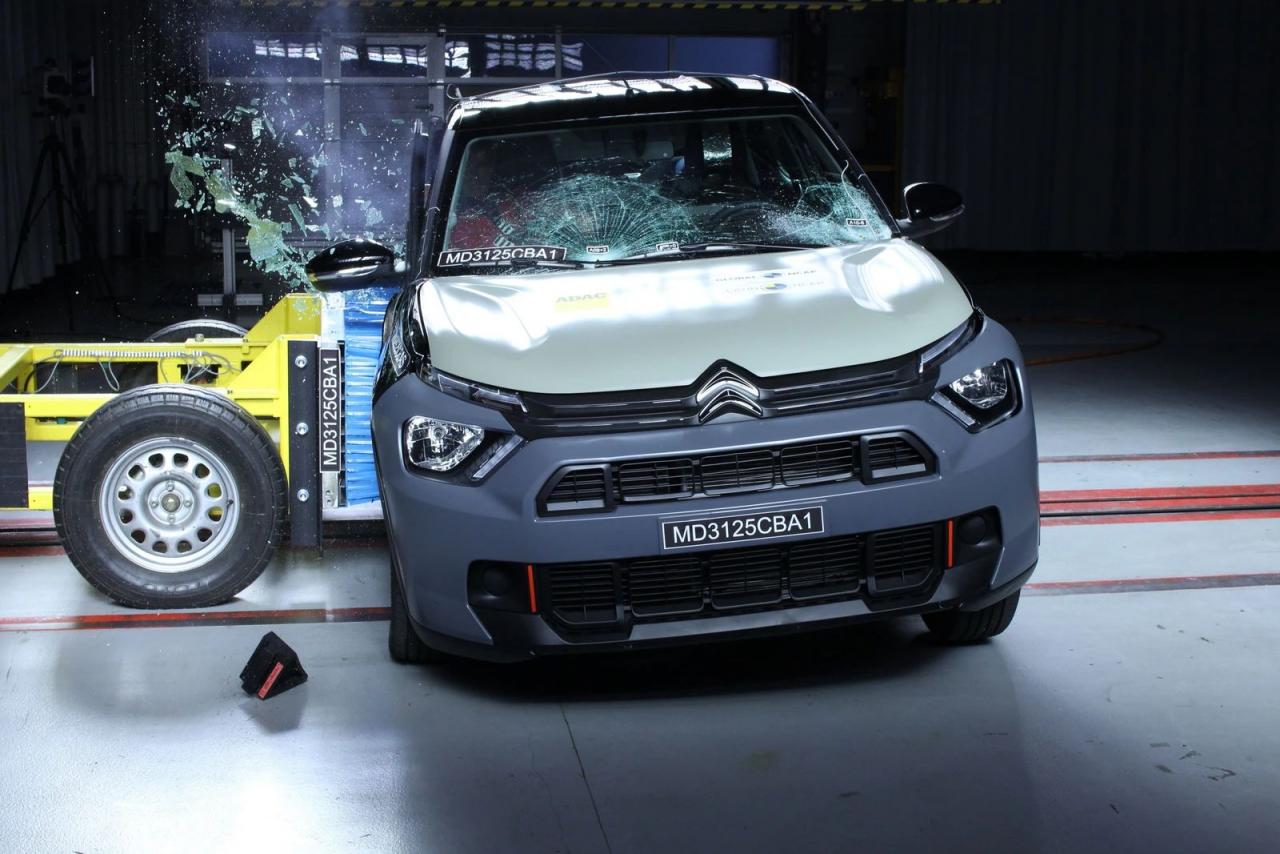
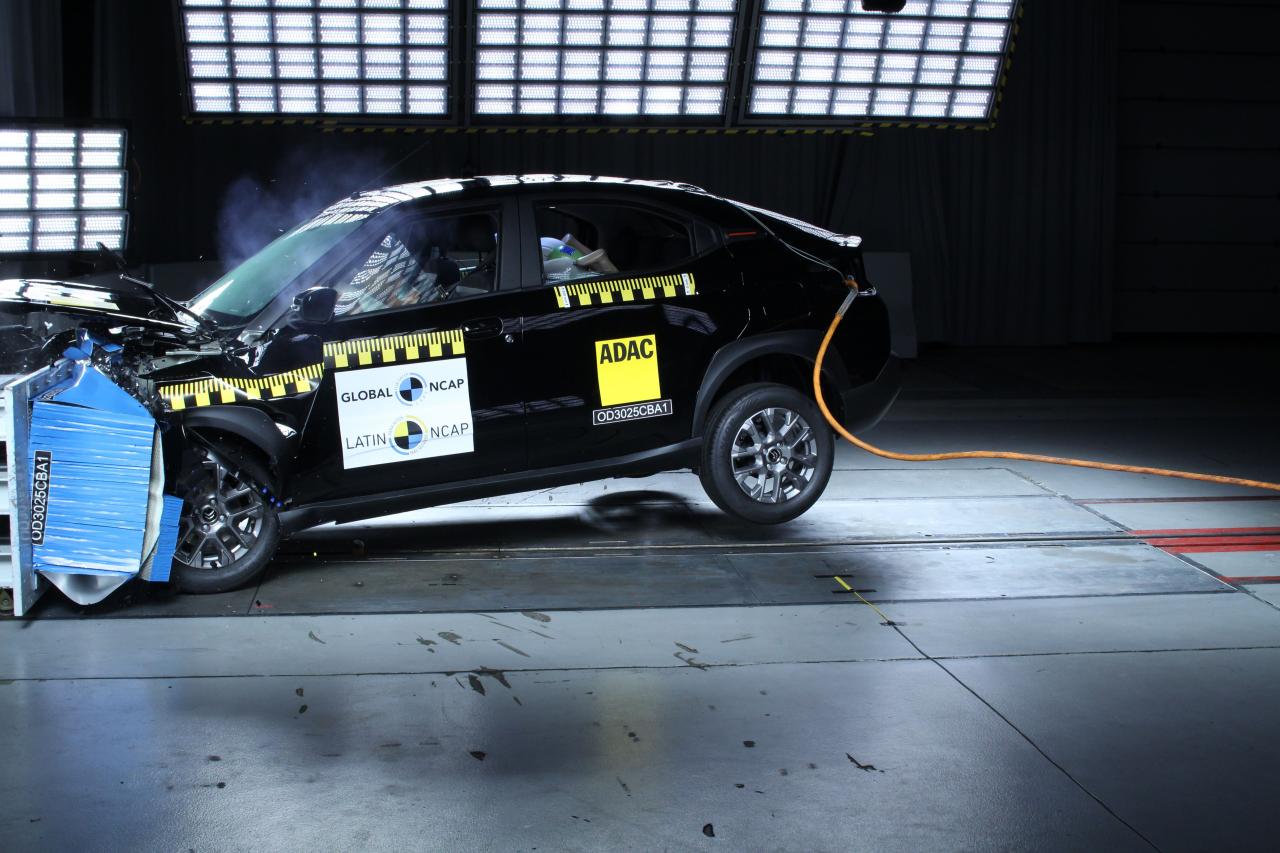
Latin NCAP’s detailed result page notes several specific findings. In the frontal impact, head and neck protection for the driver and front passenger was rated good, but the driver’s chest protection was marginal, and the passenger’s chest was weak, which Latin NCAP attributes to seatbelt pretensioner underperformance.
Knees were assessed as marginal due to potential contact with hard structures behind the fascia; tibia protection was adequate, and the footwell was stable. The assessment also covered side impact, whiplash, pedestrian protection, and ESC, with the overall package hurt by the absence of side head airbags and any ADAS features (even as options) in the tested market spec.
Citroën Basalt Fails Latin NCAP Crash Test
The Basalt’s zero-star outcome continues a difficult run for Stellantis models in Latin NCAP’s tougher, continuously evolving protocols. Latin NCAP’s own release frames the Basalt result as “adding to Stellantis’ poor results,” contrasting it with other brands that are now consistently hitting five stars in the region.
The lack of head-protecting side airbags and modern driver assistance systems weighed heavily in the Safety Assist and Adult Occupant categories, dragging the overall star score to zero despite some areas of solid performance.
It’s important to stress that star ratings are not directly comparable across regions; they depend on the protocol and equipment of the model sold in that market. Media coverage has already drawn comparisons to the India-market Basalt’s 4-star Bharath NCAP rating (2024), even though that was assessed under a different program with different thresholds and possibly different standard equipment.
Both versions share the CMP/Smart Car platform, but spec differences — notably airbag count/type and the availability of active safety tech — can materially change outcomes. In other words, a “Basalt” sold in one region is not necessarily the same safety specification as a “Basalt” sold in another.
For consumers in Latin America, the takeaways are straightforward:
- Check the equipment on the specific trim you’re buying. The tested car had 4 airbags and ESC; no head-protecting curtain airbags or ADAS were available, which significantly limited scores. If future MY updates add head airbags or AEB/LKA, performance could improve in a retest.
- Look beyond the single-star headline. The sub-scores show where the vehicle performs acceptably (e.g., head/neck in the frontal test, stable footwell) and where it falls short (chest loads, Safety Assist). That helps you decide whether equipment upgrades or alternative models better fit your safety priorities.
- Protocol stringency matters. Latin NCAP has steadily raised the bar in recent years, and models that once passed comfortably may now need additional airbags and active safety to achieve higher stars.
Coverage across automotive outlets in India and Latin America has echoed Latin NCAP’s numbers and highlighted the contrast with markets where the Basalt is configured differently. Reports also note that Latin NCAP’s October 2025 batch included other vehicles — some attaining five stars — underscoring the widening gap between safety leaders and laggards in the region.
Summary
In its Brazilian specification, the Citroën Basalt currently fails to meet Latin NCAP’s thresholds for a star award, chiefly due to limited restraint systems and the absence of modern driver-assistance technologies.
Buyers should verify local equipment lists and watch for updates; small hardware changes — adding head airbags and basic ADAS like AEB — could substantially change its standing in any future Latin NCAP evaluation.