
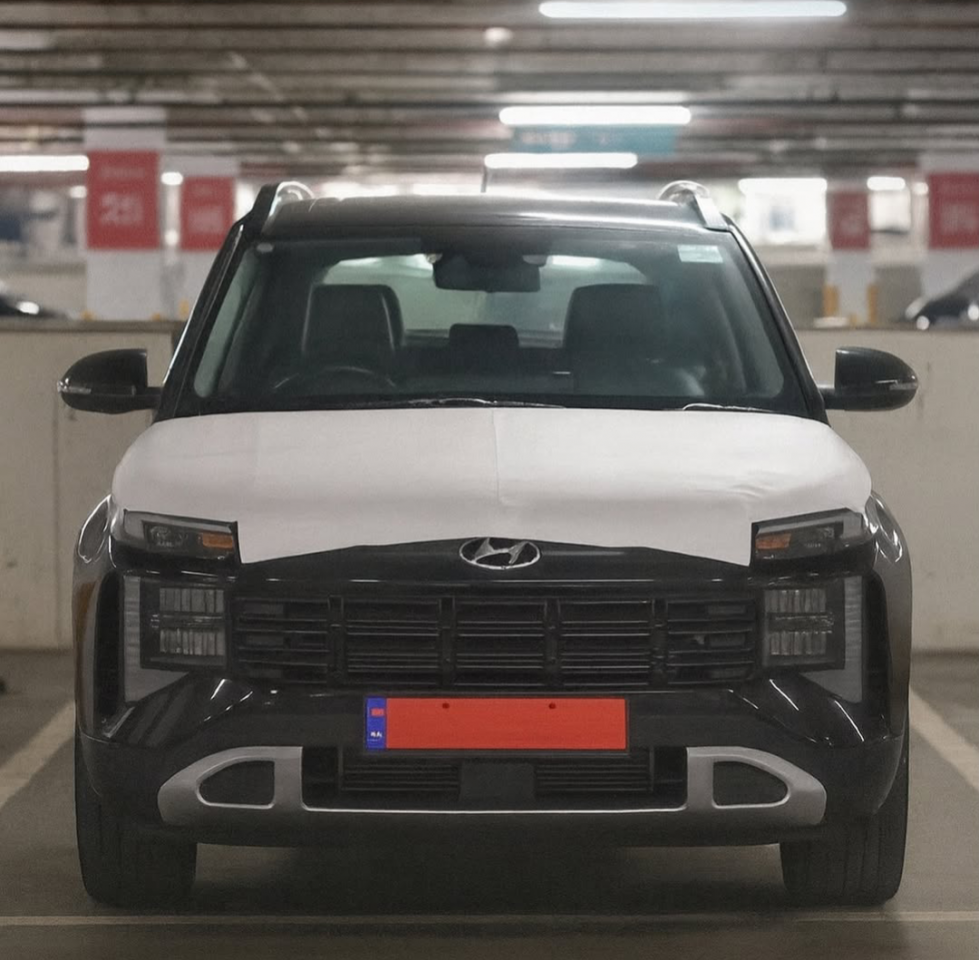
Recent spy photographs of the 2026 Hyundai Venue have peeled back much of the camouflage, offering a clear look at its heavily redesigned front fascia — a bold departure from the current generation’s styling.
The new face hints at how Hyundai is pushing its sub-4-m SUV into a more mature, rugged, and tech-forward direction. Below is a detailed breakdown of what the spy images reveal — and what we can expect when it hits showrooms.
What the Spy Shots Reveal
Split LED Lighting & New Layout
One of the most striking changes is the adoption of a split headlamp arrangement. The upper portion carries the slender LED daytime running lights (DRLs) or indicator elements, while the main headlamp modules are now embedded lower down in the bumper.
The DRLs wrap around the headlamp units in a C-shaped formation, resulting in a striking visual signature. The vertical stacking of rectangular LED units is clear in the images, giving the front end a layered, modern look.
Wider, Squarer Grille & Bolder Proportions
The grille itself has been reworked — it’s noticeably wider, has a squarer silhouette, and features bold horizontal slats replacing the mesh pattern of the outgoing model. The grille meets the DRL strip along the bonnet line, forging a cleaner, more integrated face.
Flanking the grille are revised air intakes and a lower bumper that now hosts a silver-finished faux skid plate, underlining the SUV character. The bumpers appear chunkier, with a more rugged lower section than the current model.
ADAS Sensor & Central Module
In the latest uncovered spy shot, a rectangular sensor module is visible in the center of the front bumper, just below the license plate area, hinting at advanced driver-assistance system (ADAS) hardware. This suggests Hyundai is integrating safety and perception tech more overtly into the design, not hiding it behind bulkier covers.
Overall Styling Cues & Design Language
The front-end styling takes clear cues from Hyundai’s newer compact SUVs. The inspiration from the Creta N Line is often noted in spy reports, especially in proportions, lighting signature, and grille treatment. Despite the changes, the Venue retains a boxy and upright stance — the side profile remains broadly familiar, though with revised cladding and sharper lines.
Wheel arches now wear chunkier cladding, and new alloy wheel designs are already visible in some test mules. Roof rails, mirror housings, and roofline shaping also subtly evolve, contributing to a tougher overall look.
What It Signals for Production & Market
Finished For Production
The increasingly uncovered and polished spy shots suggest that the new Venue is entering its final stages of development. The design cues appear production-ready rather than prototype fantasies. The unveiling is likely imminent.
Segment-Leading Design and Tech
With the new front fascia, Hyundai is pushing the Venue’s visual sophistication closer to its larger siblings while retaining its compact footprint. The bold grille, split lighting, and strong surfacing suggest an upgrade in perceived value and heft.
By integrating the ADAS sensor module visibly, Hyundai signals a move to make safety tech more integral to the design rather than hidden.
Expected Launch & India Relevance
The new Venue is slated for a debut in India on 4 November 2025, coinciding with a key festive season launch for maximum market impact. Indian media reports confirm that this front-end treatment will lead to the design change for the Indian-spec version.
Given the strong interest in the sub-4m SUV class in India, the redesigned face could be a major differentiator in a crowded segment dominated by rivals like Tata Nexon, Maruti Brezza, and Kia Sonet.
Continuity Under the Hood
While styling sees a leap, powertrain carryover is highly likely. Sources suggest that the existing engine options — a 1.2-litre naturally aspirated petrol, 1.0-litre turbo petrol, and a 1.5-litre diesel — will continue, paired with their current transmissions (manual, iMT, DCT, torque-converter AT), depending on region.
Hyundai may also launch an N Line variant of this next-generation Venue, sporting red accents, sharper bumpers, and sportier touches for those seeking a performance-flavored look.
Conclusion
The 2026 Hyundai Venue’s newly spied front fascia clearly marks a bold design upgrade. The switch to split lighting, a wider horizontal slatted grille, chunky bumpers, and an exposed ADAS module together give the compact SUV a more mature, muscular, and premium face. While the side silhouette preserves familiarity, these frontal changes elevate the Venue’s visual status and make it more competitive in its segment.
As more spy shots emerge and the launch draws closer, its exact interior tweaks, feature list, and real-world appeal will become clearer. But from what the front end reveals so far, Hyundai is signaling that the next-gen Venue is not just an incremental update — it’s an attempt at redefining its entry-level SUV identity in a rapidly evolving market.