

Land Rover Baby Defender 4X4: The long-rumoured compact Defender is no longer just internet folklore. Spy shots and detailed reporting confirm Jaguar Land Rover (JLR) is developing a smaller, more accessible Defender—likely to be called the Defender Sport—with a global debut targeted for 2027.
It will sit beneath today’s L663 Defender 90/110/130 and form a core part of JLR’s EV-led roadmap. Here’s everything we know so far, plus how it stacks up against India’s off-road darling, the Mahindra Thar.
What is the “Baby Defender”?
Autocar’s scoop shows a camouflaged prototype with unmistakably Defender-like, square-shouldered proportions—but scaled down and tuned more for everyday road use than extreme trails.
The publication says the model is being readied as early as 2027, with dimensions around 4.6 m long, ~2.0 m wide, and <1.8 m tall, keeping the upright stance while dialing back the hardcore approach of the full-size Defender. It could also wear the Defender Sport badge, consistent with JLR’s “Sport” suffix for more road-focused variants (e.g., Range Rover Sport, Discovery Sport).
Autocar India echoes those details, calling it an all-electric 4×4 on an 800-volt architecture, and again points to a 2027 market entry. The outlet also notes it might replace the ageing Discovery Sport in JLR’s line-up, further clarifying brand overlap.
Platform, Batteries, and Powertrains
Under the skin, the compact Defender is slated to ride on JLR’s EMA (Electric Modular Architecture)—the group’s mid-size EV-first platform that will also underpin the next-gen Range Rover Evoque and Velar.
EMA is designed around 800V electrics for faster charging and efficiency, and production is tied to JLR’s Halewood facility in the UK (which is undergoing a major EV upgrade). While the product brief is EV-first, Autocar reports that JLR’s recent strategy pivot to build more plug-in hybrids could leave the door open to electrified combustion options on EMA if needed.
A separate roundup focused on JLR’s EV plans adds context: the first Defender EVs (full-size and compact) are expected around 2026–27, EMA will be pure BEV for mid-size products, and the compact Defender could target ~300 miles of range (manufacturer target not yet confirmed). Treat the exact range figure as an informed estimate rather than a spec sheet claim until JLR publishes numbers.
Design and Positioning
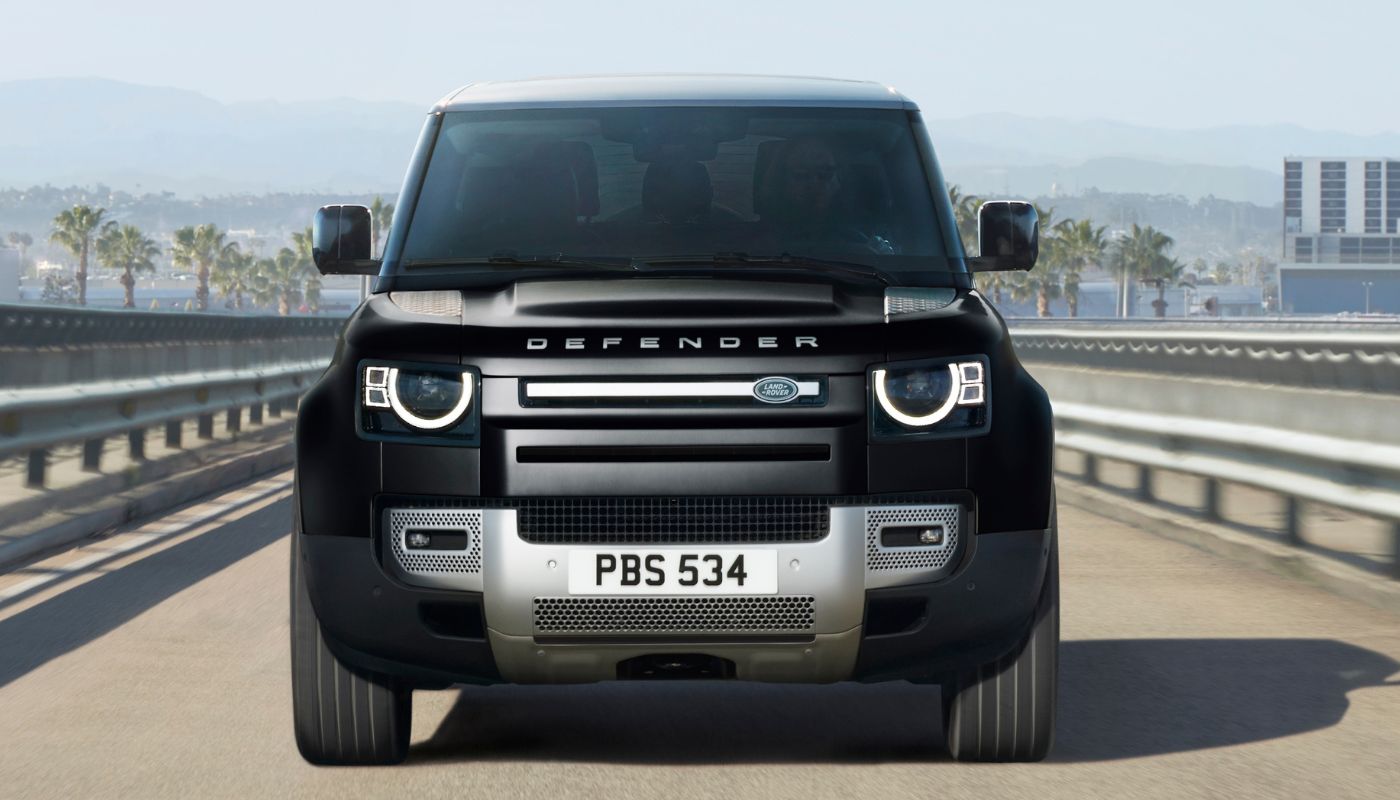
Expect a shrunken-but-faithful Defender look: slab sides, short overhangs, and upright glasshouse. Prototypes suggest thinner lights, flush door handles, and a stance that’s less off-road extreme, yet still credible for adventures—especially with the instant torque and control EV powertrains provide.
The market positioning is straightforward: price it significantly below the full-size Defender (which starts around £57k in the UK) to bring more buyers into the Defender “house.”
When and where will it be built?
Autocar reports the compact Defender, Evoque EV, and Velar EV share JLR’s EMA and are set for the upgraded Halewood plant in the UK, with in-house e-motors and batteries sourced via Tata’s upcoming Somerset gigafactory plan. That aligns with JLR’s renewed EV cadence and its more clearly defined brand families (Defender, Range Rover, Discovery, Jaguar).
Timeline: Prototypes are already testing; showrooms from 2027 are the most consistent prediction across reputable automotive media. India’s launch plans have not yet been announced.
Price and Market Rivals
No pricing is official. Reporting suggests a lower entry point than the big Defender to reach volume, but this will still be a premium compact EV 4×4. Natural rivals include the upcoming “Little G” (compact Mercedes-Benz G-Class), and—depending on market—top trims of lifestyle off-roaders like Ford Bronco Sport, Jeep Recon, and the Mahindra Thar.e when it materializes.

Where Does This Leave the Mahindra Thar?
The Mahindra Thar has carved a unique niche: authentic ladder-frame toughness, strong approach/departure angles, and real-world affordability. In India, the Thar range (now including the 5-door Thar ROXX) starts roughly ₹12.99 lakh–₹23.39 lakh ex-showroom, depending on variant. Even a “Baby Defender” priced below the big Defender would remain far more expensive in India if imported, so they don’t directly overlap on price.
Capability snapshot (current 3-door Thar)
- Length/Width/Height: 3985/1820/1844 mm
- Wheelbase: 2450 mm
- Ground clearance: 226 mm
- Angles: Approach ~41.2°, Break-over ~26.2°, Departure ~36°
These numbers explain why the Thar is such a trail favourite at its price.
What About an Electric Thar?
Mahindra has previewed the Thar E-Concept on its INGLO EV platform, indicating a battery-electric future with dual-motor AWD possibilities and off-road-friendly packaging. As that inches closer to production, an EV Thar could eventually become the Baby Defender’s spiritual rival on powertrain—while still playing a very different value game.
Summary
The Thar serves rugged, relatively affordable adventure. The Baby Defender is set to be a premium compact EV 4×4 with global ambitions. Enthusiasts in India who want the Defender vibe at Thar money shouldn’t expect price parity; instead, watch how Mahindra’s Thar evolves to bring EV torque and tech to an accessible off-roader.
FAQs
1) Is “Baby Defender” its real name?
Not confirmed. The strongest reporting points to Defender Sport as the likely badge, aligning with JLR’s naming pattern for road-oriented variants.
2) When is it coming?
Targeted 2027. That’s based on multiple credible reports and the state of testing mules. Official launch timing may vary by market.
3) Is it electric-only?
It’s engineered as an EV-first model on JLR’s EMA platform (800V). JLR’s broader strategy leaves room for electrified combustion options if market demand dictates, but the plan being reported is pure-electric for the compact Defender.
4) How big is it?
Expect ~4.6 m length, ~2.0 m width, and <1.8 m height—compact compared with the Defender 110, but still boxy and practical.
5) Will it be as capable off-road as the big Defender?
The focus seems less extreme than the full-size Defender, but it should retain the brand’s go-anywhere ethos. EV torque and precise control will help in low-speed terrain work, though final hardware (tyres, lockers, height-adjustable suspension, etc.) remains to be seen.
6) Where will it be built?
At Halewood (UK), alongside other EMA-based models, which is undergoing a significant EV upgrade. Batteries are expected to be sourced from Tata’s Somerset plant when online.
7) What range can we expect?
No official claim yet. Informed analyses suggest ~300 miles (WLTP-style figure), but treat that as an estimate until JLR publishes specs.
8) How much will it cost?
Guidance is that it’ll be significantly cheaper than the full-size Defender (UK: ~£57k+), but still very much premium—especially in markets with import duties.
9) Will it come to India?
JLR hasn’t announced India-specific plans. If imported, pricing would likely be well above lifestyle 4×4 staples like the Thar, positioning it as a niche premium EV 4×4.
10) How does it compare to the Mahindra Thar?
They target different buyers. The Thar (and 5-door ROXX) delivers authentic off-road hardware and angles at ₹12.99–₹23.39 lakh price points; the Baby Defender aims to be a compact, premium EV with advanced software and charging—priced much higher. If you want EV torque at that money, keep an eye on the Thar e production path.
Quick Specs Snapshot: Mahindra Thar (Current 3-Door, For Context)
- Ground clearance: 226 mm
- Angles: Approach ~41.2°, Break-over ~26.2°, Departure ~36°
- Dimensions: 3985 × 1820 × 1844 mm; Wheelbase 2450 mm
- Price (ex-showroom range): ~₹12.99–₹23.39 lakh (ROXX 5-door similar band, variant-dependent).
Summary
The compact Defender should broaden the Defender brand with an EV-first, smaller 4×4 that’s practical for cities yet adventure-ready. It won’t be a price rival to the Thar, but it will heat the lifestyle 4×4 EV conversation—right as Mahindra readies the Thar for its electric future.