
In a striking early success, Maruti Suzuki India has exported 6,068 units of its all-electric SUV e Vitara between August and September 2025, less than two full months since exports commenced.
This figure reflects both the ambition and challenges of India’s push into global electric vehicle (EV) manufacturing.
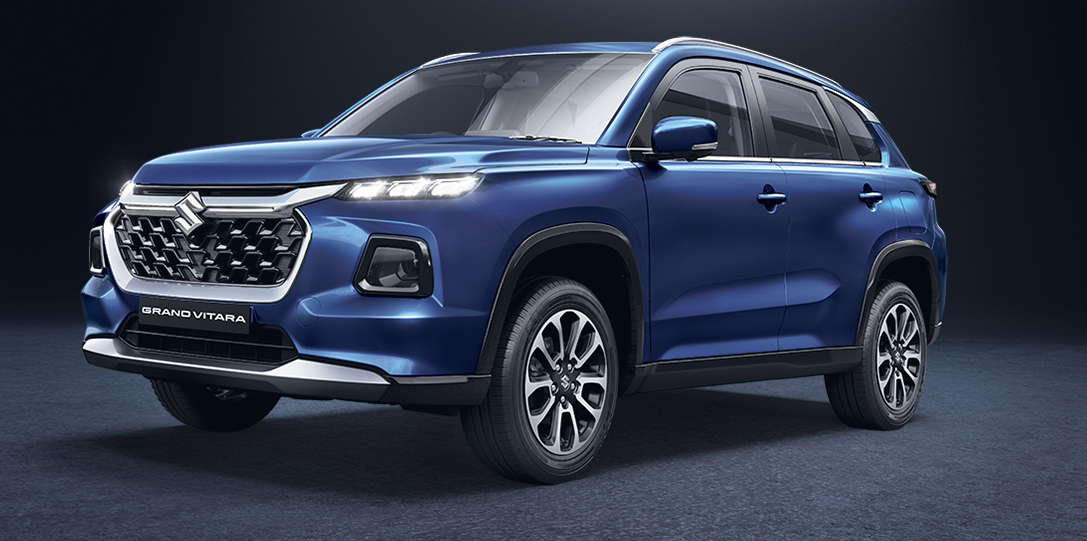
Export Launch & Markets
The export program kicked off in August 2025, with the first shipment — totaling over 2,900 units — dispatched from Pipavav Port in Gujarat to 12 European countries. The recipient nations include the United Kingdom, Germany, Norway, France, Denmark, Switzerland, the Netherlands, Sweden, Hungary, Iceland, Austria, and Belgium. Maruti labels this as part of its “Make in India, Make for the World” vision, positioning the Gujarat facility as the global production hub for the e Vitara.
Beyond Europe, Maruti also intends to export to over 100 countries, including Japan. For the Japanese market, the e Vitara is expected to go on sale in early 2026, while the domestic Indian launch is also slated around that time.
Model & Technical Highlights
The e Vitara is built on Suzuki’s all-new HEARTECT-e (or Heartect-e) electric vehicle platform. Battery options include:
- A 49 kWh pack (single motor / 2WD)
- A 61 kWh pack (with higher output, and a dual-motor / AWD variant).
In the dual-motor version (61 kWh), the combined output is claimed to be ~178 BHP (or ~300 Nm), delivering an all-wheel drive experience. Some media reports suggest the larger battery configuration promises over 500 km of range (under ideal conditions).
An interesting production-line note: currently, the e Vitara is being built on the same line as the Fronx at the Suzuki Motor Gujarat (SMG) facility — there is not yet a fully dedicated EV line. Plans are in place to invest ~₹3,200 crore to build a dedicated EV line by the end of fiscal 2025–26.
Strategic Significance
1. Global EV Ambition & “Make in India”
By achieving over 6,000 exports so soon after commencing shipments, Maruti aims to demonstrate India’s viability as a global EV manufacturing hub. The move supports India’s “Make in India” narrative — producing high-tech, globally competitive EVs on Indian soil. This could help India diversify its export basket beyond traditional autos, textiles, and software.
Moreover, Maruti’s parent (Suzuki) has outlined a large investment plan in India, reinforcing its long-term commitment to EVs from its Indian operations.
2. First EV Export & Learning Curve
Exporting an electric vehicle is more complex than a conventional internal combustion engine (ICE) one — especially considering regulatory differences, homologation norms, safety & emissions (or safety + EV standards) in varied markets, charging infrastructure compatibility, and after-sales support. Getting over 6,000 units out in two months suggests Maruti has cleared many of these initial hurdles.
It also offers a steep learning curve on logistics (especially battery transport and handling), quality assurance for climate and road conditions abroad, and supply chain robustness.
3. Signal to Competitors & Market Entry
Maruti’s entry into EV exports places it in direct competition with established EV players (e.g., Tesla, BYD, Hyundai, etc.) in export markets. In India, the e Vitara will compete with vehicles like the Hyundai Creta Electric, MG ZS EV, Tata Curvv EV, and others in the mid-size EV SUV space. By exporting early, Maruti aims to build international credibility and economies of scale, which could help it manage costs and positioning in domestic markets too.
4. Risks & Supply Constraints
The journey is not without challenges. Earlier in 2025, Maruti Suzuki reportedly cut its near-term e Vitara production target by two-thirds (from ~26,500 units to ~8,200 units for April to September) due to shortages in rare earth materials, crucial for EV motors and components (magnets, etc.). This underscores how global supply chain dependencies (especially from China) can threaten EV plans.
Thus, while the export numbers are heartening, scaling sustainably will require careful supply chain management, localizing more components (especially magnets, batteries, and semiconductors), and ensuring reliability in diverse markets.
Outlook & Forward Path
- Full-year ambitions: Maruti aims to produce ~67,000 e Vitara units in FY 2025-26, with a significant chunk earmarked for export markets.
- Domestic launch: The e Vitara is expected to reach Indian showrooms by early to mid-2026, giving Maruti a foothold in India’s burgeoning EV market.
- Infrastructure & service expansion: To support both domestic and export operations, Maruti is likely to ramp up charger rollout, expand EV-trained service centers, and invest in charging ecosystems. (While not always emphasized in news sources, such steps are typically integral to EV rollout strategy.)
- Localization & vertical integration: Over time, to reduce risks from raw material volatility and import dependence, Maruti/Suzuki may push for more local manufacturing or joint ventures in EV critical components.
Conclusion
Maruti Suzuki’s export of over 6,000 e Vitara electric SUVs in just two months is a bold statement — one of ambition, capability, and strategic urgency. It reflects India’s transition into becoming a serious player in the global EV supply chain.
However, the success of this move will hinge on how well Maruti navigates material supply constraints, maintains quality consistency, builds after-sales support globally, and scales production intelligently. If managed well, the e-Vitara could become a flagship for India’s EV aspirations, both at home and abroad.