
Here is an account of the incident and its wider implications:
What Happened at Munich
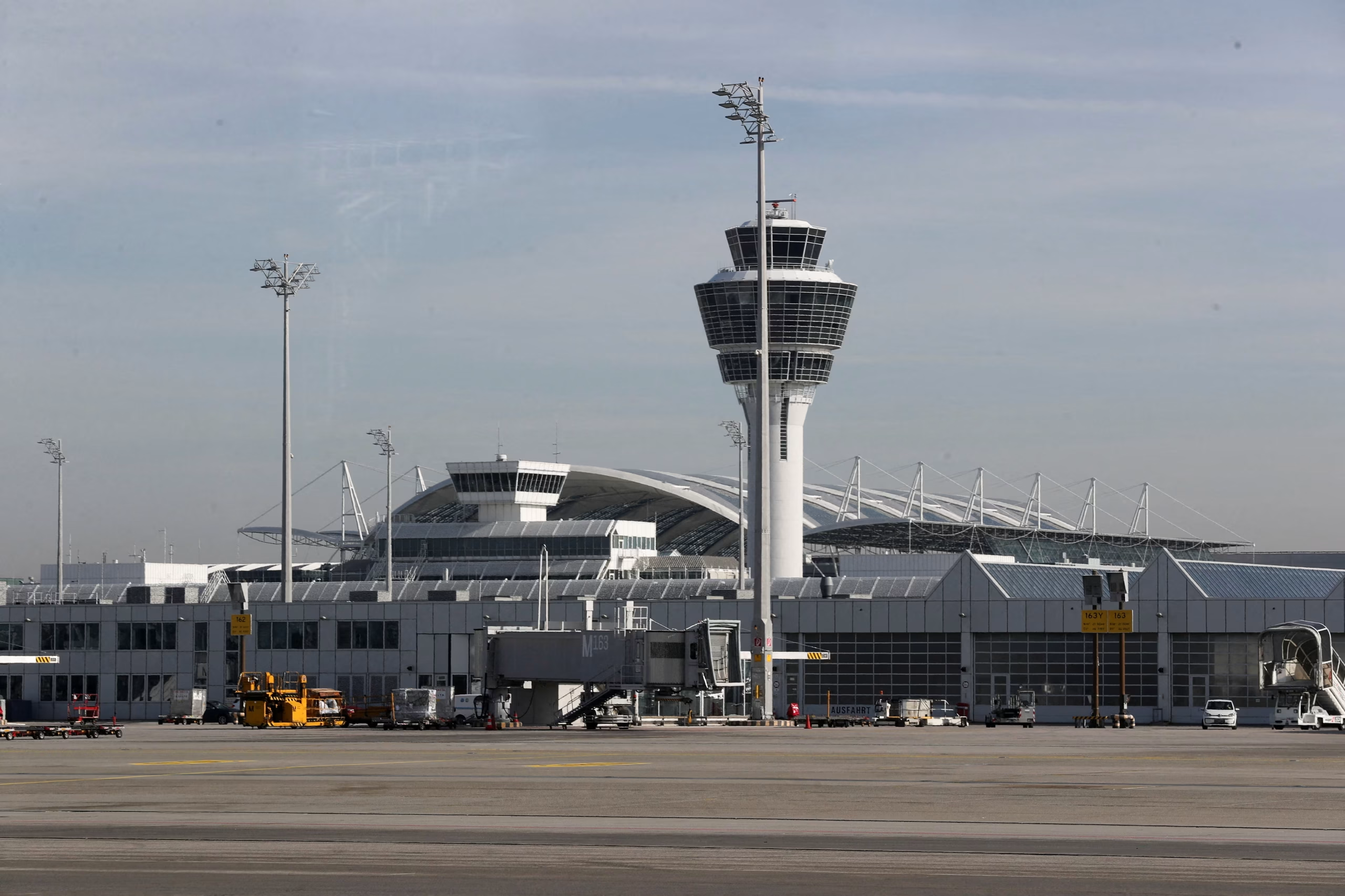
Late on the evening of October 2, 2025, German air traffic control (DFS) reported multiple drone sightings near Munich Airport. Beginning around 10:18 p.m. local time, flights were initially restricted, and soon operations were fully suspended for safety reasons.
In total, 17 flights destined to depart from Munich were grounded, affecting almost 3,000 passengers. Meanwhile, 15 arriving flights had to be diverted to other airports, including Stuttgart, Nuremberg, Vienna, and Frankfurt.
To care for stranded passengers during the overnight disruption, Munich Airport, in cooperation with airlines, distributed blankets, drinks, snacks, and arranged camp beds in terminal areas.
In the early hours of October 3, normal operations resumed. The first arriving aircraft landed around 5:25 a.m. local time.
Key Details & Response
- Because the sightings occurred at night, the drones could not be clearly characterized (e.g., size, type, or number).
- Law enforcement deployed helicopters to search the area, but no drones or perpetrators were immediately located.
- The Munich Airport press office emphasized that “when a drone is sighted, the safety of travellers is the top priority.”
- They also noted that detection and defense against drones fall under the responsibility of federal and state police authorities.
Broader Context & Significance
This incident in Munich is part of a spate of similar drone disruptions in European airspaces. In recent days, airports in Denmark and Norway have also faced temporary closures or flight restrictions due to unexplained drone intrusions.
These events have raised serious concerns about the safety and security of critical aviation infrastructure. In response, European Union leaders at a summit in Copenhagen voiced support for strengthening anti-drone defenses across the bloc.
Some European officials have speculated about possible links to Russian drone operations, citing recent airspace violations over Eastern Europe. However, no specific actor has claimed responsibility for the Munich incident, and Russia has denied involvement in similar events.
The Munich event also came during a tense period in the city: earlier in the week, Oktoberfest was temporarily shut down over a bomb threat, and explosives were found in a residential building.
Challenges & Takeaways
- Detection Limitations at Night
The inability to clearly identify the drones underscores the difficulty of surveillance and characterization in low-visibility conditions. - Civil Aviation Vulnerabilities
Airports are increasingly being seen as soft targets. Drones—small, mobile, and hard to track—pose new risks that traditional air defenses were not designed to address. - Coordination Among Agencies
Effective response requires tight coordination between air traffic control, airport operators, and law enforcement. The line between aviation safety and security enforcement is becoming more blurred. - Need for Drone Defence Systems
There is growing urgency to deploy counter-drone measures—like jamming systems, radar nets, or interceptors—particularly around key infrastructure. Some EU states are already exploring or investing in such technologies. - Geopolitical Implications
Repeated drone provocations over European skies carry geopolitical overtones. Whether state or non-state actors are involved, such actions heighten tensions and demand robust deterrence.