
If you love the unmistakable thunder of an AMG but assumed the eight-cylinder era was fading into a footnote, Mercedes-AMG has other plans.
Executives and recent reports indicate an all-new, electrified V8 that aims to produce a more intense sound than today’s engines while consuming less fuel and meeting stricter emissions standards. In 2025, that sounds like trying to have your Sachertorte and eat it—but the ingredients are finally there.
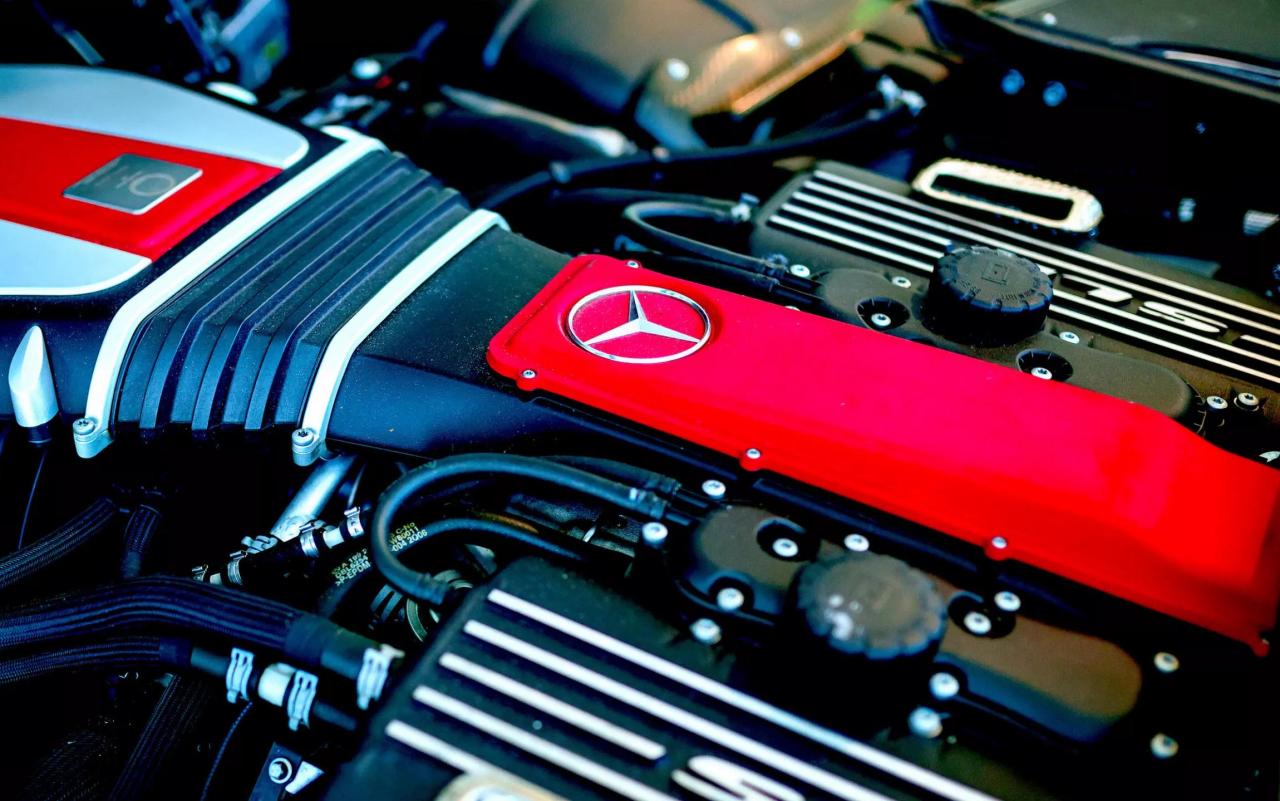
“Louder”: what AMG actually means
Start with the headline change: the next-gen AMG V8 is widely reported to adopt a flat-plane crankshaft, a configuration historically used in high-revving performance engines. Swapping from the traditional cross-plane crank should let the new V8 rev higher and respond faster, and crucially, it changes the character of the sound.
Expect a sharper, more urgent, “hard-edged” wail rather than the classic baritone rumble. That tonal shift—paired with freer-breathing exhaust valving at higher revs—can make the engine feel louder to human ears even if absolute decibels at regulated test points don’t increase.
It’s also important to note that exterior pass-by noise for new passenger cars in Europe is capped and getting stricter (down toward 68 dB(A) for most new types by the 2026 step). That means manufacturers can’t simply blast past legal noise limits; instead, they tune frequency content and sound events (think start-up flares and overrun textures) to boost perceived drama, while staying inside the decibel ceiling.
AMG has been doing this for years with exhaust flaps and the now-famous “Emotion Start” procedure that allows a higher, rowdier cold start when you hold a paddle on startup. Expect the new V8’s calibration to lean into these permissible tricks—within the law.
There’s another wrinkle: interior sound design. While this new V8 is the real thing, AMG is openly applying sophisticated audio strategies on its upcoming EVs to recreate V8-like feedback with deep bass and overrun burbles. That tells you how much the brand prioritizes emotional sound cues. The same philosophy—emphasizing the right frequencies at the right moments—will inform the next V8’s personality, too.
“More efficient”: the tech stack that makes it real
Where does the efficiency come from? Three big buckets:
- 48-volt mild hybridization (EQ Boost / ISG):
AMG’s modern powertrains increasingly integrate a compact electric motor (an Integrated Starter-Generator) between the engine and transmission. It fills torque holes, enables sailing/coasting, smooths stop-start transitions, and recovers energy—delivering a better real-world economy without dulling response. Mild hybrid support also lets engineers open the throttle earlier at leaner engine loads or keep the turbos spooled, so the V8 can feel more eager and use less fuel. Expect an evolved version of this on the next engine. - Smarter boosting (including e-turbo know-how):
AMG has already deployed electrically assisted turbochargers on other engines to quash lag by spinning the compressor electrically before exhaust energy arrives. Rolling that learning into a V8 lets the engine operate closer to efficiency sweet spots more often—meaning you can run taller gearing (lower rpm at cruise) without sacrificing instant response. That’s free MPG. - Friction and combustion optimization (plus cylinder deactivation):
The current M177/M178 family already brought hot-vee packaging, advanced direct injection, and—in some applications—cylinder deactivation that can shut down four cylinders under light loads. A clean-sheet successor built for Euro 7 will iterate on all of this with revised combustion chambers, low-friction internals, smarter thermal management, and more flexible cam control. The goal is a broader efficiency plateau without muting the car’s character.
Add it up and you get the paradox AMG is aiming for: more power with less fuel. That’s not marketing bravado; it’s what mild hybrid torque fill, electrified boosting, and high-rev mechanical efficiency do when tuned well. Multiple execs have said the power ceiling will climb beyond today’s benchmarks while emissions fall—exactly the brief for a next-gen V8 that must live through the late 2020s.
Where you’ll see (and hear) it
AMG is playing a dual-track strategy: EVs on the dedicated AMG.EA platform and electrified ICE flagships to satisfy customers who still want cylinders. Reporting suggests the new V8 architecture is being engineered to comply with tight regulations and remain in production “well into the next decade.”
In the near term, the CLE 63 is expected to bring V8 mild-hybrid power back to the mid-size two-door, signaling the shift away from the four-cylinder PHEV formula that struggled to win hearts. Looking a bit further, rumors persist of an AMG C63 reunion with eight cylinders mid-decade—clearly, Affalterbach hears the feedback.
Why a flat-plane crank changes the soundtrack
Beyond efficiency, the flat-plane switch is the single biggest reason many enthusiasts will perceive the next V8 as louder. Firing evenly left-right across the bank, a flat-plane crank alters exhaust pulse spacing and raises the natural frequency content—producing a sharper, more metallic treble that cuts through cabin insulation and outside noise.
Even if peak decibels at the EU pass-by test point remain inside the legal envelope, the higher-frequency energy and rev range make the engine sound more urgent, more motorsport, and yes, louder to your ears. AMG’s own GT Black Series showed how dramatic that tonal shift can be, and reports indicate the next engine will push this character while improving pedal response.
The compliance balancing act
How do you square all of this with real-world laws? By designing the soundtrack and flow around the certification windows. The EU’s staged R51 pass-by protocol caps external levels, but it doesn’t outlaw a charismatic start-up flare, pronounced overrun textures, or valved exhausts that open under certain loads and rpms—so long as the car meets its type-approval test.
Expect AMG to calibrate those “emotional moments” carefully and continue to use features like Emotion Start in markets where it’s permitted. That approach makes the car feel louder when you want it while remaining civilized (and legal) during standardized tests.
What it means for the brand
AMG has been candid that some customers didn’t warm to the four-cylinder plug-in rocket approach in the C63. The new V8 is, in part, a customer-led course correction—one that doesn’t abandon electrification but wields it to enhance the V8 rather than replace it.
At the same time, the brand is moving full speed on emotional EVs with convincingly V8-like soundscapes and even simulated shifts to maintain feel. In other words, the future AMG garage could include a silent-running, 1300-hp EV that sounds like an AMG V8 on command—and a real V8 that’s louder and thriftier than its forebears. Either way, the goal is the same: goosebumps.
Summary
The next Mercedes-AMG V8 isn’t about nostalgia—it’s about evolution. A flat-plane crank promises a fiercer, more present soundtrack; 48-volt mild hybridization, cylinder shutoff, and electrified boosting promise lower consumption and cleaner tailpipes; and tighter sound design keeps the drama where drivers actually notice it. If AMG delivers on these ingredients, “louder and more efficient” won’t be a contradiction at all—it’ll be the point.