
Here’s a detailed, in-depth look at the NHTSA’s investigation into 1.2 million Ram trucks for rollaway risk:
🔍 What’s Happening?
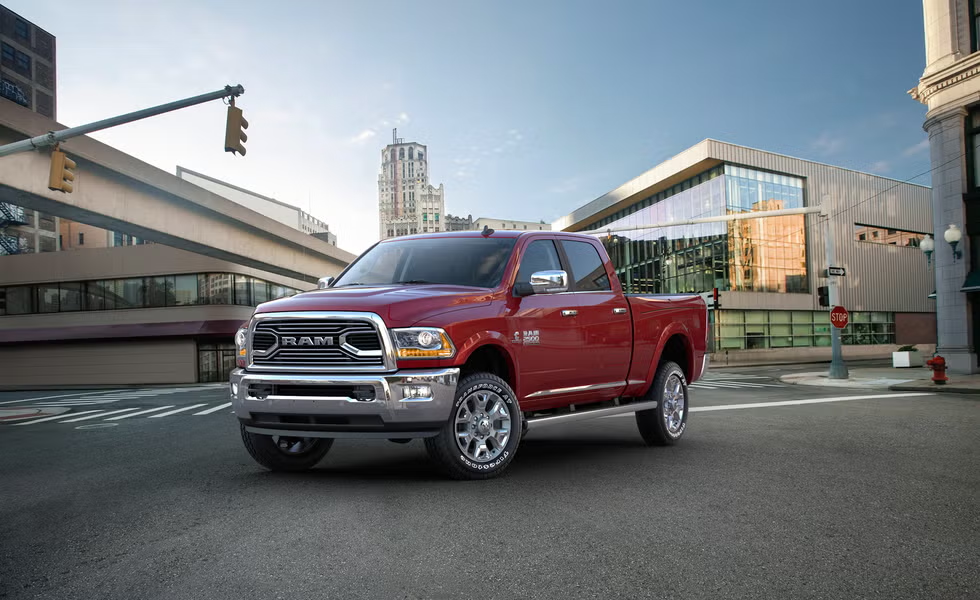
On July 7, 2025, the U.S. National Highway Traffic Safety Administration (NHTSA) announced it has opened a formal recall query into approximately 1.2 million Ram pickup trucks, primarily from the 2013–2018 model years, including Ram 1500 through 5500 models equipped with column-mounted shifters.
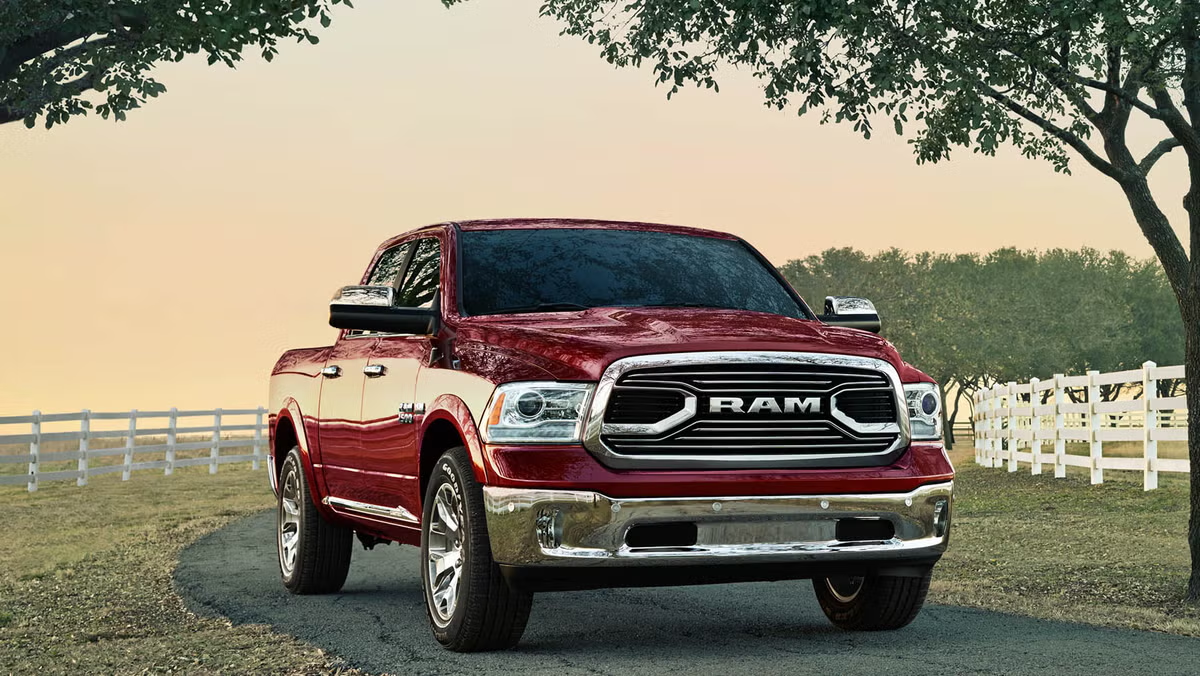
These vehicles were previously recalled under recall campaigns 17V‑821 (2017) and 18V‑100 (2018) to address a defect in the Brake Transmission Shift Interlock (BTSI) system, designed to prevent shifting out of “Park” unless the brake pedal is depressed (and, in some cases, the key is present).
In spite of previous fixes, NHTSA has received 14 Vehicle Owner Complaint (VOQ) submissions and 6 Early Warning Reporting (EWR) filings pointing to continued BTSI failure after recall repairs were performed. According to the agency, there have been seven reported injuries in six separate rollaway incidents, as well as 12 crashes or fires connected to this issue. While no fatalities have been confirmed, NHTSA is taking these reports seriously.
- Steps To Check Your EV Battery
- Gas Car vs. Electric Car
- Different Types of EV Batteries
- You Should Know About EV Batteries
- Best Affordable Electric Cars
- One-Pedal Driving in Honda Hybrid
- Types of Electric Cars
History of the BTSI Recalls
1. Recall 17V‑821 (2017)
This recall impacted over 1.48 million Ram trucks. The issue involved the BTSI solenoid overheating over prolonged periods, causing its housing to swell and grease inside to degrade, leading the locking pin to stick in an unlocked position. This allowed the vehicle to be taken out of “Park” without depressing the brake or without having the key in the ignition.
2. Recall 18V‑100 (2018)
Issued to address remaining trucks from later model years (2017–2018) not covered by the first recall. Essentially, the same BTSI solenoid issue prompted this recall.
Stellantis (formerly FCA US) addressed these recalls by replacing the solenoid and associated bracket, hoping this remedy would permanently correct the issue.
Why a New Investigation?
Despite these repairs, NHTSA’s continuing reports suggest that the BTSI issue persists in certain vehicles, raising serious concerns:
- Post-recall failures: The query highlights the 14 VOQs and 6 EWR reports, which included six crashes/fires and seven injuries, all occurring after the recall service was completed.
- Potentially faulty recall fix: NHTSA suspects that the replacement parts may not have addressed the root cause fully, or the fix itself may be defective.
- Evaluating remedy effectiveness: The agency’s Office of Defects Investigation (ODI) is now evaluating whether Stellantis’s remedy was adequate and effective, and whether additional or new corrective measures are needed.
Mechanics of the BTSI Defect
A closer look at the Brake Transmission Shift Interlock (BTSI):
- In column-shifter models, the BTSI includes a locking pin that engages in the shift column to block movement.
- When the solenoid overheats, the plastic housing and grease can swell or degrade, causing the locking pin to stick in the unlocked position, allowing the shifter to move without brakes applied, and even without the key in the ignition.
This defect is particularly dangerous since a heavy pickup truck (6,000–9,000 lbs) can roll away with significant momentum, potentially causing severe damage or injury, even at slow speeds.
NHTSA Recall Query: What It Means and What Comes Next
- Investigation Phase
- NHTSA will collect and analyze data to assess whether the existing remedies have failed or were insufficient.
- The agency may require Stellantis to provide repair and failure data, test fixes, and submit engineering studies to identify the underlying cause of failure.
- Decision Pending
- If the agency concludes that the remedy is faulty or the defect remains unaddressed, a new recall could be issued with an updated or improved repair.
- Owner Communication
- If additional repairs are required, impacted owners may receive notifications to bring their vehicles in for further corrective action.
As of now, however, there is no new recall—only an active investigative process.
What Owners Should Do Now
If you own a 2013–2018 Ram truck with a column-mounted shifter, here’s what you should do:
- If your truck has already received the recall repair, remain alert for unusual shifting behavior, such as moving out of Park without brake engagement or key presence.
- Report issues immediately to NHTSA via their website or VOQ hotline, detailing any post-recall failures.
- Schedule a dealership inspection if you notice any abnormal behavior, especially if the truck rolls away from the Park unexpectedly.
- Use your parking brake as a precaution until a permanent fix is confirmed.
Stellantis’s Response
In public statements, the automaker noted that:
- The company is working closely with regulators.
- All previous recall repairs are being honored, and they’ll participate in any further inspections or enhanced remedy programs.
Broader Implications For Vehicle Safety
This investigation raises several important industry-wide issues:
- Recalls must be effective
- A recall is only as good as its implementation. If the remedy doesn’t fully eliminate the defect, safety risks persist, potentially causing harm.
- Post‑recall oversight is essential
- The BTSI probe demonstrates that NHTSA actively monitors repairs even after recall completion, ensuring continued attention to safety outcomes.
- OEM accountability
- Manufacturers are held responsible not just for issuing recalls, but for ensuring those fixes remain reliable over time.
- Consumer vigilance matters
- Owners play a vital role by reporting issues and using safe practices (e.g., applying parking brakes) until permanent remedies are confirmed.
Summary & Outlook
In short:
- 1.2 million Ram trucks (2013–18), with column shifters, are under investigation for ongoing rollaway risk post-recall.
- Despite fixes under recalls 17V‑821 and 18V‑100, NHTSA reports 14 owner complaints, 6 injury incidents, 7 injuries, and 12 crashes/fires caused by shifting out of Park.
- NHTSA’s recall query will examine whether the recall remedy was effective or if a new, improved fix is necessary.
- Owners should verify their recall status, report any issues, and install consistent parking brake usage in the interim.
- If deficiencies are confirmed, a new recall could be issued and more robust repairs implemented, potentially involving redesign or enhanced BTSI components.
Why This Matters
This investigation stands as a compelling reminder that vehicle safety isn’t a one-time tick box; it demands continuous oversight. Especially when the failure involves a sudden rollaway of a heavy vehicle, the consequences are serious.
We’ll be monitoring NHTSA updates closely. If a new recall is issued—or if additional engineering findings are revealed—you’ll be the first to know.