
Nissan has quietly stepped back into the midsize-SUV ring: test mules of its long-rumoured C-segment SUV — the model aimed squarely at the Hyundai Creta, Kia Seltos, and the rest of the hotly contested segment — have been spotted on Indian roads again, and the company looks set to introduce the new model next year.
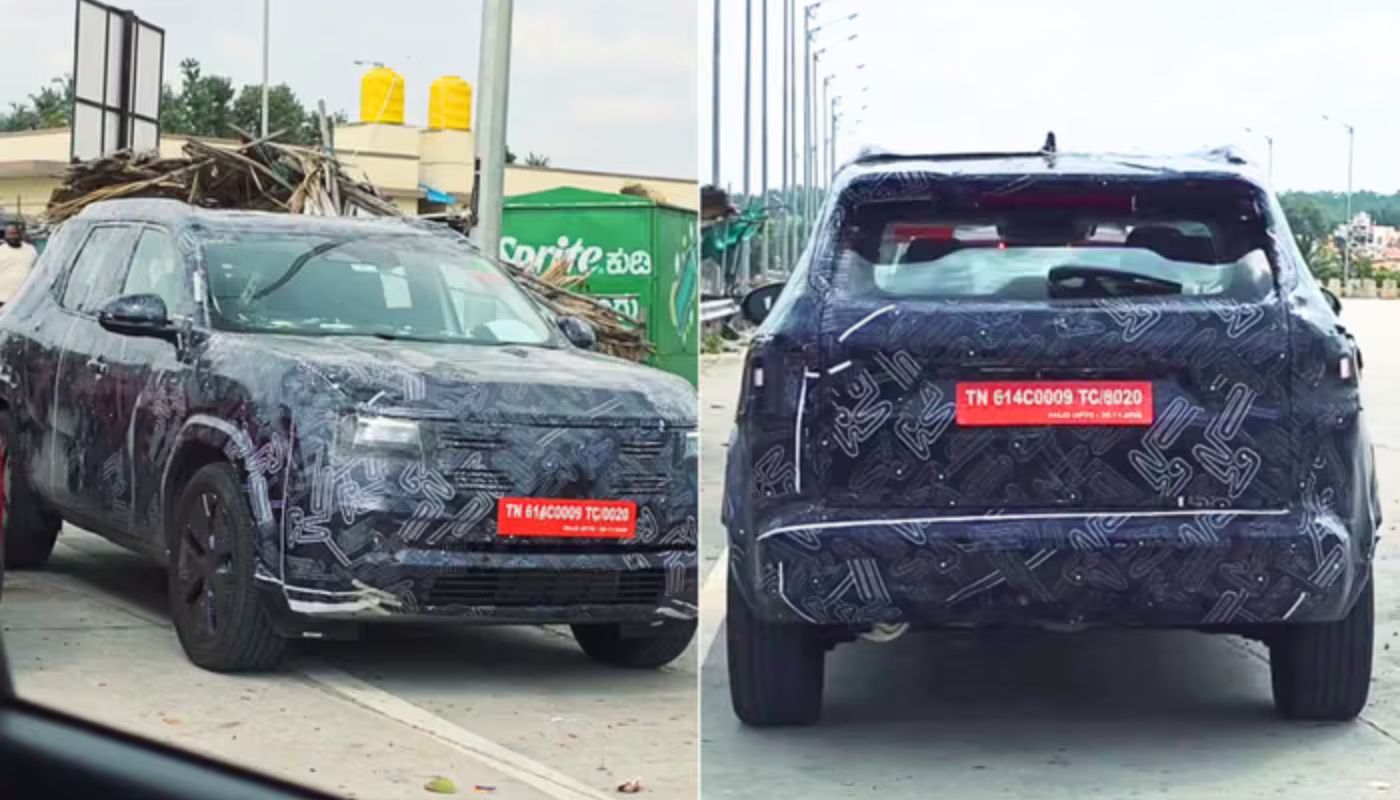
What the Spy Shots Show
The latest camouflaged prototypes reveal an upright, muscular stance with pronounced plastic wheel-arches, a sculpted bonnet, and a bold, centrally badged grille. Look closely and you can make out C-shaped elements in the bumper and a high, flat tailgate with rectangular tail-lamps and a roof spoiler — styling cues that echo earlier Nissan teasers. The overall silhouette hints at a production design that will balance ruggedness with mainstream appeal.
Inside details remain hidden behind heavy disguise, but several outlets expect the cabin to borrow heavily from the Renault side of the alliance — think familiar layouts, functional ergonomics, and a features list tuned for value rather than luxury. That’s consistent with Nissan positioning this car as a practical, mass-market rival rather than a premium niche player.
Underpinnings and Powertrain
Crucially, the new Nissan C-SUV is expected to ride on the same architecture that underpins the next-generation Renault Duster — part of the Renault-Nissan alliance’s plan to share platforms and lower development costs. That means Nissan can offer a well-sorted chassis with generous ground clearance and a range of powertrain choices without reinventing the wheel.
Early reports say Nissan will initially target petrol buyers, with possible petrol-turbo and naturally aspirated options in the line-up. Media speculation also points to CNG and hybrid variants being considered down the line — moves that would make sense for India, where fuel flexibility and efficiency are strong selling points.
Launch Timing and Product Plan
Multiple outlets place the launch window around mid-2026, after the Renault Duster’s India debut. Nissan’s India strategy seems to phase the rollout: a 5-seater C-SUV first, followed by a larger, seven-seat sibling (or a distinct seven-seater model) in the subsequent year to expand family-oriented appeal. If timelines hold, expect showroom floors to start seeing dealer promos and teasers through late 2025 and early 2026.
Why This Matters for Nissan
Nissan’s Indian lineup has been thin for a while — the Magnite is currently the mainstay — and the C-SUV is the brand’s best shot at reclaiming relevance in a segment that drives volume and margins.
A competitively priced, feature-rich crossover could give Nissan much-needed scale, while platform sharing with Renault should help keep costs in check. The follow-up seven-seater would further broaden the buyer pool, from young urban families to larger households.
What To Look Out For Next
- Official teasers and specs: Nissan has teased new SUVs in the past; an official design preview or showroom concept would confirm styling and interior direction.
- Powertrain line-up: watch for confirmation of turbo petrols, and any announcement on hybrids or factory-fitted CNG — these will significantly affect real-world running costs and appeal.
- Pricing and feature package: the Creta segment is highly feature-sensitive; ADAS, infotainment, and safety kit will be battlegrounds. Nissan must strike a smart value balance to compete.
Summary
The new Nissan C-SUV won’t be a stealth move — it’s a clear attempt to re-enter India’s most important midsize SUV category with a competitive, alliance-shared product.
The spy shots confirm progress, the platform link to the Renault Duster promises practicality, and the planned rollout through 2026 (with a larger, seven-seat follow-up after) signals a steady, staged comeback. If Nissan gets pricing, features, and fuel choices right, this Creta rival could shake up the segment — at the very least, it adds another strong contender to a market that loves SUVs.