
Here’s a detailed look at Ram / Stellantis officially cancelling its plans for the all-electric Ram 1500 “REV” pickup — what happened, why, what it means, and what’s coming next. If you want, I can also pull up some commentary from analysts or potential implications for consumers or the EV market.
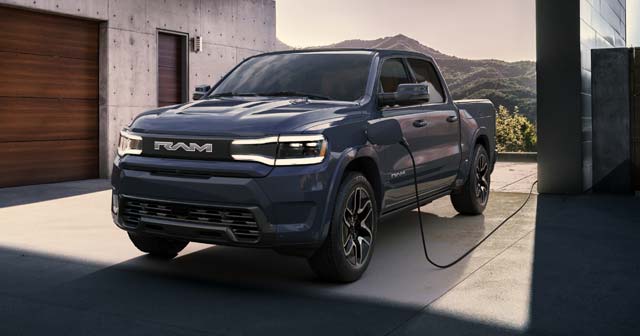
What was the EV Ram 1500 REV
- The Ram 1500 REV (Revolution Electric Vehicle) was to be Ram’s full-size battery-electric pickup. It was first teased in concept or earlier planning stages in 2021 during Stellantis’ EV Day, with the idea that Ram would produce a BEV (Battery Electric Vehicle) version of its popular Ram 1500.
- It was expected to compete with other full-size electric pickups in the U.S., e.g., Ford F-150 Lightning, Chevrolet Silverado EV, etc.
- Among planned features were large battery packs, high range, fast charging, and robust towing/payload capabilities. The platform behind it was the STLA Frame, which was intended to support multiple powertrain types (EV, ICE, hybrid, etc.).
What was the Timeline
- 2021: Stellantis announces development of an electrified Ram pickup, concept, and early planning.
- 2023: The concept is further demonstrated; RamREV/REV is presented as the all-electric pickup. Also, at that time, Ram unveiled (or started promoting) a hybrid / extended-range version named Ramcharger.
- Late 2023-2024: Delays begin. Ram pushed back the expected launch of the REV from 2024 to 2025, then to 2026. At the same time, development of some features was scaled back (e.g., the very long-range 500-mile battery version was canceled earlier).
- Early-mid 2025: More delays, shifting focus to the hybrid / range-extended pickup (Ramcharger). Stellantis was rethinking timelines and demand.
What Stellantis / Ram officially announced: Cancellation
- On September 12, 2025, Ram (Stellantis) confirmed that it is discontinuing development of the full-size battery-electric Ram 1500 REV pickup.
- The reason given is the slowing demand in North America for full-size BEV trucks.
- Along with cancelling the BEV version, Ram is reassigning the “REV” name to its plug-in hybrid / range-extended electric version (formerly called Ramcharger). The hybrid version will retain many pickup features (towing, etc.) and is now expected to go on sale sometime in 2026.
Why the cancellation — what factors led to this
From the publicly available reports and company statements, multiple interrelated factors seem to have led to this decision:
- Weakening demand for full-size BEV trucks.
Consumers have been cautious about battery-electric full-size pickups, especially regarding concerns like range under load (towing/hauling), charging infrastructure, price, and possibly resale value. Ram itself cited “slowing demand.” - High costs and technical challenges.
Building full-size electric trucks with enough battery capacity, robust towing and payload, good long-distance range, fast charging, etc., is expensive. Battery packs required are large; supporting infrastructure is needed. Some of the planned long-range versions were scaled back earlier. The long-range (≈500-mile) battery variant was cancelled earlier in 2025. - Strategic realignment/product priorities.
Stellantis seems to be reassessing its electrification roadmap. Instead of pushing ahead fully with a BEV truck that may have uncertain commercial success, they are pivoting toward hybrid / range-extended variants that may bridge between ICE and fully electric. This mixed approach may reduce risk and cost. - Delays and shifting timelines.
The REV’s launch date was already being postponed multiple times. Delays signal internal challenges (engineering, battery supply, cost, quality) and also reflect external market conditions (e.g., consumer acceptance, incentives). Eventually, continual delays lead to reassessment of whether it’s worth continuing. - Broader macro environment.
Electric vehicle incentives, regulatory pressures, competition, and market reaction all play a part. Also, when rivals don’t meet BEV truck sales expectations (e.g., F-150 Lightning, Rivian, etc.), it sends signals. Cost of batteries, supply chain bottlenecks, and consumer “range anxiety” or infrastructure concerns remain hurdles.
What Remains — The Hybrid / Range-Extended Version
- The plug-in hybrid / range-extended electric pickup, formerly known as Ramcharger, is still on track, now renamed to Ram 1500 REV (i.e., the name is reallocated).
- According to reports, this version will include a battery portion (≈92 kWh per some sources) plus a gasoline V6 engine acting as a generator/extender, giving a very large total range (battery + fuel) likely in the 600-700+ mile range depending on mix.
- The hybrid version addresses some of the concerns that full BEVs have: less dependency on public charging, better “backup” range via gasoline, possibly lower costs or less strain on battery supply, and potentially less risk for both manufacturer and buyer.
Implications
Here are some of the implications and consequences of this decision:
- For Ram / Stellantis
- Cost savings: Avoid continuing investment in a product that may not produce a sufficient return given market conditions.
- Risk mitigation: Reduces exposure to potential gaps between expectations (battery, performance, customer acceptance) and actual results.
- Brand Direction: Ram is emphasizing hybrid / ICE plus range-extender options, possibly delaying full electrification for its core trucks.
- For competitors
- This move may reinforce caution among other automakers considering launching or expanding BEV full-size pickup lines. If major players start seeing weak returns, fewer newcomers may enter, or existing ones may revise their plans.
- On the other hand, companies that have already committed and have strong EV infrastructure or strong customer acceptance may benefit from having less competition.
- For consumers
- Buyers who were excited about the full BEV Ram 1500 will be disappointed. Some were waiting for specifications and pricing. That plan is off.
- However, the hybrid / range-extended model may offer many of the benefits of electrification (EV mode, lower emissions, etc.) without as much anxiety about range or charging.
- Total cost of ownership, charging availability, infrastructure, etc., remain very relevant concerns.
- For the EV market/policy environment
- This cancellation underscores that EV adoption is not only about regulatory mandates or automaker announcements, but also heavily dependent on consumer behaviour, charging infrastructure, cost, and real-world use-cases (like towing heavy loads).
- Government incentives or policies may need to address these remaining gaps, especially for larger vehicles (charging infrastructure, battery cost, etc.).
- If more automakers scale back ambitious EV plans, it could slow down growth in certain segments.
Critique / Potential Risks or Downsides of the Cancellation
- Loss of technological leadership / competitive edge: Being among the first big names to successfully market BEV full-size trucks could yield advantages. By pulling back, Ram may cede ground to competitors who persist.
- Brand perception: Some consumers may view this as backpedalling on electrification promises. With many automakers (including Ram’s rivals) continuing with BEVs, there could be reputational risk.
- Regulatory risks: As emissions standards tighten, automakers are under pressure to electrify. Having fewer full BEVs might make compliance harder or require compensatory strategies.
- Future trends could shift: Battery tech, cost, and infrastructure all continue improving. What’s unprofitable or marginal today could become viable soon. If Ram has halted its BEV program, ramping it back up later may cost more or require catching up.
Broader Trends & Context
- Ram’s move is part of a wider trend among automakers, some of whom are revising EV plans. Slower adoption in heavy-duty/full-size segments, concerns over battery cost, infrastructure limits, and tougher ROI have made some EV projects riskier.
- Hybrid, Plug-in Hybrid (PHEV), and Range-Extended Electric Vehicles (REEV) are being seen by manufacturers as intermediate steps: lower risk, better alignment with existing infrastructure and consumer mindset. Ram opting to push the hybrid version is consistent with that.
- There are also policy/incentive changes. Some of the federal EV incentives, emissions regulations, etc., are in flux (or being scaled back) in various jurisdictions. That affects the business case.
What to Watch Going Forward
If you are following this story, here are things that could happen next or that are worth keeping an eye on:
- Specifications and pricing of the hybrid/ range-extended Ram 1500 REV: What electric-only range, what total range (with gas), towing/payload, cost premium vs ICE model? If the hybrid version is priced too high, many customers might still prefer ICE or aftermarket solutions.
- Charging infrastructure and public acceptance: How well can Ram support customers with charging, service, etc., especially given that the hybrid model still needs EV infrastructure?
- Competitor response: Do Ford, GM, and others intensify their BEV truck offerings, or do they adjust similarly?
- Policy & incentives: Will government policy shift to encourage BEV trucks more (e.g., incentives, tax credits, infrastructure subsidies)? Or will policy become more lenient toward hybrids / PHEVs?
- Technology developments: Battery cost declines, improvements in energy density, fast charging tech, etc., could make BEV trucks more viable sooner than predicted. If that happens, firms that have dropped BEV plans may feel pressure to re-enter.
Conclusion
Ram / Stellantis’ decision to cancel the full battery‐electric Ram 1500 REV pickup reflects a recalibration in response to market realities. While electrification remains central to many automakers’ strategies, this case shows that moving completely to BEVs, especially in heavy-duty or full-size trucks, is not guaranteed or risk-free.
Ram is shifting its focus to a hybrid/ range-extended electric model (taking over the “REV” name) to try to strike a balance between electric technology and consumer demand, range, infrastructure, and cost constraints.