
Renault India has taken a customer-friendly step by passing on the full benefits of the new “GST 2.0” tax reform to car buyers. Effective for deliveries from September 22, 2025—coinciding with the Navratri festival—the French automaker has announced price reductions of up to ₹96,395 across its model range.
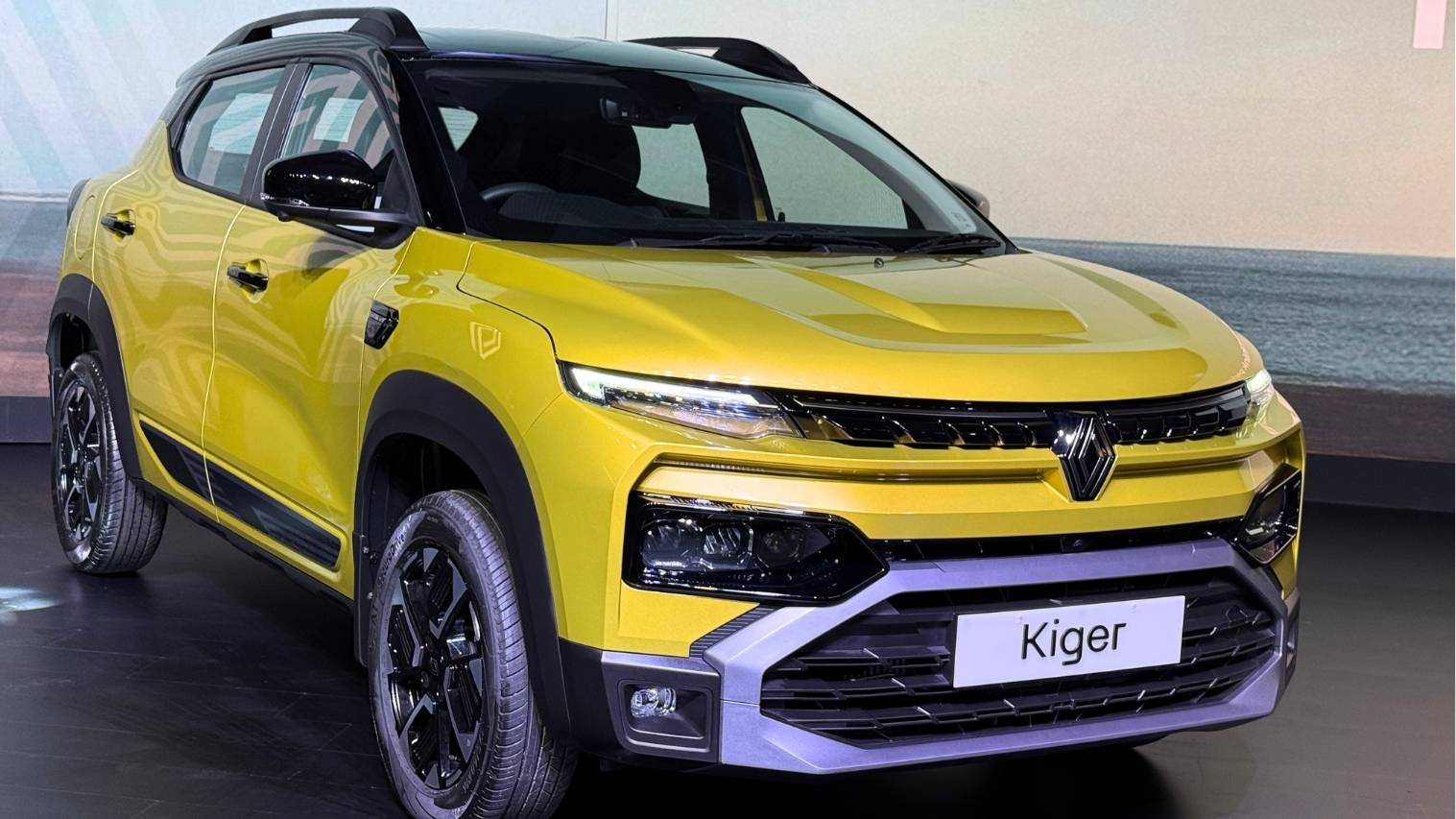
Three of Renault’s prominent India models—Kwid, Triber, and Kiger—are part of this initiative. Post-reduction, the Kwid now starts at ₹4.29 lakh, while both the Triber and Kiger begin at ₹5.76 lakh (ex-showroom).

Breakdown of Price Cuts by Model
Renault has applied varied reductions across different variants:
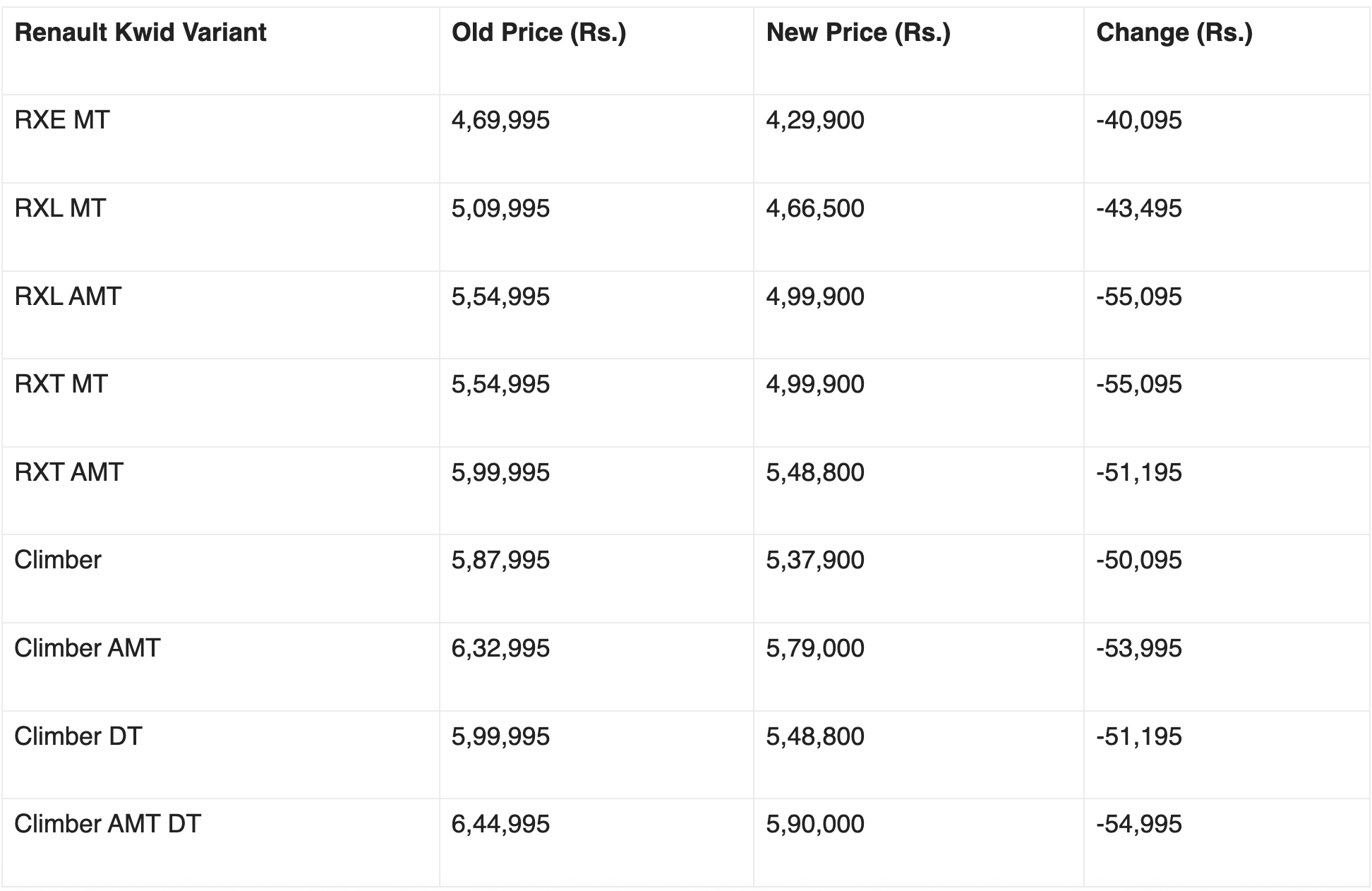
- Kwid: ₹40,095 to ₹55,095 off, depending on variant.
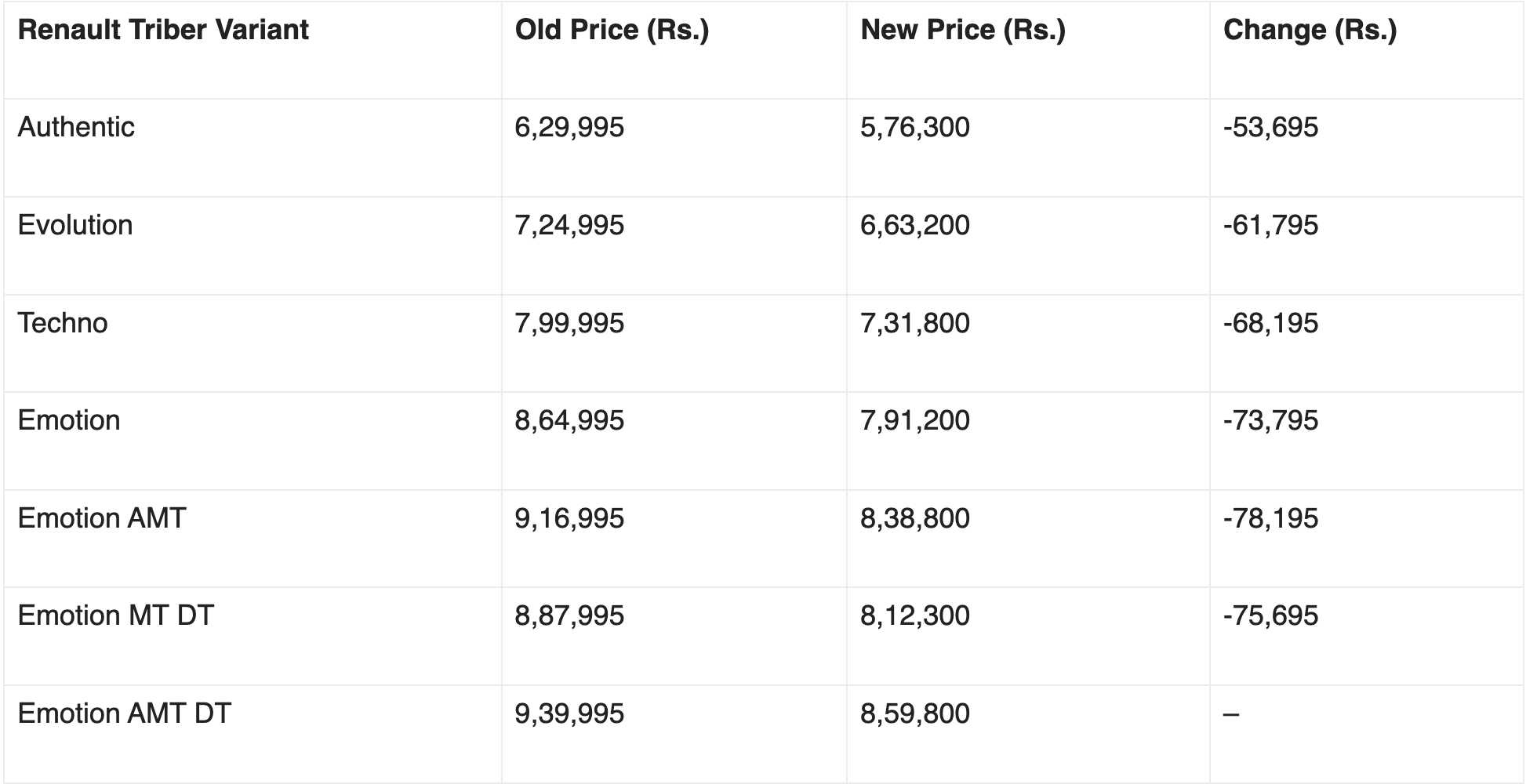
- Triber: Price slashed by ₹53,695 to ₹80,195 for select trims.
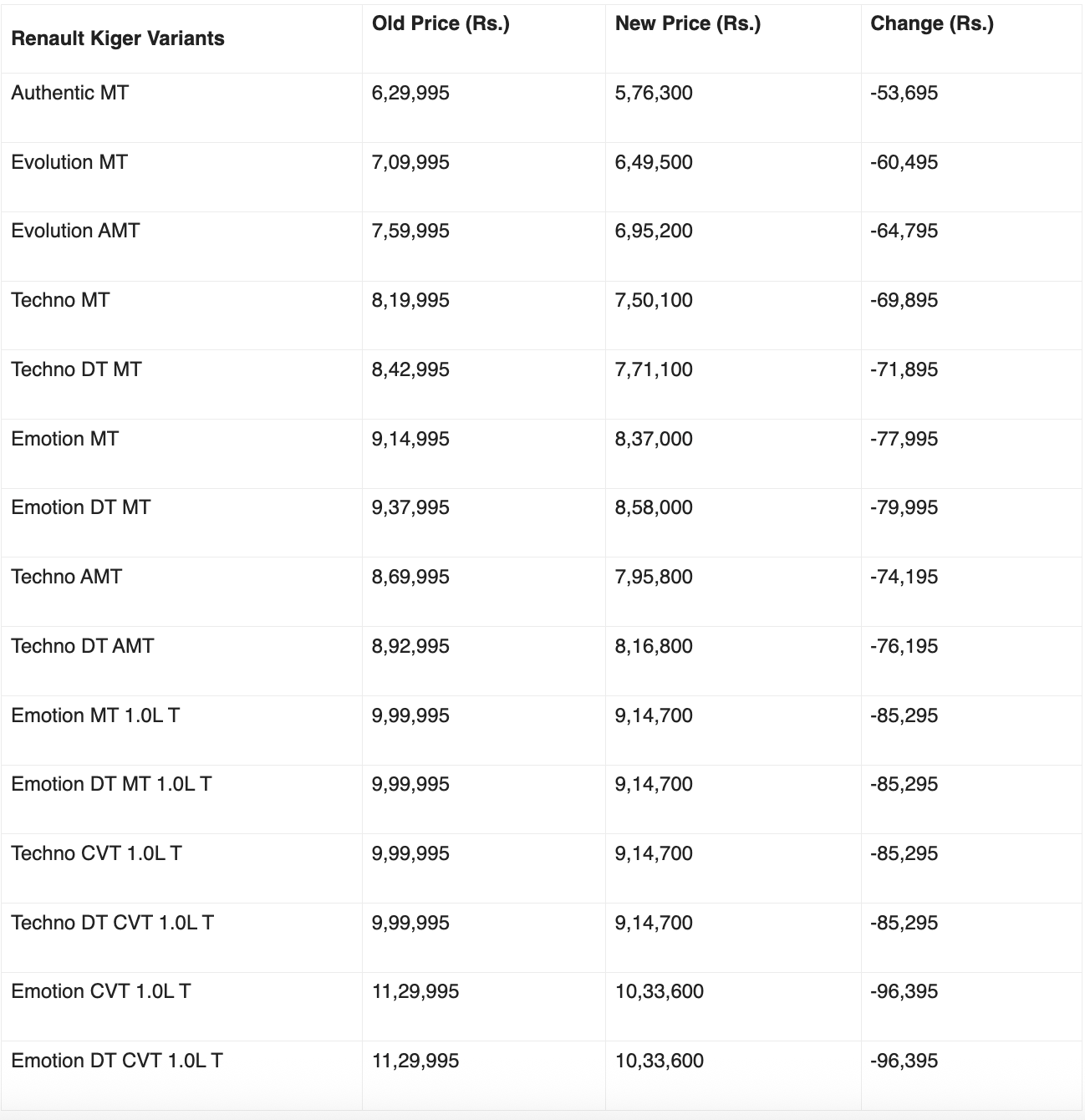
- Kiger: The headline acts star here—with price cuts peaking at ₹96,395 on select variants.
What Is GST 2.0 and Why This Matters
The government’s GST overhaul—termed “GST 2.0″—has made sweeping changes to auto taxation:
- Simplification of slabs: Internal combustion engine (ICE) cars are now placed into two GST slabs: 18% (for smaller hatchbacks/compact SUVs) and 40% (for larger/mid-size vehicles)
- Removal of compensation cess: Previously, cars bore a layered tax structure—28% GST plus a compensation cess of up to 22%, leading to tax burdens approaching 50%. The new system eliminates that cess.
- Impact on Renault: All Renault petrol models fall under the 18% slab, translating to significantly reduced tax incidence and enabling steep price cuts.
Buying Timeline & Festival Timing
- Bookings: Customers can book Renault cars at these new attractive prices immediately at all authorized dealerships.
- Delivery Start Date: Revised pricing will apply to all deliveries beginning September 22, landmarked by Navratri, a peak festive period favorable for new vehicle purchases.
Strategic Benefits for Renault & Consumers
- Festive Demand Surge
Navratri and the ongoing festival season are traditionally a high-sales window for automobiles. Lower ex-showroom prices could catalyze demand and footfall at showrooms. - Competitive Product Positioning
With this price advantage, Renault’s Kwid, Triber, and Kiger become highly compelling options in their segments—particularly against rivals within similar price ranges. - Brand Perception & Customer Trust
By committing to pass on the full tax benefit, Renault signals transparency and customer commitment—something that can bolster brand standing in a price-sensitive market. - Production & Distribution Readiness
Renault’s Chennai facility, which boasts a 480,000-unit annual capacity, along with a robust retail and service network (over 430 sales outlets, 490 service centres, and 250 mobile “Workshop on Wheels” units), ensures that it’s well-placed to handle any uptick in demand.

Wider Industry Context
This isn’t an isolated initiative—others like Tata Motors are doing similarly:
- Tata Motors has also passed on full GST 2.0 benefits, delivering price cuts of ₹65,000 to ₹1.55 lakh across its passenger vehicle range.
The overarching GST reforms have made smaller cars notably more affordable, while larger and luxury cars, despite being shifted to 40% GST, still benefit from the cess removal—resulting in net tax relief of roughly 8–10%.
Summary
Renault’s move to wave down prices by up to ₹96,395 reflects a “GST 2.0 dividend” directed straight to car buyers. With the new tax rules and removal of cess, the cost structure for smaller ICE cars has dropped significantly—making key Renault models more accessible at a time when buyers are most eager (festive season). This strategic initiative is anchored in strong production capabilities, a wide service and sales network, and aligns with the company’s customer-centric design.
Looking ahead, the competitive pull may force other automakers to follow suit, potentially reshaping India’s festive auto-sales season into a more value-driven marketplace.