

San Mateo Electric Bus Charging Stations County just took a big, practical step toward cleaner transit. The package includes new depot chargers, overhead pantograph dispensers, and major electrical and communications upgrades centered at the agency’s South Base operations and maintenance facility in San Carlos.
This first buildout will directly support the battery-electric buses operating out of South Base and lay the groundwork to expand charging capacity substantially in the years ahead.
What Exactly was Approved?
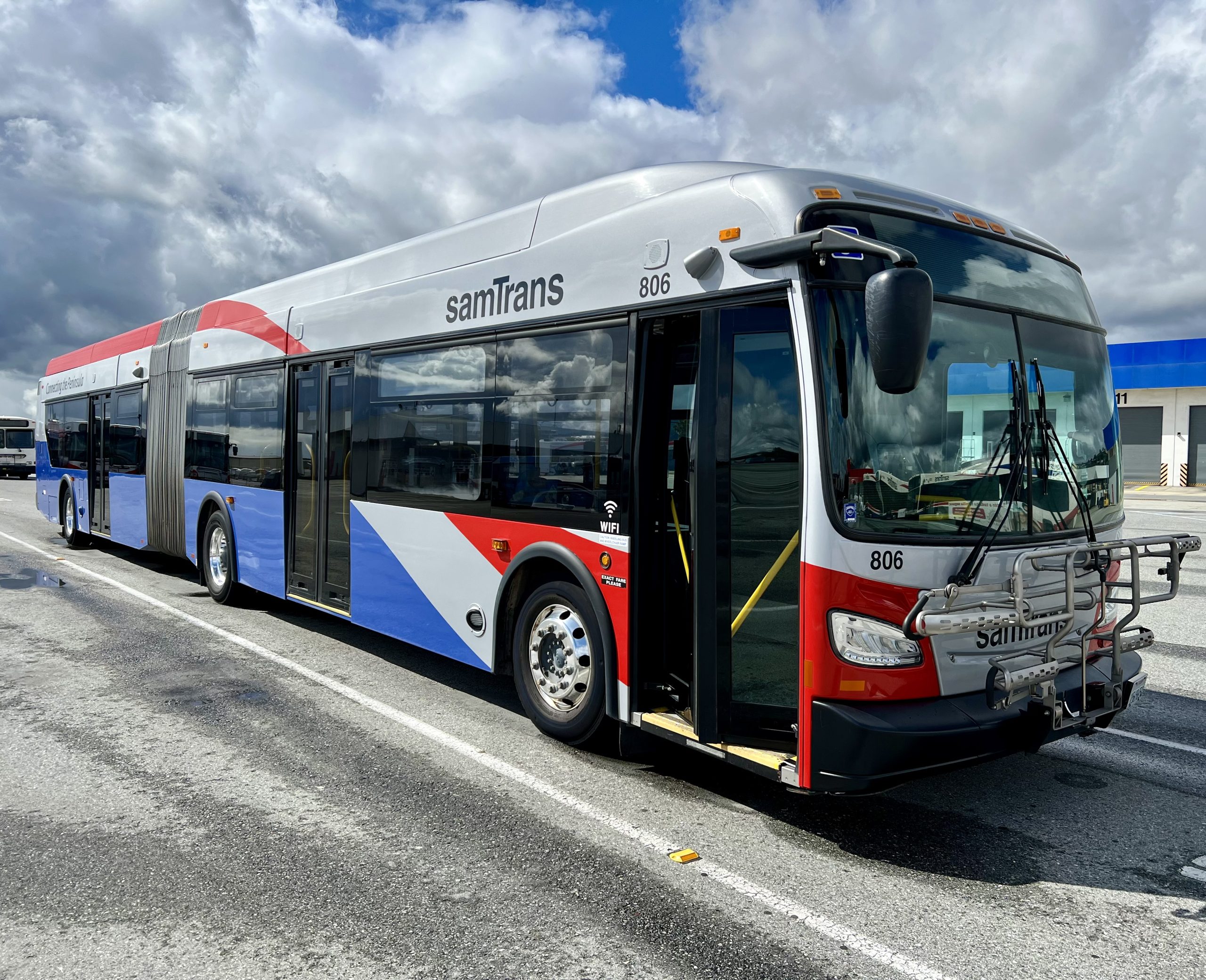
According to SamTrans, the Board authorized a comprehensive charging project—delivered with Clark Construction Group—that will power the agency’s current 37 battery-electric buses at South Base and prepare the site to support up to 110 additional zero-emission vehicles in the future. Overhead pantograph dispensers (the “mast-over-bus” style chargers used for quick, reliable charging) are part of the plan, along with upgrades to site power, communications, and yard systems needed to operate and manage a large electric fleet.
The broader program vision is even bigger. Coverage in the trade press notes that the buildout aims to accommodate nearly 150 buses when finished, positioning SamTrans for deeper electrification across its network.
Where is this happening?
Phase one centers on South Base in San Carlos, one of SamTrans’ primary depots. Local reporting highlights that this facility will receive the first wave of infrastructure upgrades under the new contract. It’s a logical starting point: South Base already hosts SamTrans’ initial battery-electric buses and has seen preparatory electrical work in recent years.
Why now?
Electrification isn’t a nice-to-have; it’s a requirement on the horizon. California’s Innovative Clean Transit (ICT) regulation requires agencies to transition to 100% zero-emission bus fleets by 2040. SamTrans’s ICT Rollout Plan maps out how the district will phase in vehicles and infrastructure to meet that mandate. The newly approved charging project is an on-the-ground step that accelerates that plan.
How Does This fit with SamTrans’s overall Zero-Emission Strategy?
SamTrans brands its decarbonization journey as “Emission Zero.” The program spans vehicles, facilities, workforce training, and operations. The agency has communicated that electrification will take years and significant investment—more than $600 million across vehicles and infrastructure—so it’s designing projects that scale. This charger buildout is a foundational piece that allows the fleet to grow while keeping operations predictable and reliable for riders.
It’s also worth noting that SamTrans is taking a portfolio approach to zero-emission technologies. Alongside battery-electric buses (BEBs), the district is moving forward with hydrogen fuel cell electric buses (FCEBs) and a permanent hydrogen fueling station, especially for longer-distance or higher-duty routes. Batteries handle some use cases well; hydrogen may be a better fit for others. The new electric chargers and the hydrogen program are complementary—not either/or.
What about the Power and Electrical Backbone?
Depot charging is as much an electrical engineering project as it is about plugs and dispensers. SamTrans’s energy procurement strategy already emphasizes sourcing 100% greenhouse-gas-free, renewable electricity via Peninsula Clean Energy, and it plans phased infrastructure upgrades to handle growing load as more buses plug in.
Prior site work at South Base has included heavier switchgear and yard distribution improvements to support BEB charging, illustrating the kind of behind-the-scenes upgrades that make large-scale charging practical.
Community and Rider Benefits
For the community, the project cuts localized air pollution and makes progress on regional climate goals, while keeping transit service consistent during the buildout. Press coverage underscores that the investment focuses on reliability and scalability, so SamTrans can add more electric buses without disrupting service.
Frequently Asked Questions (FAQs)
1) What was officially approved?
A $36.3 million design-and-build agreement to expand electric bus charging at SamTrans’ South Base in San Carlos. The scope includes high-capacity chargers, overhead pantograph dispensers, and major electrical/communications upgrades to support current and future electric buses.
2) How many buses will this support?
Immediately, the project powers 37 battery-electric buses operating from South Base. The site upgrades are engineered to scale for up to 110 additional zero-emission vehicles over time, with industry coverage suggesting capacity for nearly 150 buses as the full plan builds out.
3) Who’s delivering the project?
SamTrans selected Clark Construction Group to execute the charging buildout at South Base.
4) What types of chargers will be installed?
The plan includes depot chargers for overnight/layover charging and overhead pantograph dispensers—the roof-mounted interface that allows fast, hands-off charging. Specific power ratings and vendor lists weren’t detailed in the approval notice; however, SamTrans has previously procured depot chargers (including ABB 150 kW units) as part of earlier BEB deployments, so expect similarly high-power hardware designed for heavy-duty transit operations.
5) Are these chargers open to the public?
No. These are depot chargers located inside SamTrans’s operating facility, used exclusively for transit fleet operations—not public access. Facility location and scope make them operational infrastructure, not public charging stations.
6) How does this relate to the state’s zero-emission bus rule?
California’s ICT regulation mandates a full transition to zero-emission bus fleets by 2040. SamTrans’s ICT Rollout Plan outlines the fleet mix, timeline, and facilities work required. This South Base project is a key step to meet those regulatory milestones.
7) Will there be service impacts during construction?
SamTrans has not announced specific service disruptions. Depot-centric construction is typically phased to minimize operational impact (e.g., staging work away from active lanes, scheduling around pull-in/pull-out windows). News coverage frames the effort as enabling a reliable, scalable electric operation rather than constraining it.
8) How is the project powered sustainably?
SamTrans already purchases 100% GHG-free, renewable electricity through Peninsula Clean Energy for operations, an important foundation for making bus electrification truly low-carbon. As chargers come online, that clean power procurement strategy helps maximize emissions benefits.
9) Is SamTrans only doing battery-electric buses?
No. SamTrans is also investing in hydrogen fuel cell buses and infrastructure. The district recently advanced a plan for a permanent hydrogen fueling station, expanding its zero-emission toolkit for different route profiles and duty cycles.
10) What’s the timeline?
The Board’s approval is recent. While SamTrans’ announcement doesn’t list a full construction calendar, procurement and site prep typically start quickly after approval, with charger commissioning following staged yard and power upgrades.
11) How does this affect riders’ day-to-day?
Riders should see quieter, modern buses on routes served from South Base as the fleet grows. Over time, expanded charging capacity supports more zero-emission service hours, better yard reliability, and potentially lower operating noise in neighborhoods near bus corridors.
12) Where can I read the official details?
Start with SamTrans’ project announcement, then check local and industry coverage for context and scale figures: Mass Transit Magazine, SFGATE, Electrive, and local outlets like Redwood City Pulse.
Summary
San Mateo County is moving from plans to concrete: real chargers, real yard upgrades, and a clear runway to scale. With the South Base project approved, SamTrans is locking in the electrical and operational backbone it needs to put more zero-emission buses on the road—cleaner air for Peninsula communities, and a sturdier path to California’s 2040 goal.