
On September 11, 2025, multiple outlets confirmed that Suzuki Motorcycle India has discontinued the Katana from its domestic lineup, quietly pulling the litre-class neo-retro from its website and showrooms.
The move ends a short, roughly three-year run for a motorcycle that blended 1980s-inspired styling with modern engineering—and it subtly reshapes Suzuki’s big-bike portfolio in the country.
A Brief Run, a Distinct Identity
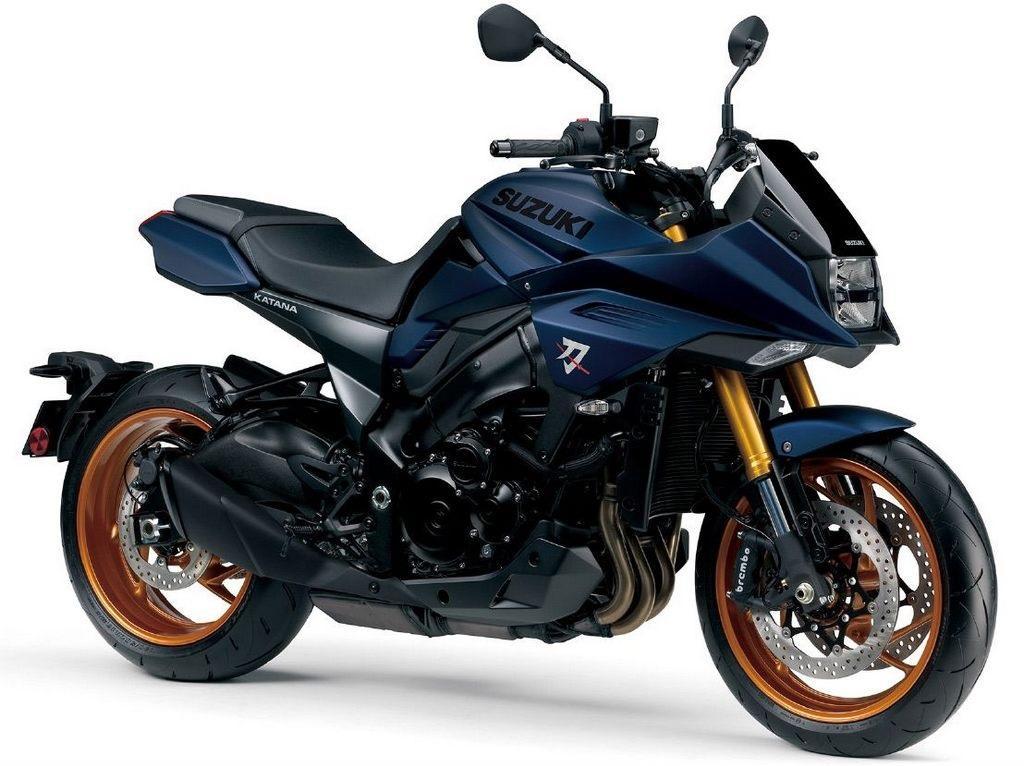
The Katana returned to global markets in 2019 as a modern homage to Suzuki’s iconic early-’80s original, but it only arrived in India in 2022. Here, it positioned itself as a premium, niche alternative to conventional litre-class nakeds, combining sharp “bikini-fairing” lines with a muscular stance.
Priced at about ₹13.6 lakh (ex-showroom), it sat on the expensive end of the neo-retro spectrum for a four-cylinder Japanese naked, a factor that reportedly didn’t help it gain traction in a price-sensitive market. Beneath the retro suit, the Katana carried a proven heart: a 999cc inline-four derived from the famed “K5” GSX-R1000 architecture.
In Indian spec, it developed around 152 hp and 106 Nm, paired with modern electronics like ride-by-wire, multiple riding modes, and traction control—ingredients that made it properly quick while preserving a classic feel. Reviewers consistently praised its engine character and road manners, even as they noted compromises like a relatively small fuel tank.
Confirmation and Context
The discontinuation has been described as “silent”—no splashy press note—signaled instead by the model’s disappearance from official listings and corroborated by industry reports. Some publications also note that with the Katana gone, the Hayabusa now stands as Suzuki’s only four-cylinder big bike officially sold in India, underscoring how slim the brand’s large-capacity lineup has become.
This isn’t the first time Suzuki has pared back high-capacity offerings in India. Earlier shake-ups (notably around emissions transitions) saw several large models dropped rather than updated immediately, often citing limited sales as a deterrent to rapid compliance re-engineering. While that earlier context dates back years, it is a reminder that volume realities and regulatory costs routinely influence which halo products stay or go.
Why the Katana struggled
Several converging factors likely led to the Katana’s low sales and eventual exit:
- Pricing versus perceived value: At roughly ₹13.6 lakh ex-showroom, the Katana sat awkwardly among litre-class nakeds and sport-standards. While the spec sheet justified much of the cost, buyers comparing on-paper outputs and features may have found more aggressive value propositions elsewhere—or simply stretched to full-fat superbikes.
- Niche positioning: The Katana’s appeal is intentionally stylistic and heritage-driven. Its target buyer loves the aesthetic and the story as much as the numbers. That’s a smaller audience than the mainstream litre-naked segment, which can dilute showroom momentum in a market where brand-agnostic, spec-chasing decisions are common.
- Market headwinds for four-cyl street bikes: The broader Indian premium market has leaned toward parallel-twin middleweights and value-dense 700–900 cc offerings that deliver usable performance, lower running costs, and easier ownership. Four-cylinder litre-class machines, while thrilling, carry higher acquisition and upkeep costs—narrowing the audience further. (This is also reflected in Suzuki’s current large-capacity focus around the Hayabusa as a singular flagship.)
- Regulatory cadence and model strategy: Keeping a low-volume four-cylinder model updated through evolving emissions and OBD-phase norms demands investment. Suzuki India has spent 2025 consolidating its OBD-2B-compliant mass-market portfolio and launching strategic mid-segment models (like the GSX-8R), suggesting a resource focus away from a niche halo naked.
What Owners and Seekers Should Know
Existing Katana owners should not be alarmed by the model’s exit from showrooms. Suzuki and its dealer network remain obligated to support parts supply and service for reasonable periods. Moreover, the Katana’s engine and many core components share lineage with the GSX-R1000 K5/K6 and the GSX-S platform, which tends to aid long-term parts availability versus truly exotic hardware. (That said, bodywork and model-specific trim are always more specialized.)
Prospective buyers who had the Katana on their shortlist may still find unsold or demo stock at select dealerships for a limited time; pricing and availability will vary. Pre-owned examples will likely become the primary path, and the bike’s niche status could translate to softer used prices than mainstream litre-nakeds—an opportunity for enthusiasts who specifically wanted the Katana’s retro-modern recipe. (Check with local dealers and credible classifieds; official listings no longer show the model.)
Alternatives Within and Beyond Suzuki
With the Katana gone, Suzuki’s in-showroom four-cylinder choice narrows to the Hayabusa, a very different proposition—heavier, far more powerful, and significantly pricier. If you were drawn to the Katana’s upright ergonomics and street-friendly character, the ‘Busa won’t play the same role.
Outside Suzuki, buyers seeking a similar neo-retro + four-cyl vibe will have to look carefully; genuine four-cylinder nakeds are thinning out or priced high. In practice, many Indian buyers cross-shop modern twins that deliver real-world pace with lower ownership overheads.
That broader shift partly explains why models like the Katana—high on character, but niche in appeal—face a tougher runway here. (Model-by-model alternatives change often; verify current availability and pricing locally.)
Legacy and Enthusiasts’ View
It’s worth remembering why the Katana inspires such affection. The nameplate evokes a design revolution from the early ’80s, and the modern bike carried that torch with distinctive lines that stood apart from wind-tunnel-driven homogeneity.
On the move, the K5-derived mill’s linear shove, the balanced chassis, and approachable ergonomics delivered classic four-cylinder magic without the pretzel-back ergonomics of full superbikes. Review coverage through early 2025 reflected exactly that: old-school soul, new-age fury—and a package that shone brightest on flowing roads versus outright track aggression.
Yet motorcycles are sold one invoice at a time. In India, where even premium buyers evaluate value, practicality, heat management, service reach, and resale alongside performance and design, the Katana’s emotional pitch wasn’t enough to drive sustained numbers at its price point. For Suzuki, withdrawing it frees focus for volume-relevant models and select big-bike flagships.
Summary
The Suzuki Katana’s discontinuation in India marks the end of a unique, character-rich option in the litre-class naked space. It leaves the Hayabusa as Suzuki’s lone four-cylinder here and signals how niche, heritage-driven big bikes must fight harder for space in a market gravitating toward mid-segment parallel-twins and sharply priced performance.
For riders who value the Katana’s blend of retro design and superbike-bred four-cyl charisma, the used market may soon be the best (and possibly most affordable) way to own one.
Key facts at a glance (India):
- Discontinued: Reported September 11, 2025, with removal from official listings.
- India sales window: Launched in 2022; the run lasted a little over three years.
- Last known price: About ₹13.6 lakh (ex-showroom).
- Engine & outputs: 999 cc inline-four, ~152 hp, 106 Nm (India spec).
- Aftermath: Hayabusa remains Suzuki’s only four-cylinder big bike officially on sale in India.