
VE Commercial Vehicles (VECV)—the Volvo Group and Eicher Motors joint venture behind Eicher Trucks & Buses—has signed a Memorandum of Understanding with Jio-bp Pulse to dramatically expand charging access for its electric trucks and buses.
Announced on September 4, 2025, the tie-up gives VECV’s EV customers access to 6,000+ DC fast-charging points across India’s cities, highways, and purpose-built EV hubs, knitting together one of the country’s largest public charging footprints for commercial vehicles.
What moves this collaboration beyond a simple roaming arrangement is the digital integration: VECV will surface Jio-bp Pulse’s public chargers directly inside My Eicher, the company’s fleet management app used by operators for day-to-day planning and uptime.
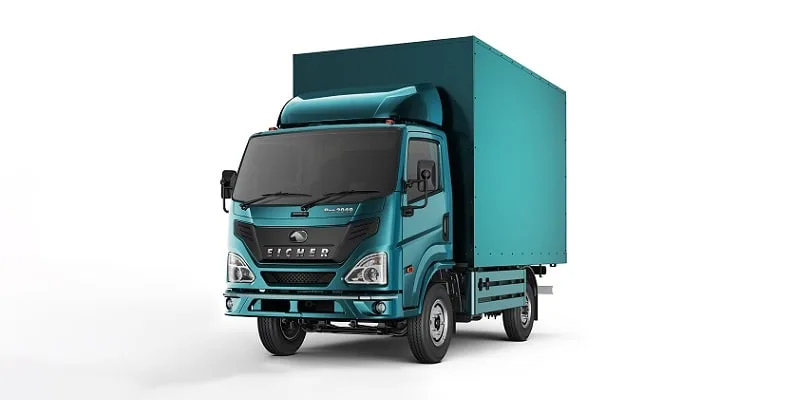
For fleet managers, that means they can see charger locations and availability in near-real time, route vehicles accordingly, and fold charging stops into the same operational view they already use for dispatch, utilization, and productivity tracking. VECV is calling this the first-ever integration of a public charging network into a commercial vehicle OEM’s fleet app in India—an “industry-defining” step that tackles one of the biggest barriers to electric fleet adoption: dependable, easily discoverable charging.
From Jio-bp’s side, the partnership is a scale play that leans into its brand promise: Pulse focuses on DC fast charging, which is indispensable for trucks and buses that run tight duty cycles and can’t sit for hours on AC. The network already spans dense urban centers, inter-city corridors, and EV hubs designed to handle larger vehicles and higher throughput. For Eicher’s customers, that breadth unlocks real operability: last-mile and mid-mile trucks can reliably top up in cities; line-haul vehicles get corridor support; and bus operators gain access to high-power charging at depots and terminals along priority routes.
Strategically, this is a smart division of labor. Jio-bp Pulse, the electric-mobility brand run by Reliance BP Mobility (a joint venture of Reliance Industries and bp), brings network scale, site development, and charging-ops expertise.
The MoU explicitly contemplates customized charging solutions and co-engagement with fleet customers, meaning the two companies won’t limit themselves to public waypoints—they’ll also co-design charging blueprints that match real-world operations.
Depot charging is where operators can capture the lowest energy costs and most predictable turnaround times, especially when combined with smart power management, TOU (time-of-use) optimization, and, where feasible, on-site solar and battery storage.
The partners say dedicated agreements will follow based on customer requirements—an important signal that this is not a one-size-fits-all model but a toolkit for different verticals (urban goods movement, intercity logistics, staff and school buses, municipal fleets, etc.).
For India’s CV electrification journey, timing and context matter. Fleets are increasingly measured on total cost of ownership (TCO), reliability, and uptime—not only emissions. The public-plus-depot approach addresses all three:
- TCO: High-power public charging fills the gaps while depot charging secures the lowest per-kWh cost, especially when combined with demand management.
- Reliability: A large, distributed network means fewer “dead zones” and better redundancy if a site is down.
- Uptime: Real-time visibility via My Eicher reduces the guesswork in route planning, limiting detours and queuing, and allowing dispatch to nudge drivers toward available stations.
There’s also a softer—but critical—benefit: confidence. Many fleet transitions stall because the charging picture feels murky. Putting 6,000+ points on the map, and embedding them in the same app operators already trust, sends a strong market signal that the supporting rails for commercial EVs are taking shape. On the product side, VECV has been steadily expanding its electric portfolio and connectivity stack.
Over time, this creates opportunities for data-driven charging orchestration: recommending optimal stops based on SOC, load, terrain, traffic, and delivery windows; forecasting charger congestion; and analyzing driver behavior to reduce energy waste. With Jio-bp Pulse focused on fast chargers capable of serving heavier vehicles, those insights translate to practical wins: fewer missed delivery slots, slimmer buffers, and better asset utilization.
From an infrastructure-buildout angle, the partnership is also about where chargers get placed next. Public networks that serve consumer cars don’t always line up with commercial needs. Trucks need sites with wider aprons, higher clearances, pull-through bays, easier ingress/egress for articulated vehicles, and uptime practices tailored to business-critical operations.
Pulse’s existing hubs and highway sites are a starting point, but the feedback loop with VECV’s operations data can inform the next wave of locations: logistics parks, warehousing clusters, city consolidation centers, and industrial corridors where dwell times are predictable and power availability is favorable.
Of course, challenges remain. Power availability and demand charges can swing the economics of fast charging; grid interconnections may be slower in some jurisdictions; and site reliability (software, hardware, and maintenance) must be sustained at commercial-grade SLAs. But the structure of this MoU—pairing an OEM and a charge-point operator with explicit plans to co-develop both public and depot solutions—addresses those issues more holistically than siloed efforts. It’s not just about selling trucks or laying cables; it’s about designing the energy and operations stack together.
It’s also notable that Jio-bp is not a niche player. As a JV between Reliance Industries and bp, it brings both capital and operational maturity, and it has been positioning Pulse as one of India’s largest and fastest-growing EV charging networks, with a particular emphasis on DC fast charging. That scale matters for national logistics, where routes hop from state to state and consistency is everything.
Looking ahead, expect the pair to experiment with commercial-friendly features around payment and billing (fleet accounts, consolidated invoicing, automated GST capture), API integrations (so fleet ERPs can ingest charging data), driver-experience tweaks (predictive wait times, charger health indicators), and energy-management pilots at depots (smart load sharing, on-site generation, battery buffering to clip peaks). Given India’s push for cleaner transport and the rapid maturing of the domestic EV supply chain, initiatives like this can accelerate the tipping point where electric becomes the default choice in specific CV segments.
In short: by combining network access at scale with in-app visibility and a roadmap for depot solutions, the VECV–Jio-bp Pulse alliance attacks the electrification puzzle on multiple fronts. It reduces uncertainty for buyers, improves daily operability for dispatchers and drivers, and lays the groundwork for smarter, cheaper energy management over time. If executed well, it won’t just put more chargers on a map—it will make commercial EVs easier to own, easier to run, and easier to scale across India’s most demanding routes.
Key facts at a glance (as of Sep 4–5, 2025):
- MoU signed: September 4, 2025.
- Access provided: 6,000+ Jio-bp Pulse charging points nationwide.
- Coverage: Cities, highways, and purpose-built EV hubs for all types of commercial vehicles.
- First-ever integration: Public charging network discoverability embedded into the My Eicher fleet app.
- Next steps: Joint evaluation of depot-level and bespoke infrastructure projects for large fleets and bus operations.