
Here is a detailed write-up on the Volvo EX30 electric SUV as launched in India at around Rs 40 lakh, covering its positioning, features, specs, pros & cons, market impact, etc.
Volvo has launched the EX30 in India as its most affordable electric SUV to date. It targets customers looking for premium EVs at somewhat more accessible price points. With an introductory ex-showroom price of Rs 39.99 lakh (for bookings till a certain date) and a regular ex-showroom price of around Rs 41.00 lakh, the EX30 is positioned below Volvo’s more expensive electric offerings, such as the EX40 and EC40.
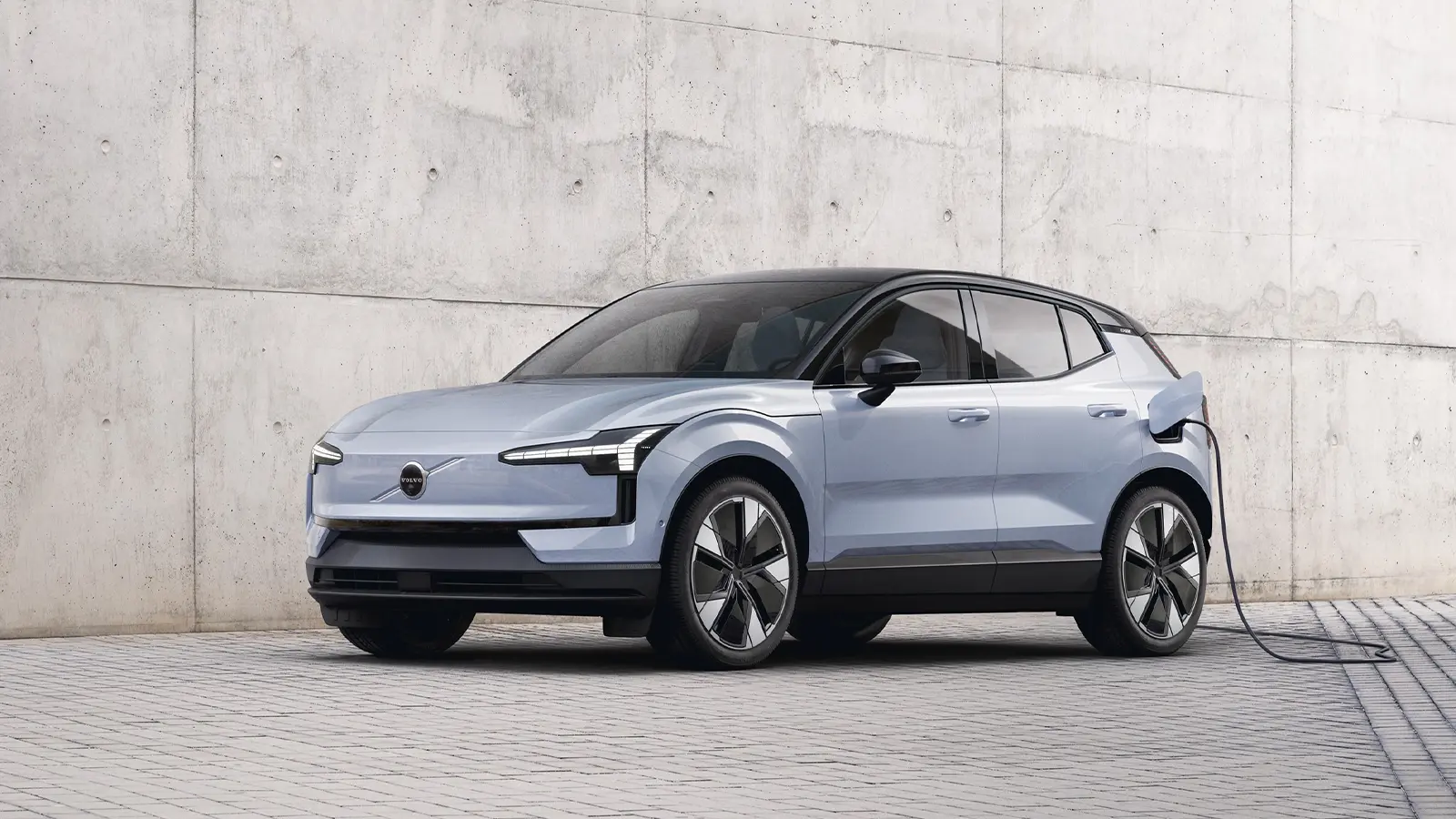
Volvo is aiming this model at the “entry-luxury EV”/premium compact SUV segment, where buyers want brand prestige, styling, safety, and some performance, but don’t necessarily need the bulk, cost, or footprint of a large SUV.
This segment is becoming increasingly important in India as EV adoption rises, incentives and infrastructure improve, and people look for smaller, more efficient, but still premium electric vehicles.
Design, Platform & Dimensions
- The EX30 sits on Volvo’s parent company’s SEA platform (Sustainable Experience Architecture), which is modular and designed for EVs.
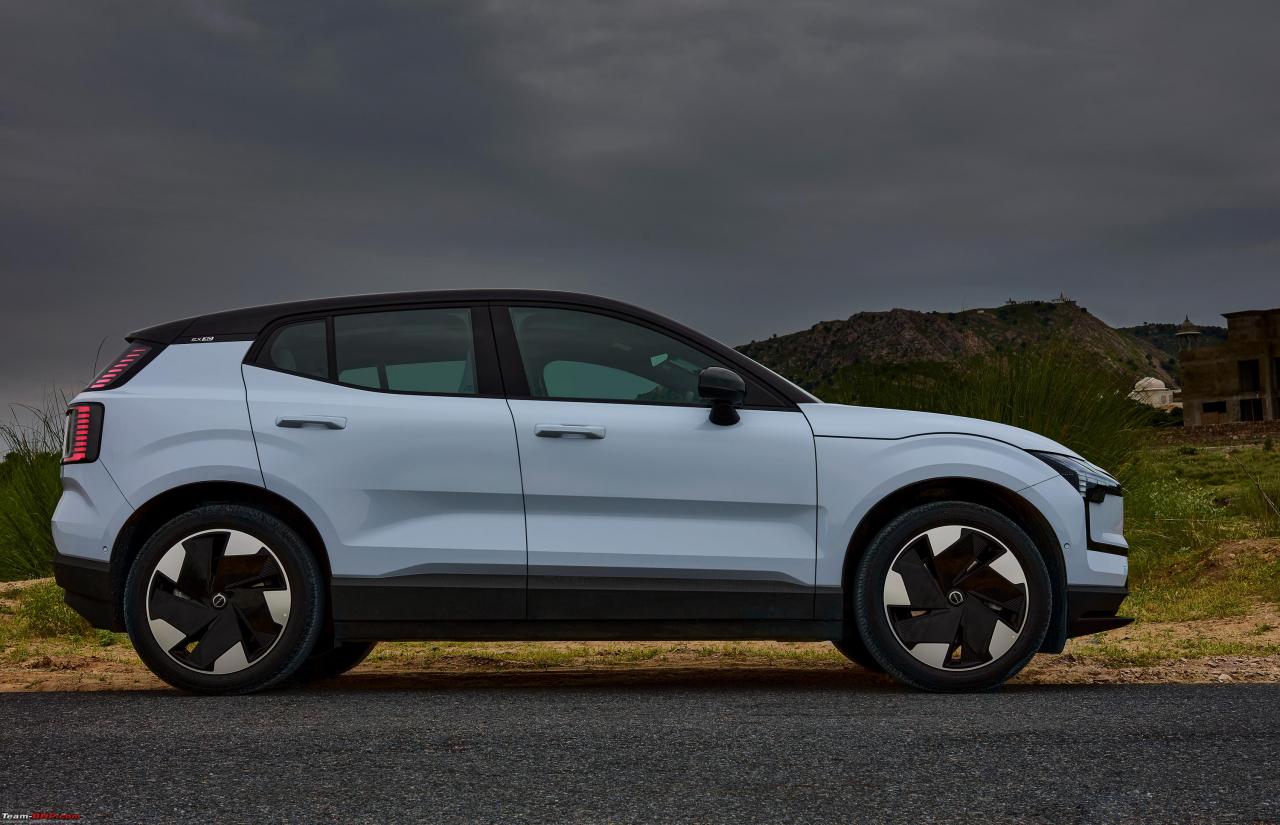
- Exterior styling is modern and somewhat daring for Volvo: sharp lines, clean front fascia with a closed‐off grille (since no engine), LED lighting with signature “Thor’s Hammer” DRLs, pixelated or stylised lighting details, aerodynamically designed 19-inch alloy wheels, contrasting roof options.
- It is compact: about 4,233 mm long, 1,838 mm wide, 1,550 mm tall, with a wheelbase of 2,650 mm. These are very good dimensions for urban manoeuvrability while still offering usable space.
Powertrain, Range & Performance
- The Indian version of the EX30 is being offered with a 69 kWh battery pack.
- The motor layout in the Indian spec is rear‐wheel drive (RWD), giving it decent performance. It produces about 268-272 PS and 343 Nm of torque.
- Acceleration from 0–100 km/h is claimed at around 5.3 seconds.
- Range: The claimed WLTP range is up to 480 km. But as with all EVs, this figure will drop under real-world Indian conditions (traffic, climate, AC use, etc.), perhaps to roughly 350-400 km in many use cases.
Features, Interior & Safety
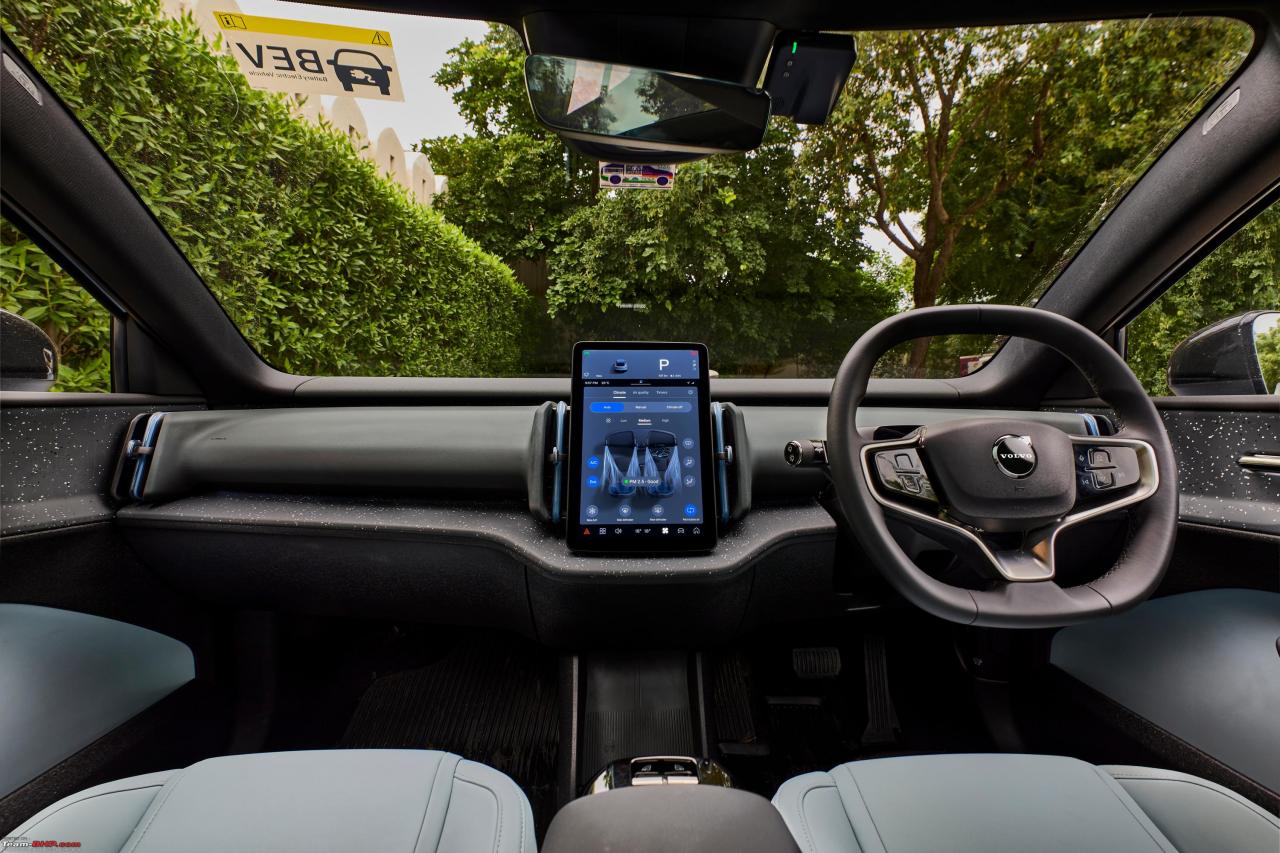
- Interior / Cabin: Volvo has taken a minimalistic yet premium feel approach. The cabin uses recycled and sustainable materials—these include recycled metals, plastics, possibly fabrics, etc. The infotainment system is based on Google OS. There’s a 12.3-inch touchscreen (vertical orientation) for most controls, with fewer buttons.
- The design includes features like a panoramic glass roof (heat-insulated) in some reports.
- Safety features are strong, as expected from Volvo: ADAS suite, multiple airbags, 360-degree camera, blind-spot monitoring, lane-keep assist, etc. The EX30 is also expected to score well in crash/safety tests.
Pricing & Launch Details
- The launch in India is in September 2025. Bookings opened earlier. Deliveries are expected to commence in October 2025.
- Introductory price: Rs 39.99 lakh ex-showroom for a limited time (till ~19 October). After that, the regular ex-showroom price is about Rs 41 lakh.
- Volvo is manufacturing/assembling partly or fully via CKD (completely knocked down) in India (some reports say assembly, not fully importing), which helps reduce duties and costs.
Strengths (What Works For The EX30)
- Performance vs price: 0-100 km/h in ~5.3 seconds is very quick for a compact EV at this price. For someone who wants performance, this is a strong draw.
- Premium brand & safety: Volvo’s reputation for safety gives it a strong advantage. The safety features and build quality are likely to appeal to buyers who value those more than just prestige or looks.
- Feature-loaded: Given the inclusion of Google-based infotainment, modern ADAS, premium materials, etc., the EX30 is well-equipped. For many buyers, this justifies the cost.
- Compact size + usable range: The dimensions make it more usable in urban settings than larger EVs, yet the range is still good enough to handle inter-city driving. The battery is large enough that range anxiety will be less of a concern (if charging infrastructure supports it).
- Sustainability/materials: Volvo’s use of recycled or sustainable materials could appeal to environmentally conscious buyers; a lower carbon footprint is becoming an important selling point.
Challenges / Weaknesses (What Might Hold It Back)
- Rear seat comfort & space: Some reports suggest rear seat comfort isn’t best-in-class. Under-thigh support may be weak, and there are no rear AC vents. For buyers who carry passengers often, this could be a downside.
- Variable range in real conditions: Though 480 km WLTP is claimed, in Indian traffic, with AC, possibly in hot climates, and with fast acceleration, the real range will drop significantly. Buyers need to be realistic and aware of that.
- Price competitiveness: Even at ~Rs 40-41 lakh, it faces stiff competition from other luxury or near-luxury EVs, especially as other brands up their offerings, as well as luxury ICE / hybrid alternatives. The cost of ownership (charging, maintenance, etc.) and resale value will matter.
- Charging infrastructure & support: As with all EVs in India, access to fast chargers, consistent charging experience, and service support are critical. Volvo will have to ensure strong after-sales charging support, battery warranty, etc.
- Some missing niceties: The minimalistic design might omit features that some customers expect — e.g., sunshade for the roof, small comfort details, a large boot, especially with a spare tyre, etc. Some tradeoffs are inevitable to hit the price point.
Comparison with Rivals
Some direct or close rivals include:
- BMW iX1 LWB — a luxury compact EV/SUV from BMW. The EX30 aims to undercut it in price while offering decent performance and features.
- Hyundai Ioniq 5, BYD Sealion 7 — both are strong competitors in terms of EV tech, features, and range. The EX30’s challenge is to match or beat in value, after-sales, and comfort.
- Other upcoming EVs / newer premium small EV crossovers will also compete, so Volvo will need to maintain strong product and service differentiation.
Market Implications & What This Means for EV Space in India
The launch of EX30 at around Rs 40 lakh has several larger implications:
- It signals that premium electric mobility is becoming more accessible in India. The “luxury EV” segment is no longer exclusively for six-figure sums or super-rich buyers.
- It increases pressure on competing manufacturers to offer more features, a good range, safety, and performance at lower prices. This could accelerate innovation, volume, and possibly help scale for EV infrastructure.
- Given Volvo’s reputation, this move might help increase consumer confidence in buying EVs, especially among premium buyers who may have been hesitant owing to concerns around build, safety, brand, resale, etc.
- Local assembly (CKD) or semi-Knockdown assembly helps mitigate cost, import duties, and makes such EV launches more viable financially for both manufacturer and buyer. If Volvo can maintain a local supply chain, parts, and servicing well, the cost of ownership will improve.
- It may also influence policy: governments (central/state) might support EV adoption more aggressively, incentivize safety, battery standards, charging networks, etc., when such high-visibility models enter more mainstream price brackets.
Conclusion
The Volvo EX30 makes for an appealing package for someone looking for a premium EV that is compact, stylish, quick, safe, and reasonably well-feature-loaded, without going to the price extremes of larger SUVs. If you are buying for yourself, especially for city / mixed driving, with occasional highway trips, the EX30 could hit a “sweet spot” of performance + prestige + sustainability.
However, if rear-seat comfort, maximum space, or maximum real-world range are top priorities, or if you do frequent long highway drives in harsh climates, you may want to look closely at how it performs beyond official claims. Also, after-sales, charger network, battery warranty, etc., will play a big role in long-term satisfaction.