
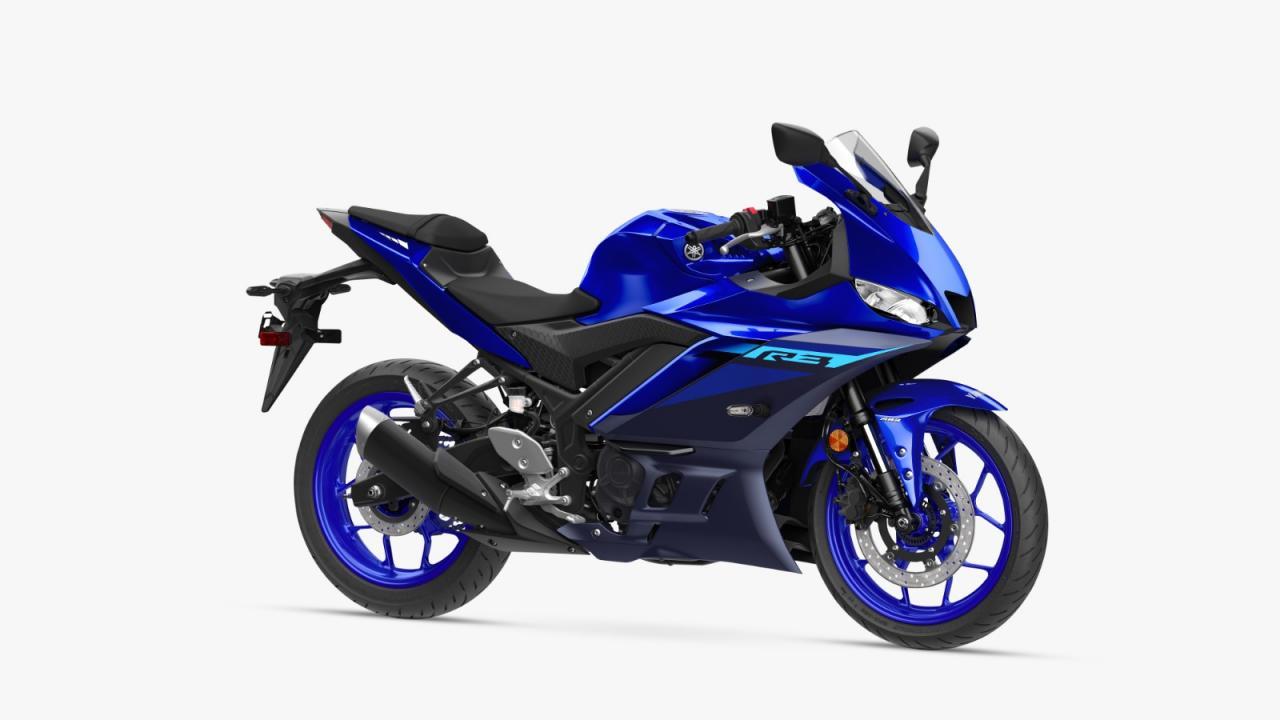
Recently, Yamaha Motor India has slashed the prices of its 321 cc twins — the YZF-R3 and MT-03 — by up to ₹20,000 following a revision in GST slabs.
Below is a closer look at what’s changed, how big the impact is, and whether the bikes now deliver better value.
Why the Price Cut?
- The Indian government recently revised the GST rate on motorcycles under 350 cc, reducing it from 28% to 18%.
- Yamaha has decided to pass on this benefit fully to consumers on models covered by this change — that includes the R3 and MT-03.
- This is the second major price cut these bikes have seen in 2025. Earlier, Yamaha had already trimmed their prices by ₹1.10 lakh in January.
So, this recent ₹20,000 cut is more of a fine-tuning in response to tax changes, rather than a dramatic overhaul in positioning.
What are the New Prices?
According to media sources:
- YZF-R3 is now priced at ₹3,39,000 (ex-showroom) — a drop of about ₹20,000 from its earlier ₹3,60,000 range.
- MT-03 is now listed at ₹3,29,000 (ex-showroom) (also a ~₹20,000 cut) from its earlier ~₹3,50,000 tag.
These prices are indicative of what’s being reported today; local on‐road prices (after RTO, insurance, etc.) will vary by city.
It’s worth noting that in some earlier speculation, Yamaha was thought to consider a deeper cut (up to ₹30,000) on these models, but the official confirmed reduction is ₹20,000.
What Do You Get with the R3 / MT-03?
Though they share the same core underpinnings, the R3 and MT-03 present distinct personalities — one sporty and fully faired, the other aggressive streetfighter:
- Engine & performance: Both carry the 321 cc parallel-twin, liquid-cooled engine (same displacement and architecture) that’s known for smooth power delivery and high revving behaviour.
- Chassis & handling: With a capable frame, good balance, and Yamaha’s engineering pedigree, they handle well in both city and highway settings. The shared platform keeps development and parts efficiency in check.
- Features & Styling:
• The R3 offers full fairing styling, aerodynamic bodywork, and sport touring appeal.
• The MT-03 has naked, muscular styling, an upright riding posture, and more “roadster” vibe.
• Both come with modern touches such as LED lighting, digital instrument clusters, and dual-channel ABS. - Market positioning: Before the cuts, their prices were seen as somewhat steep compared to rivals. The new pricing brings them closer to competitive territory, making them a more compelling choice vs. alternatives in the ~300–400 cc class.
Impact & Outlook
✅ Pros For Buyers
- Better affordability: A ₹20,000 reduction isn’t trivial — it can tilt decisions for buyers who were on the fence.
- Stronger value proposition: With Yamaha’s brand value, twin-cylinder refinement, and strong build, these bikes become more competitive.
- Stimulus to demand: For Yamaha, it could help revive sales of these models, which saw tepid traction at higher price points.
⚠️ Cautions & Caveats
- Limited margin buffer: The cut isn’t huge, so room for further discounting is narrow unless Yamaha rethinks platform costs or localizes more aggressively.
- Model lifecycle: Such price corrections sometimes precede a facelift or introduction of next-gen variants. Buyers should check if a refresh is imminent.
- On-road costs: Excise, transport, RTO, and insurance still add significantly, depending on the state.
- Competition intensifies: Rivals (like KTM, Aprilia, etc.) might respond with offers, added features, or model updates.
Conclusion
The ₹20,000 price slash for YZF-R3 and MT-03 is timely and welcome. While it doesn’t completely erase their premium positioning, it softens the blow and nudges them closer to the “sweet spot” in the competitive 300–400 cc space. For riders who’ve been eyeing a twin-cylinder, middleweight Yamaha, this could be a good moment to revisit those plans.