
On November 18, 2025, Amazon-owned Robotaxi Company Zoox announced that it is opening its driverless taxi service to the public in select neighborhoods of San Francisco.
The initiative marks a significant milestone in Zoox’s Transition from testing to real-world passenger operations.
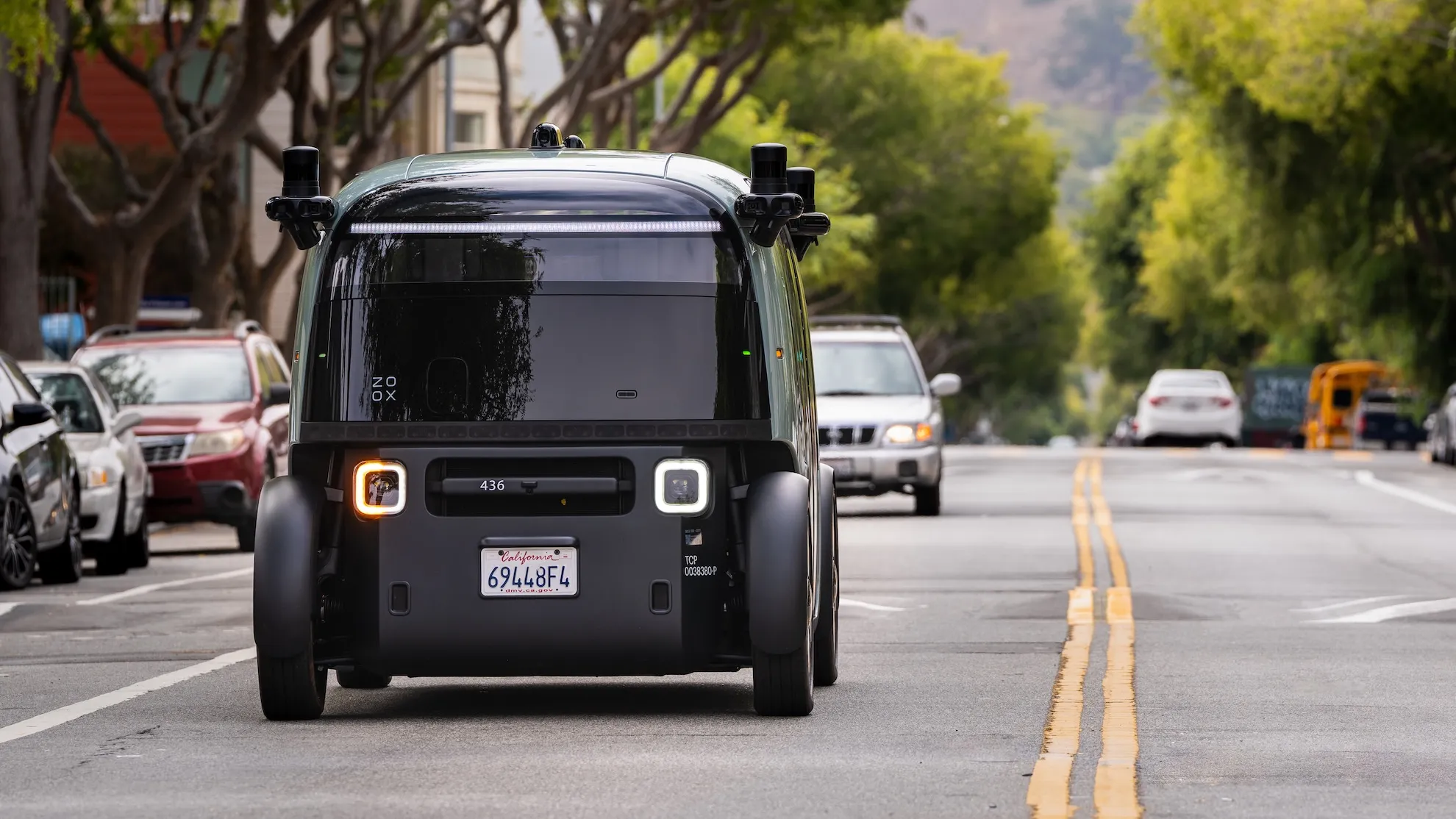
What’s Happening
- Under the programme termed the “Zoox Explorers”, people who signed up on a waitlist through Zoox’s app are now being invited to take free rides in its custom-built, fully autonomous vehicles.
- The service is currently free and limited in scope: rides are available only in certain San Francisco neighborhoods, namely the SoMa, Mission, and Design District areas.
- The vehicles are purpose-built—no steering wheel or pedals—designed from the ground up for autonomy, unlike many competitors who retrofit existing vehicles.
- Zoox has about ~50 robotaxis currently across San Francisco and Las Vegas.
- The aim is to refine the service and gather feedback from early riders, with a goal of scaling further and ultimately allowing paid service once the regulatory approvals are in place.
Why It Matters
- Competition Heating Up: The move puts Zoox in more direct competition with Waymo LLC, the Alphabet-owned firm that has a larger footprint in robotaxi services and has already been offering paid rides in some areas.
- Purpose-Built Vehicle Strategy: Zoox’s choice to design an entirely new vehicle rather than retrofit existing ones may give it advantages in efficiency, safety architecture, and rider experience.
- Urban Mobility Shift: Offering real rides to actual passengers in dense urban settings like San Francisco is one of the big hurdles for autonomous mobility. Success here could accelerate commercial robotaxi deployments elsewhere.
- Regulatory Path: Because the service is free and limited, Zoox can continue data-gathering and system refinement while working through regulatory permits required for fare-charging operations.

Key Details & Caveats
- To participate, users must download the Zoox app, join the waitlist, and be selected as part of the Explorers programme.
- The current service area is small compared to the full city: it covers parts of SoMa, Mission, and the Design District.
- Though the rides are publicly accessible (for those selected), this is not yet a commercial, paid service. Zoox still awaits regulatory clearance to charge fares.
- The company has not disclosed the size of the waitlist or exactly how many vehicles are active in San Francisco alone.
- While the vehicle interior is novel (four-seater facing each other, no driver controls), some early riders in other contexts have reported motion sickness when sitting facing backwards.
What To Watch Going Forward
- Scaling of operations: How quickly Zoox expands from this small pilot to a broader service area, and how many vehicles it deploys.
- Regulatory approval: When and how Zoox obtains the permit(s) to charge fares and operate more broadly in California.
- Competition and differentiation: Whether Zoox’s vehicle design and service experience give it a meaningful edge over players like Waymo or others entering the robotaxi market.
- Safety and public acceptance: How riders, pedestrians, and city infrastructure respond to a growing fleet of fully driverless taxis in urban traffic.
- Business model viability: At what scale and cost does the robotaxi model become commercially sustainable, given vehicle build cost, charging infrastructure, maintenance, fleet management, etc.
Summary
Zoox’s public launch of robotaxi rides in San Francisco is a landmark step: the company is moving beyond closed testing with employees to offering rides to real people in a major city. While the service is still free, limited, and very much in a pilot phase, it signals how autonomous mobility is steadily moving from concept toward actual deployment.
For Zoox, the challenge now is to scale, ensure safety and reliability, and turn the technology into a viable commercial business. For urban mobility, it’s a clear sign that the driverless-taxi future is inching closer to the present.