

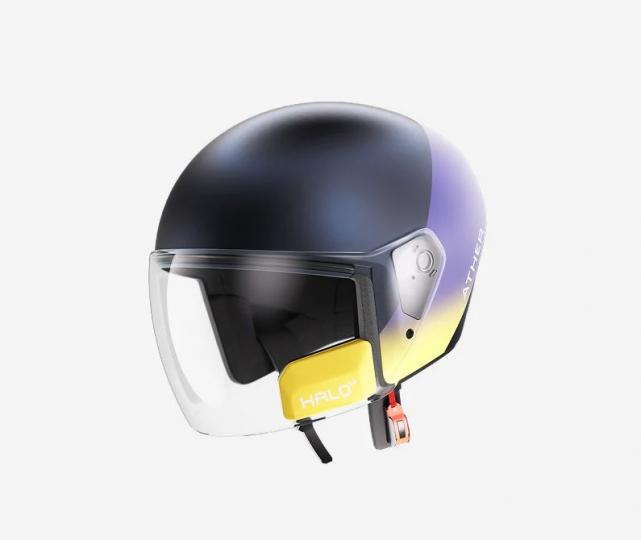
Here’s a look at the Ather Halo Smart Helmet—sleek, futuristic, and now more affordable than ever.
Ather Halo Smart Helmet Now Starts at ₹2,999!
Ather Energy recently unveiled an exciting update: the Halo Bit variant of the smart helmet now starts at just ₹2,999, while the full-face Halo model is available at ₹4,999.
What Changed?
- Wireless charging removed: The new versions use a USB‑C charging port, replacing the former wireless charging system.
- Same trusted safety standards: Both variants remain ISI-certified, ensuring safety and quality.
- Packed with modern smart features powered by Ather Stack 7: navigation alerts, pothole warnings, live cricket scores, and more.
Understanding the Variants
Halo Bit – Starting at ₹2,999
- Targeted as the entry-level variant, combining a half-face helmet with a smart module.
- Equipped with Bluetooth 5.1, features ChitChat, music sharing, and a USB‑C charging port. Offers impressive 50+ hours of playback and 30 days of standby time.
- Delivers intelligent alerts via Ather Stack 7—navigation, potholes, and even live cricket updates.
Halo (Full-Face) – Now ₹4,999
- Previously retailed at nearly ₹10,000, this is a substantial price cut.
- Includes features like auto WearDetect, Bluetooth connectivity, a microphone, and connections with Ather scooters.
- Integrated music playback, hands-free calling, and smart rider alerts powered by Ather Stack 7.
- Comes in three color options and multiple sizes—size flexibility and personalization.
Evolution of the Halo Helmet
When first launched at the 2024 Ather Community Day, the Halo Series debuted with:
- Halo (full-face): Price at ₹12,999, offering Harman Kardon speakers, wear detection, wireless charging, ChitChat, and excellent battery life up to a week.
- Halo Bit: A modular add-on for half-face helmets priced at ~₹4,999—ISI/DOT certified, music sharing, and long battery life.
What You Get at ₹2,999 / ₹4,999
Features Across Both Variants:
- Connectivity: Bluetooth support for music, calls, and smart alerts.
- Safety: ISI-certified helmets, wear-detect tech to activate features only when worn.
- Smart Alerts: Navigation, pothole alerts, tow-away zones, and even live cricket score updates via Ather Stack 7.
Halo Bit (₹2,999):
- Highly cost-effective entry into smart helmet tech.
- Strong battery performance and compact smart module.
Halo (₹4,999):
- Full-face protection, immersive audio experience, and integrated smart tech—perfect for those who want premium features without premium pricing.
Why It Matters
Accessibility
With the entry price slashed to ₹2,999, Ather is bringing smart safety tech to a broader audience—especially students and daily commuters. Smart helmets no longer feel like luxury—they’re becoming the new standard.
Tech & Safety Combined
Both versions combine practical safety design with smart connectivity. Compact alerts and hands-free control enhance both convenience and rider safety.
Eco & Fashion Appeal
Ather’s thoughtful design—modular structure keeping electronics away from your head, multiple colors, sleek aesthetics—means you wear both style and safety.
Possible Considerations
- Charging Changes: Moving to USB-C means you now need to carry a cable and plan charging—less seamless than wireless charging, but more budget-friendly.
- Feature Trade-offs: Some premium features like Harman Kardon audio aren’t probably available at the current lowest price—still, the essentials are strong.
Summary
- Intro & Announcement
- Highlight the price slash from expensive to accessible, grounding the discussion.
- Variant Breakdown
- Dive into the details of Halo Bit vs full-face Halo, their features, and battery strengths.
- Historical Launch Context
- Reflect on what the helmet offered at initial launch vs. today’s updated value proposition.
- What ₹2,999 / ₹4,999 Offers
- Recap the tech, safety, and convenience features available at new price points.
- Why It’s Important
- Emphasize affordability, safety, and practicality, making smart helmets mainstream.
- Considerations & Caveats
- Address possible downsides—charging style shift and feature simplification.
- Closing Thoughts
- Conclude with potential impact on Indian riding safety, and personal reflections on affordability and adoption.