
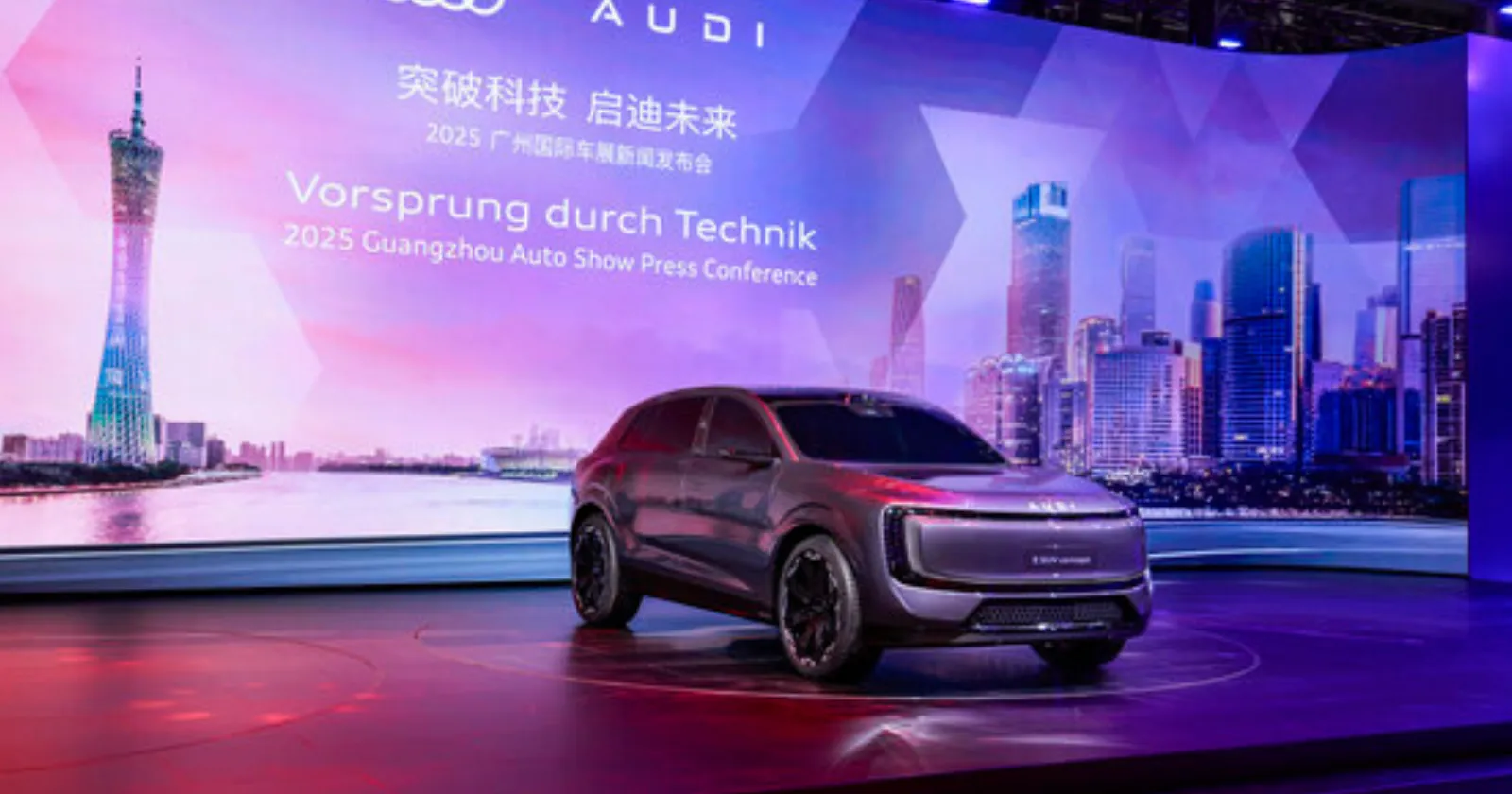
Audi is intensifying its push into China’s Electric Vehicle (EV) market with a fresh wave of new launches, strategic partnerships, and an expanded product roadmap designed to reclaim momentum in a fast-moving sector.
As China continues to lead the world in EV adoption—driven by strong government incentives, advanced battery innovation, and fierce competition—Audi’s latest moves signal a decisive step toward electrifying its regional lineup and strengthening its brand presence.
A Renewed Strategy For a Rapidly Changing Market
Over the last few years, China’s EV landscape has shifted significantly. Domestic manufacturers such as BYD, NIO, XPeng, and Li Auto have rapidly gained market share by offering cutting-edge technology, competitive pricing, and localized innovation. Against this backdrop, Audi is doubling down on its electric strategy to ensure it remains relevant to Chinese consumers.
Audi’s updated China plan centers on three pillars:
- New EV launches tailored to local demand
- Deepened partnerships with Chinese manufacturers and technology companies
- Localized production to increase efficiency and speed to market
This combined approach allows Audi not only to compete with domestic brands but also to capitalize on China’s growing appetite for luxury electric models.
New EV Models Designed For China
At the heart of Audi’s renewed push is a fresh wave of EV launches specifically developed for Chinese buyers. Recent models, including the upcoming Audi Q6L e-tron and Audi A6 e-tron (China-specific variants), highlight the brand’s shift toward creating vehicles that cater directly to regional preferences.
Key features that Audi is prioritizing include:
- Extended wheelbase models for greater rear-seat comfort—a top priority for Chinese consumers
- Advanced infotainment systems designed with Chinese apps and services integrated natively
- Improved battery efficiency and range suitable for long-distance urban and suburban commuting
- Optimized pricing strategies to better compete with homegrown brands
These new models are expected to help Audi regain traction in a market where luxury EV buyers increasingly look for both high performance and cutting-edge technology.
Partnership With SAIC: A Game-Changer
A major component of Audi’s China EV acceleration is its growing collaboration with SAIC Motor, one of the country’s largest automotive manufacturers. The partnership aims to:
- Co-develop new EV platforms
- Speed up time-to-market for future Audi EVs
- Share access to advanced Chinese EV technologies
- Expand Audi’s presence in additional vehicle segments
This collaboration enables Audi to leverage SAIC’s local market knowledge and manufacturing strength, reducing production costs and ensuring models can be adapted quickly to fast-changing consumer trends. It also positions Audi more competitively against rival automakers that have already adopted localized production strategies.
Investing in Local Production and R&D
Audi is significantly expanding its production footprint in China, including the development of new EV-dedicated manufacturing lines. Its partnership with FAW Group, which already oversees several joint-venture plants, remains central to this effort.
Additionally, Audi is investing in local research and development hubs focused on:
- Battery technologies
- Intelligent cockpit systems
- Autonomous driving features adapted to Chinese regulations and driving environments
By strengthening R&D within China, Audi aims to bring new features and technologies to market more quickly, while staying aligned with regulatory and consumer expectations.
Targeting China’s Tech-Savvy Luxury EV Buyers
China’s EV consumers are among the most tech-driven in the world. Features such as AI-enhanced displays, sophisticated driver-assistance systems, digital services, and smart connectivity often influence purchasing decisions more than traditional automotive factors such as engine performance.
Audi’s recent launches increasingly highlight:
- Augmented reality head-up displays
- Enhanced voice assistants with natural language capabilities
- Seamless integration of popular Chinese apps
- Upgradable software-based features
These upgrades help Audi compete with Chinese brands like NIO and XPeng, both of which pioneered the concept of EVs as “smart devices on wheels.”
Strengthening Position in the Premium EV Segment
While competition in China is intense, the premium electric segment—where Audi traditionally excels—continues to show strong growth. Chinese consumers remain highly receptive to established German luxury marques, and Audi is leveraging its strong brand reputation to reinforce its status as a premium EV leader.
The company’s multi-pronged strategy aims to:
- Increase EV sales volume
- Win back market share from domestic rivals
- Build long-term competitiveness in the luxury electric segment
- Reinvent its brand image as a forward-thinking electric innovator
Looking Ahead: Audi’s Roadmap For China
Audi has made it clear that China will remain a central pillar of its global electrification strategy. With more EV models planned for release in the coming years, expanded joint ventures, and a strong emphasis on localized innovation, the brand is geared toward sustainable long-term growth in the world’s most competitive EV market.
As the EV race intensifies, Audi’s strategic launches and investments represent a bold step toward securing its position among China’s next generation of premium automakers.