
Auto Industry Robotics Installation Jumps In Japan automotive sector — what it means, what’s driving it, and its broader implications.
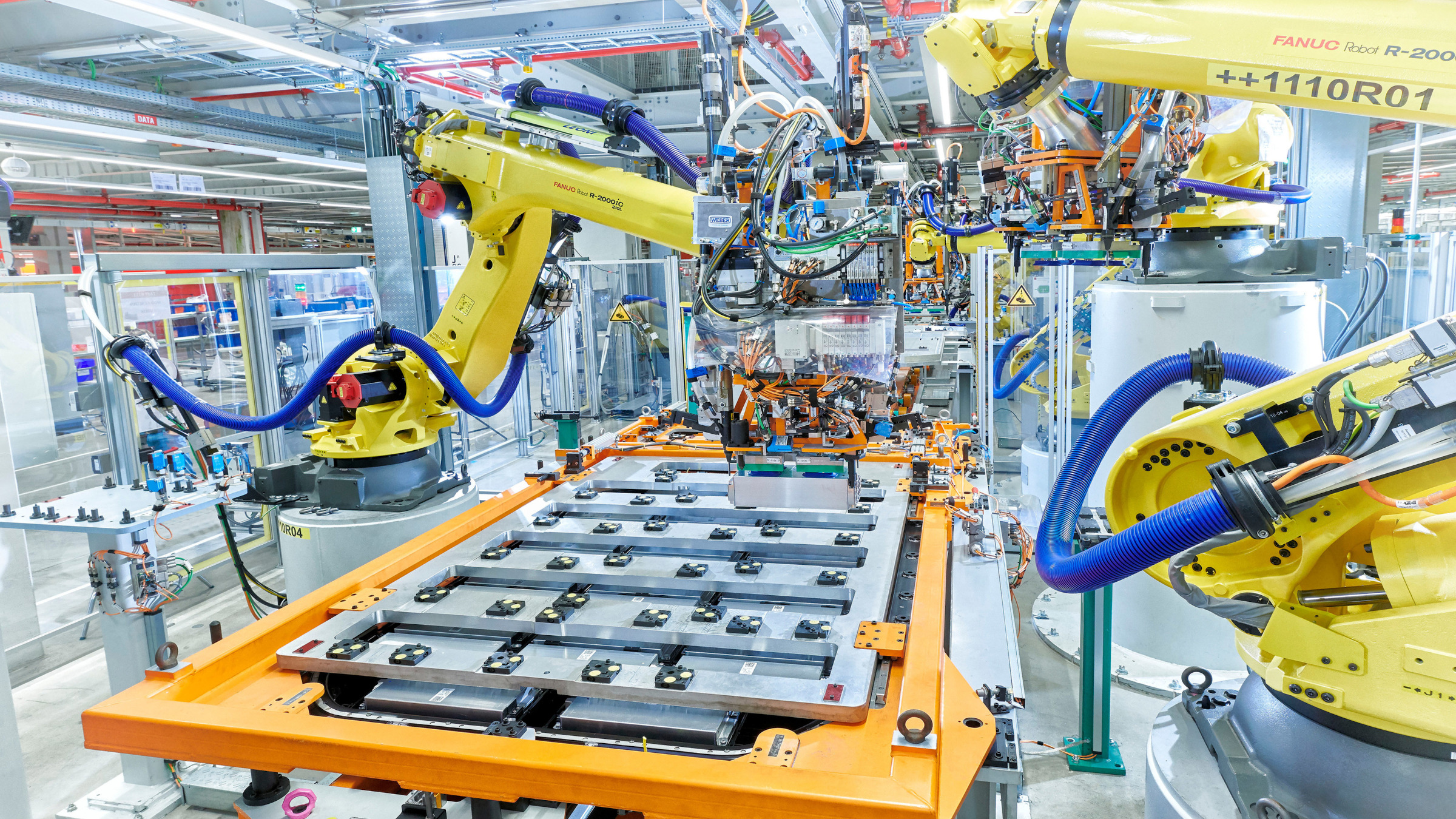
🚀 Recent Surge in Robotics in Japan’s Auto Industry
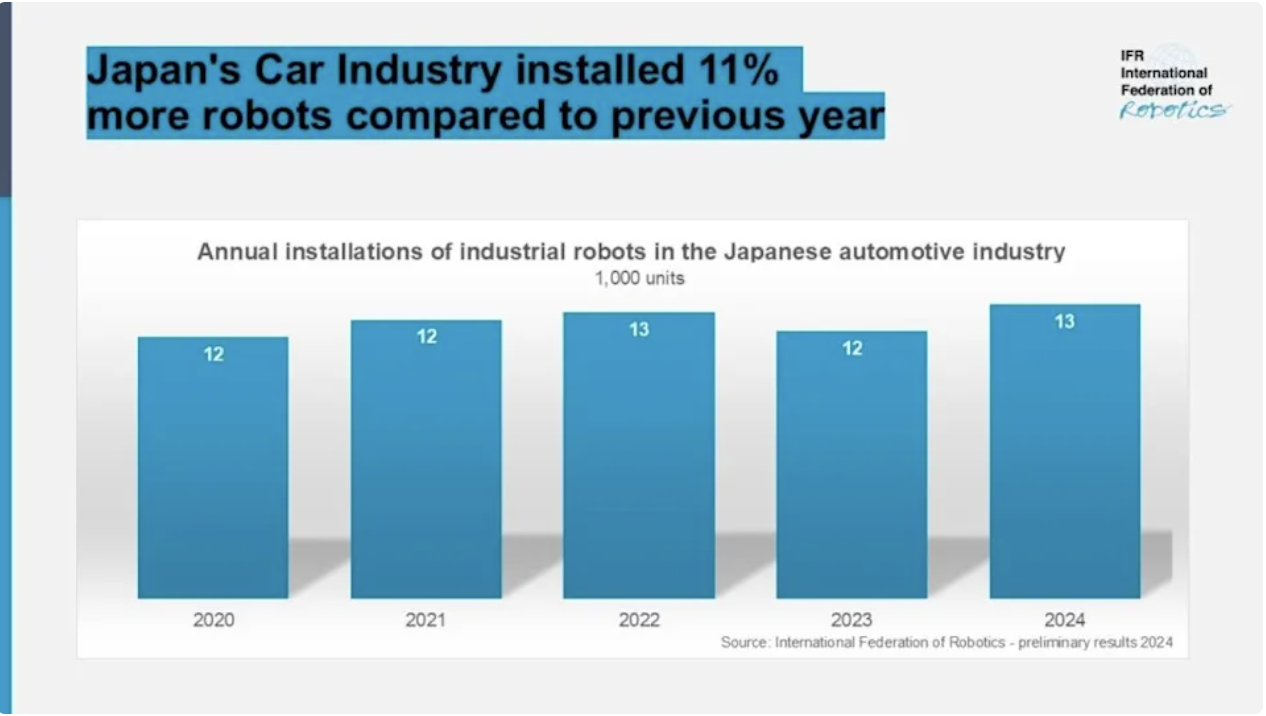
In 2024, Japan’s automotive industry installed approximately 13,000 industrial robots, marking an 11% increase compared to 2023 — the highest total since 2020.
- Robot penetration and density: As of 2023, Japan’s automotive sector had a robot density of 1,531 units per 10,000 employees, ranking it 4th worldwide, only behind Slovenia, South Korea, and Switzerland.
- National context: Japan leads the world in robot manufacturing, producing roughly 38% of global industrial robots.
📈 What’s Fueling the Growth?
Transition to Next‑Gen Powertrains
Japanese carmakers are rapidly shifting away from traditional internal combustion engines toward battery-electric, fuel-cell, and even hydrogen combustion engines. This shift necessitates:
- Flexible production lines
- Precision assembly systems
- Integration with power electronics
Robots offer the speed, repeatability, and adaptability required for these new manufacturing demands.
Legacy of Precision & Automation
Japan’s manufacturing ethos revolves around precision, quality, and consistency, especially in the auto and electronics sectors. Robotic automation aligns perfectly with these goals by minimizing defects and enabling complex, repetitive tasks at scale.
Demographic and Labor Pressure
Robots are stepping in to fill gaps in:
- Shop-floor labor
- Inspection and quality assurance roles
Smart Factory & Industry 4.0 Initiatives
The Japanese government and manufacturing ecosystem are vigorously promoting:
- Smart factories
- IoT-connected production
- Collaborative robots (cobots)
- Cloud-based monitoring and data analytics platforms.
Notably, smaller companies are increasing their robotics adoption via models like Robotics-as-a-Service (RaaS).
Technological Leadership
Japan is a leader in robotics R&D, particularly through giants like FANUC, Yaskawa, Mitsubishi, and Kawasaki. Breakthroughs in:
- AI-enhanced vision systems
- Cobots with safe human interaction
- Modular systems
- Energy-efficient designs
are directing more capital into robotic deployment.
🇯🇵 Japan in the Global Automation Landscape
- Factory robot prevalence: At the end of 2023, Japan had about 435,000 operational industrial robots, making it the second-largest global market after China.
- Regional leadership: Asia accounted for roughly 73% of global installations in 2022.
- International comparison: In 2024, the U.S. auto industry saw a 10.7% rise in installations to about 13,700 units, comparable to Japan’s growth, underscoring a synchronized trend toward automation.
⚙️ Sector Breakdown: Where the Robots Went
In Japan, the automotive industry accounts for one-quarter of the country’s total annual robot installations, second only to electronics, which installed roughly 14,000 robots in 2024 (though it saw a slight decline).
- Automotive (2024): ~13,000 robots (+11%)
- Electronics (2024): ~14,000 robots (–5%)
This pattern highlights automotive as the second-largest adopter, rapidly narrowing the gap with electronics.
🔗 Spotlight: Future Creation Robot Week
Expo 2025 in Osaka (Jul 13–19, 2025), the “Future Creation Robot Week” event showcases Japan’s leadership in robotics:
- Zone 1: Robots in future workplaces
- Zone 2: New professional skills in automated contexts
- Zone 3: Human–robot collaboration in everyday life.
This platform underlines Japan’s ambition to integrate robotics not just in factories, but throughout society.
🔮 What This Means for Industry & Society
Adaptation to EV/Hydrogen Models
Robotic flexibility is crucial as auto plants shift to multiple powertrain lines, minimizing the costs of retooling for these variants.
Productivity & Quality
Greater robot use drives down errors and waste, while boosting throughput, reinforcing Japan’s high-quality brand in global car manufacturing.
Workforce Evolves
Expect a shift in labor demand from assembly-line work to roles in robot oversight, programming, and maintenance, necessitating retraining and upskilling.
Secondary Benefits
The rise in robotics in automotive is spilling over into sectors like logistics, healthcare, and construction, supported by Japan’s aging-labor drive.
🌐 Economic & Strategic Context
- Export Leadership
- Macroeconomic Boost
Facing Global Competition
To remain competitive amid rising automation in Europe, China, South Korea, and North America, Japan must deepen its robotic infrastructure.
🔄 Long‑Term Outlook
According to IFR, robot installations in Japan follow a cyclical pattern — electronics up one year, down the next; automotive fluctuates based on investment cycles. But with demographic challenges and EV transition, growth is expected to accelerate through 2025 and beyond.
A LinkedIn‑based market forecast projects Japan’s industrial robotics market rising from USD 20 billion in 2024 to over USD 50 billion by 2032, at a CAGR of 13.2%.
✔️ Key Takeaways
| Area | Insight |
|---|---|
| 2024 Installation | ~13,000 robots in auto (+11%), peak since 2020. |
| Sector Share | Automotive = 25% of total; Electronics still leads. |
| Drivers | EV/hydrogen shift, labor shortages, gov’t support, R&D leadership. |
| Global Position | 2nd in robot usage; 38% of robot manufacturing globally. |
| Economic Impact | Strong long-term growth, societal automation, and export strength. |
🌟 Broader Implications
- Japan’s manufacturing model is evolving — from labor-intensive to highly automated, reflecting industrial resilience.
- Robotics in society — with initiatives like Expo 2025, robots are poised to become part of everyday life.
- Workforce transformation — emphasis on training technical skills in robotics and automation maintenance.
- Global influence — Japan’s robotics leadership will shape international practices, especially in developing nations adopting automation.
📝 Final Thoughts
Japan’s automotive industry’s double-digit surge in robotic installations isn’t just a numbers story — it signifies a strategic pivot to remain globally competitive in a high-tech future. With an aging workforce, electrification revolution, and rising global competition, Japan is doubling down on robotics to preserve quality, increase efficiency, and lead the next wave of industrial innovation.
The economic reverberations — from the factory floor to robot exports and societal applications — mark this leap as transformative, not transactional. This isn’t just about producing cars more efficiently — it’s about forging a future where robots empower workers, boost innovation, and propel the nation forward in the Fourth Industrial Revolution.