
In the ever-evolving world of compact SUVs, 2026 is shaping up to be a milestone year. The two dominant players in this space—Toyota RAV4 Vs. Mazda CX-5 is once again locking horns in what may be the most important SUV battle of the year.
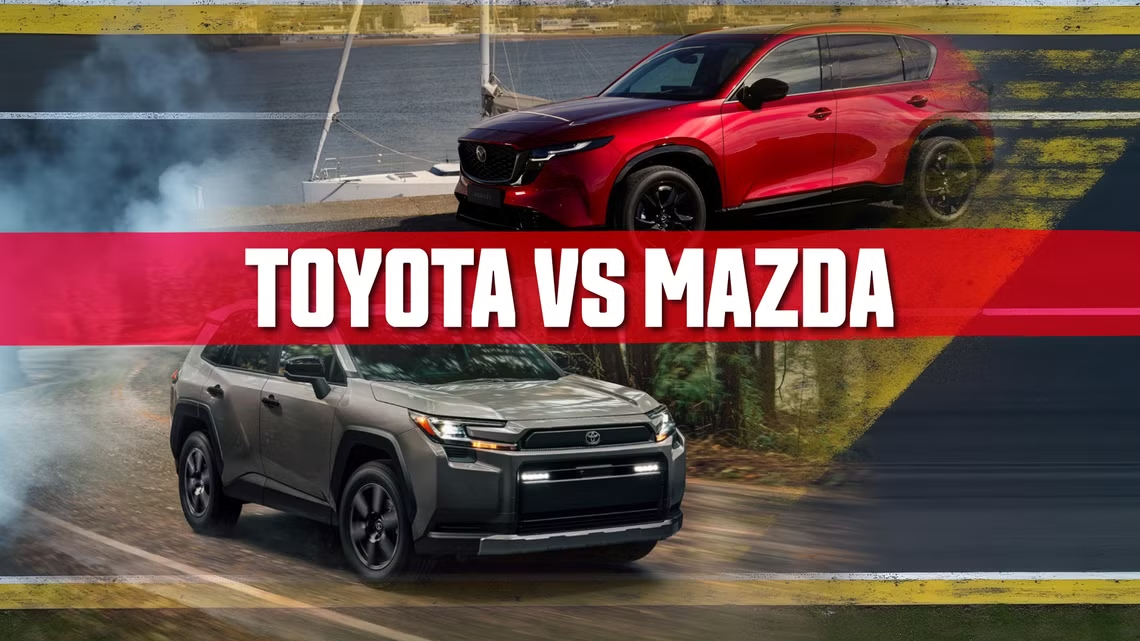
Both models are set to redefine expectations in terms of design, performance, technology, and efficiency. Let’s break down this battle across all critical fronts.
Design and Aesthetics
Toyota has taken a bold step forward with the 2026 RAV4. The latest model features a more aggressive, rugged exterior, drawing inspiration from its off-road TRD lineage. Its angular front grille, bolder LED lighting signature, and chunkier wheel arches give it a tough urban-meets-outdoorsy vibe. Toyota wants this to look like a compact SUV that’s ready for a weekend in the wild, even if it’s most often used for school runs and commutes.
Verdict: If rugged and ready is your style, RAV4 takes the win. If you’re after refinement and elegance, the CX-5 edges ahead.
Interior and Comfort
The dashboard is now more streamlined, and higher trims offer a 12.3-inch digital instrument cluster paired with a 14-inch infotainment touchscreen. Toyota has also focused on improved seat ergonomics and more sound-deadening materials for a quieter ride.
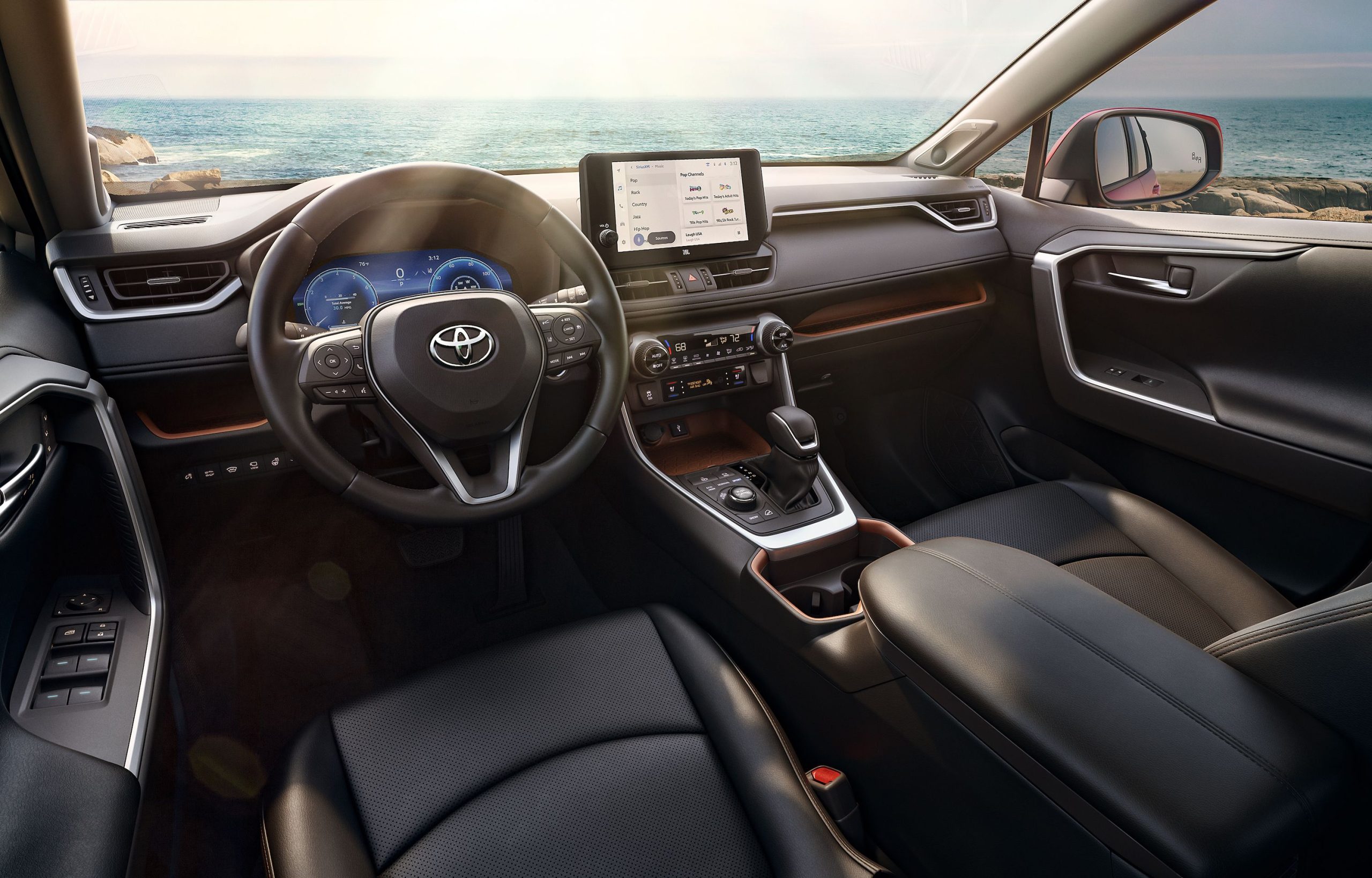
Mazda, however, has long been known for its near-luxury interior feel, and the 2026 CX-5 ups the ante. Premium materials like Nappa leather, genuine wood inlays, and a more driver-focused cockpit make the cabin feel like it belongs in a German luxury vehicle. Mazda has also expanded the dimensions slightly, improving rear-seat comfort and cargo space.
Verdict: Mazda CX-5 wins for sheer cabin quality and premium feel, but RAV4 remains the more practical option for families.
Technology and Features
The CX-5 isn’t left behind. Mazda has refined its tech offering, now including a curved 13-inch center display with a redesigned rotary-dial interface. While not touch-based (a preference of Mazda’s), the system is faster and more intuitive than previous iterations. A newly added feature is Mazda’s upgraded driver monitoring system and adaptive interior lighting based on the time of day.
Verdict: Toyota pulls slightly ahead with its user-friendly infotainment and AI assistant, but Mazda offers a cleaner, distraction-free tech layout.
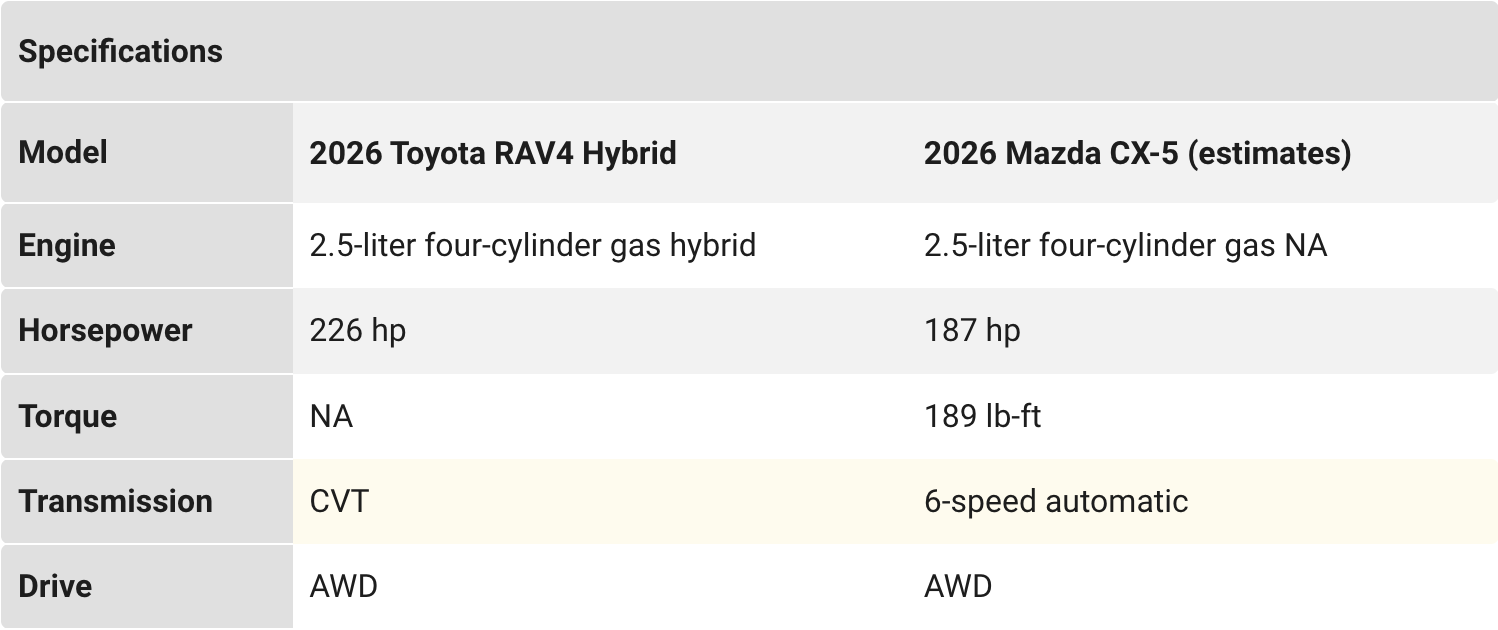
Specification
Performance and Driving Dynamics
Performance is where these two truly begin to diverge in personality. The RAV4 continues with its tried-and-tested lineup of engines, including the naturally aspirated 2.5L inline-four, a hybrid, and the plug-in hybrid RAV4 Prime—now upgraded for 2026 with better range and acceleration. The Prime model boasts a 0-60 mph time under 6 seconds and up to 50 miles of all-electric range.
Mazda, never one to shy away from sportier dynamics, has given the CX-5 a new turbocharged 2.5L engine with mild-hybrid assistance, offering improved fuel economy and more torque off the line. The ride remains best-in-class in terms of agility, steering response, and suspension tuning.
Fuel Economy and Sustainability
The standard hybrid delivers a combined EPA rating of around 41 MPG, and the plug-in hybrid variant offers class-leading electric-only range. Toyota also uses more recycled materials in its construction and continues to push toward carbon neutrality with its battery manufacturing.
The CX-5’s new mild-hybrid system improves efficiency to an estimated 33 MPG combined, which is respectable but still trails behind the RAV4 Hybrid. Mazda does, however, focus on lightweight construction and low emissions through efficient engine design and clean manufacturing practices.
Verdict: Toyota wins hands down in the sustainability and fuel-efficiency department.
Pricing and Value
The base 2026 RAV4 starts slightly higher than the CX-5, but the value it offers through standard hybrid tech, Toyota Safety Sense 3.0, and strong resale value cannot be ignored.
Mazda counters with lower starting prices, but higher trims can climb quickly with premium options. Still, the CX-5 undercuts competitors when it comes to luxury materials at a modest price point.
Verdict: Mazda CX-5 wins on entry-level value and luxury for the dollar.
Safety and Driver Assistance
Both SUVs come packed with driver assistance features. Toyota includes lane tracing assist, adaptive cruise control, pedestrian detection, and emergency steering assist as standard. The CX-5 comes with Mazda’s i-Activsense suite, which includes similar safety features but adds advanced driver attention monitoring and cross-traffic braking.
Both vehicles score well in crash tests, and both offer parking sensors, auto high beams, and optional parking assist tech.
Verdict: A draw—both are at the top of their class in terms of safety.
Conclusion: Which One Wins the 2026 Battle?
In the battle of the 2026 Toyota RAV4 vs. Mazda CX-5, the winner ultimately depends on what you value most in a compact SUV.
- If fuel economy, hybrid options, and practical family utility top your list, the Toyota RAV4 is hard to beat.
- If you’re after a luxury-like experience, refined design, and engaging performance, the Mazda CX-5 is your perfect match.
For the average buyer, the RAV4 continues to be the safer all-around bet. But for those who view driving as more than just commuting, the CX-5’s charm is undeniable.
Sources: Mazda, Toyota