
Here’s an in-depth look at the dramatic departure of Christian Horner—a story with deep roots and wide-reaching consequences:
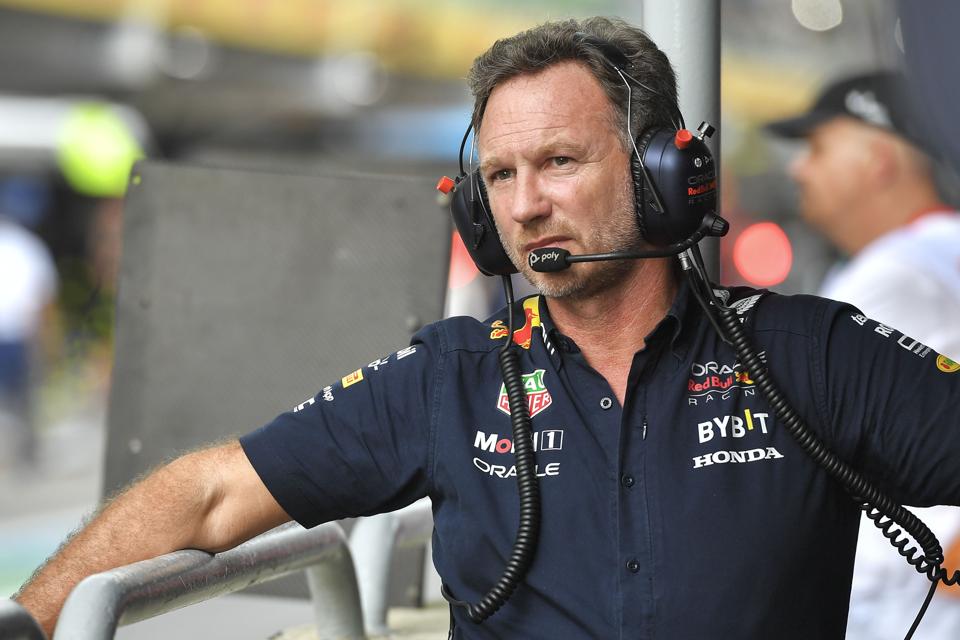
1. 🏁 The Breakup: Horner Leaves Oracle Red Bull Racing after 20 Years
What happened:
- On July 9, 2025, Red Bull abruptly removed Christian Horner from his roles as team principal and CEO of Oracle Red Bull Racing, ending his 20-year tenure at the helm.
- He was immediately replaced by Laurent Mekies, previously in charge of the sister team Racing Bulls, with Alan Permane stepping into Mekies’s former role.
- Red Bull’s official statement praised Horner’s “exceptional work,” but offered no concrete reason for the sudden decision.
2. Legacy of Success — A Double Golden Age
First Era (2010–2013):
- Vettel-led Red Bull clinched four consecutive Drivers’ and Constructors’ titles, firmly establishing their place at the top.
Second Era (2021–2024):
- Under Horner, Verstappen secured four straight Drivers’ titles (2021–2024), with Red Bull also earning championship glory in 2022 and 2023, including a record-breaking 21 wins in 2023.
3. Turbulence Before the Exit
Performance issues:
- As of mid‑2025, Red Bull slumped to 4th in the Constructors’ standings, trailing frontrunners like McLaren, Ferrari, and Mercedes.
- Max Verstappen has been the team’s lone bright spot, with two wins and a commanding 165 of Red Bull’s 172 points, highlighting stark performance gaps.
Departures of key personnel:
- Chief designer Adrian Newey moved to Aston Martin; engineering head Rob Marshall went to McLaren; sporting director Jonathan Wheatley also exited.
Internal conflict & scandal:
- Internal tensions surfaced following Horner’s public clash with Verstappen’s entourage and the emerging slew of internal divisions between the Austrian and Thai sides of ownership.
- In early 2024, Horner faced—but was cleared of—inappropriate behavior allegations against a female colleague. Leaked text messages added to the controversy, damaging internal cohesion and trust.
4. The Power Play: Verstappen’s Status & Ownership Rift
Max in the mix:
- Verstappen’s deep influence is undeniable. His contract runs through 2028 but comes with performance-based exit clauses, which he could trigger soon
- His camp is believed to have allied with Red Bull co-owner Helmut Marko and the Austrian faction, potentially tipping the scales in this internal power struggle.
Ownership friction:
-
- Red Bull is 51% owned by Chalerm Yoovidhya (Thai side) and 49% by the Mateschitz family (Austrian). Some analysts say Horner lost his support base when both sides stepped back.
After 20 years with the Team, Christian Horner departs Oracle Red Bull Racing as Team Principal and CEO.
We thank him for his tireless and exceptional work. He has been instrumental in building this Team into one of the most successful in F1, with eight Drivers’ Championships… pic.twitter.com/9SyqjSBvEG
— Oracle Red Bull Racing (@redbullracing) July 9, 2025
5. The New Regime: Mekies Takes the Wheel
Laurent Mekies brings experience and credibility:
- Former Racing Bulls principal, ex-Ferrari sporting director and deputy team principal.
- He becomes CEO of Red Bull Racing, with Alan Permane stepping up at Racing Bulls.
- As CEO, Mekies will steer Red Bull’s next major challenge: transitioning to in-house power units via Red Bull Powertrains from 2026 onward.
6. Why Now? Catalysts for Change
- Declining performance — Slide from dominance to mid-pack (4th in constructors, mid-season slump).
- Talent exodus — Loss of key engineering and technical leadership echoes a fractured internal environment.
- Power struggle — Combined pressures from Verstappen’s team, ownership factions, and internal politics eroded Horner’s position.
- Engine gamble — Launching a new power unit program with Ford/Honda support is a high-stakes gamble requiring unified leadership.
7. Repercussions for the F1 Landscape
On Max Verstappen.
On Red Bull’s revival:
- Mekies’ appointment signals a pivot toward fresh leadership and strategic recalibration ahead of the technical overhaul in 2026.
Industry impact:
- Horner’s exit reverberates through the paddock. His potential next roles—rumored in leadership positions at Alpine or even Ferrari—will be closely examined.
- McLaren’s rise instigates a new rival, and shifts at Red Bull reshape the power dynamics across F1.
8. Christian Horner: A Storied Journey
- Born: 16 November 1973, Leamington Spa, UK.
- Racing driver turned manager: Started in Formula Renault, climbed to F3000, co-founded Arden International.
- Ascended to team principal in 2005, only two months before the Australian GP.
- Major accolades: 14 world titles under his leadership; Red Bull’s rise from midfield to F1 supremacy.
9. What’s Next?
- Red Bull: Must regroup internally, forge unity behind Mekies, and deliver a competitive package ahead of 2026.
- Verstappen: Will watch closely how the new leadership aligns with his ambitions—and whether performance improves.
- Horner: With an unrivaled track record, doors at teams like Alpine (e.g., taking equity with Briatore’s backing), or even Ferrari could open.
Summary
Christian Horner’s departure marks the end of an era. From molding Red Bull into a two-time dominant force, his leadership yielded unprecedented success, but also laid bare the internal divisions and strategic inflection points that made his ousting possible.
Now, as Mekies steps up, Red Bull embarks on a new chapter—one driven by technological ambition, internal reset, and the gravity of keeping two-time world champion Max Verstappen within its fold.