
Elon Musk Reveals Tesla’s Next Robotaxi: Tesla CEO Elon Musk has delivered a bold update on the company’s Robotaxi plans—revealing developments on multiple fronts: geofence growth, national rollout plans, and platform evolution.
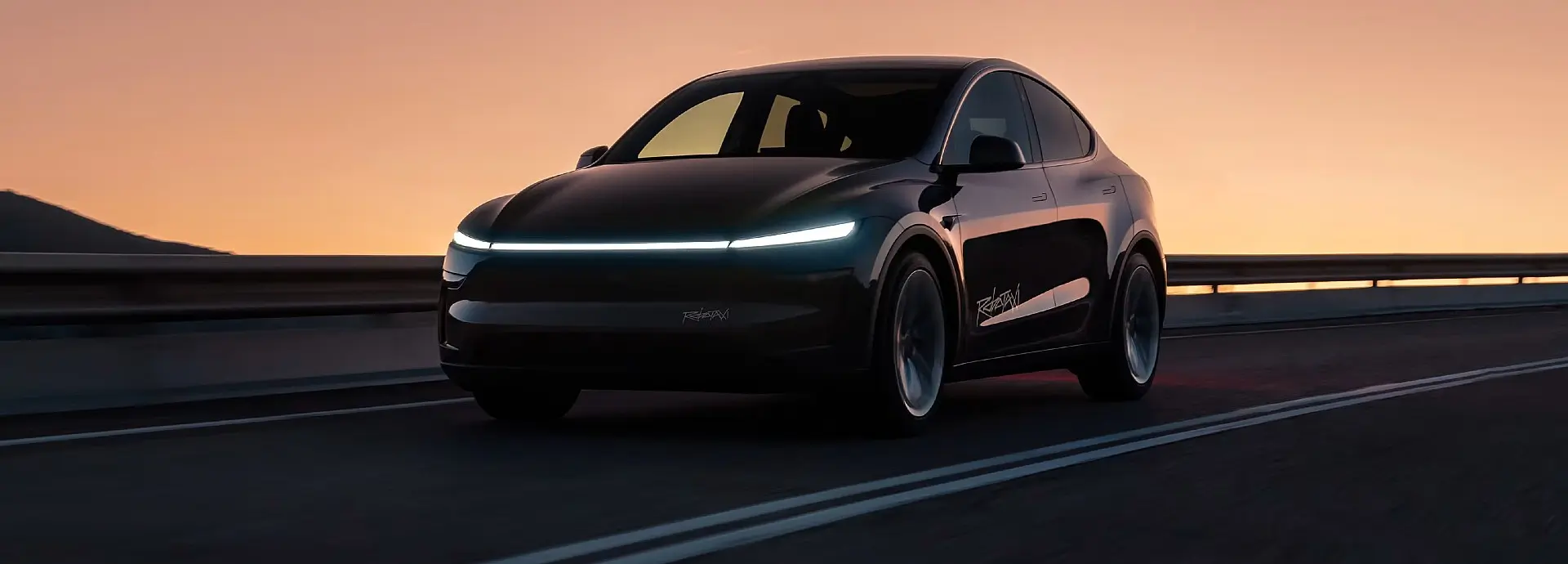
🚗 Elon Musk Unveils Tesla’s Multi‑Faceted Robotaxi Expansion
According to Tesla and multiple news sources, this update reflects a coordinated strategy to accelerate autonomous ride-hailing expansion both within Austin, Texas, and across the U.S.
Geofence Expansion in Austin
- Initial Launch: Tesla launched its pilot Robotaxi service in a small geofenced area in South Austin on June 22, 2025. It began with a fleet of approximately 10–20 Model Y vehicles, each equipped with a safety monitor in the passenger seat. Rides cost a flat promotional rate of $4.20.
- Shape‑Shifting Boundaries: The original geofence gained attention for its unusual shape, resembling male anatomy. Musk has since commented that the boundary is being expanded (“bigger and longer”) and expects a new, larger zone to be operational within “a couple of weeks or so.”
- Competitive Context: Musk claimed the expanded area will exceed competitor robotaxi zones in size—a direct nod to services like Waymo. Despite the ambition, all rides still require a safety monitor, placing Tesla’s service below Level 4 autonomy.
U.S. Expansion Plans
- Tesla intends to move beyond Austin with regional expansions into markets including California (Bay Area), Nevada, Arizona, and Florida, contingent on receiving necessary regulatory approvals.
- Musk reiterated that robotaxi autonomous ride‑hailing could cover about half of the U.S. population by year‑end 2025, assuming approvals and demonstrated safety.
- Multiple reports confirm Tesla is in talks with authorities in those states to begin pilot programs or scaled deployments later in 2025.
Platform and Ownership Expansion
- In addition to the expansion of Tesla-operated vehicles, Musk outlined a major evolution: Beginning in 2026, private owners of self‑driving Tesla vehicles will be allowed to add their cars to the Robotaxi network—allowing them to earn income when not in use.
- This shift from Tesla-operated fleet to a crowd‑sourced network has far-reaching implications, dramatically increasing potential network scale—though it comes with significant regulatory, insurance, and liability hurdles.
Technological Considerations & Hardware Updates
- Tesla’s Robotaxi service currently uses a vision-only Full Self‑Driving system—no Lidar or radar—just cameras and onboard AI, whereas competitors like Waymo include Lidar for redundancy.
- Older Teslas with Hardware 3 (HW3) will require costly upgrades to HW4 or HW5 to support unsupervised operation, potentially limiting eligibility among current owners.
- Musk has laid out a roadmap for full autonomy, including the rollout of Cybercab (a dedicated robotaxi vehicle) in 2026–2027, designed without a steering wheel or pedals. A larger Robovan concept for group transport was also unveiled.
Regulatory & Safety Challenges
- Early deployments in Austin produced numerous footage-based reports of erratic behavior, including wrong-way maneuvers, phantom braking, speeding, jerky steering, and legal violations. These incidents were captured and shared online, drawing regulatory attention.
- The National Highway Traffic Safety Administration (NHTSA) is investigating these incidents just one day after launch. Tesla has described communications with regulators as confidential business information.
- Achieving mass deployment in half the U.S. by year-end hinges on clearing substantial regulatory hurdles across multiple states, making Musk’s timeline aggressive and subject to scrutiny.
Competitive Landscape
- Waymo and Cruise have decades of autonomous driving data and operate fully driverless Level 4 services in multiple cities, with millions of autonomous miles driven.
- Tesla’s supervised, vision-based launch starkly contrasts with Waymo’s fully autonomous model. Waymo provides 250,000+ rides per week from fleets in cities like Phoenix and San Francisco. Tesla’s current fleet counts in the low dozens in one city.
- Analysts and investors remain cautiously optimistic. Musk’s vision is high-stakes: robotaxis and full autonomy are seen as core parts of Tesla’s pivot amid declining EV sales and subsidies.
🧠 FAQs (Frequently Asked Questions)
What did Musk mean by “in more ways than one”?
A1: Musk’s phrase refers to dual expansion:
- Enlarging Tesla’s operational geofence in Austin and
- Launching across new U.S. markets + enabling third-party vehicles to join the Robotaxi network.
When did Tesla first launch its Robotaxi service?
Tesla launched a pilot ride‑hailing service on June 22, 2025, in South Austin, using Model Y vehicles with onboard safety monitors costing $4.20 per ride.
Q3: What is the timeline for broader rollout?
Tesla aims to extend operations to California (Bay Area), Arizona, Nevada, and Florida by year-end 2025 and to cover 50% of the U.S. population, pending regulatory approval and safety validation.
When can Tesla vehicle owners join the Robotaxi network?
Musk confirmed that starting in 2026, Tesla owners will be able to add their privately-owned EVs to Tesla’s autonomous ride-hailing network, once legal, technical, and safety thresholds are met.
What are the main technical and safety challenges?
Tesla uses a vision-only FSD system, in contrast to Lidar-equipped systems like Waymo’s. Early Austin trials saw documented incidents—wrong-way driving, sudden braking, lane violations—that prompted NHTSA investigations. Upgrading older hardware (HW3 to HW4/HW5) is also a barrier for many owners.
How does Tesla compare to Waymo or Cruise?
Waymo operates fully driverless Level 4 robotaxi services in multiple cities, with hundreds of thousands of weekly rides. Tesla’s pilot is still supervised in a single city, and its scale remains minuscule by comparison. Waymo has logged far greater miles and public trust through measurable safety data.
What regulatory hurdles must Tesla clear?
Tesla needs permits in states like California and Florida. Approval is required both for operation and deployment of unsupervised service, and liability and safety incident data will factor heavily into clearance decisions.
✅ Why This Expansion Matters
Tesla’s strategy is ambitious—instead of waiting for full autonomy within closed fleet deployments, Musk seeks rapid expansion of both Uber‑style services and owner‑participation. If successful, Tesla could unlock vast revenue from autonomy, reinvigorating its sagging EV margins and transforming its business model.
But the plan hinges on regulatory approval, hardware upgrades, and public acceptance—areas where Tesla has historically faced delays. Musk’s track record of optimistic timelines invites both excitement and skepticism among analysts and investors.
Tesla is betting big: a future where autonomous robotaxis and Optimus humanoid robots drive growth. Whether that vision pans out—or encounters more roadblocks—will unfold in the months ahead, leading into 2026 and beyond.