

KTM 160 Duke Review 2025 – The Almost Perfect Package!” inspired by recent expert evaluations:
KTM 160 Duke: The Almost Perfect Package
1. Striking Design, Bold Identity
KTM managed to shrink the Duke 200’s striking presence into its newest 160cc offering without losing any attitude. The design elements—muscular tank extensions, split LED headlamp, a sharp trellis frame, and bold orange-and-black livery—mirror the bigger Dukes so closely that it’s hard for the casual observer to distinguish the two at a glance. This gives the KTM 160 Duke a “grown-up” look in the 160cc segment, unmatched by much of the competition.
Even though it’s the smallest Duke yet, it retains that streetfighter stance and visual aggression KTM buyers crave. Compared to competitors like the MT‑15, the 160 Duke delivers a level of presence that simply feels more premium.
2. What’s Different from the Duke 200
On paper, the KTM 160 Duke slots below the 200 Duke in both price and performance—but it’s no watered-down clone. Under the skin lies a new 164.6‑cc, single-cylinder, liquid-cooled SOHC engine producing around 15.7–15.8 bhp and 14.6–14.7 Nm of torque—considerably less than the 25 bhp and 19.3 Nm churned by the 200cc DOHC unit.
Weight savings help the 160 shine—shedding about 12 kg compared to the Duke 200 brings the kerb down to 147 kg, thanks to an optimized frame, lighter components, bionic wheels with hollow axles, lighter footpegs, handlebars, and more.
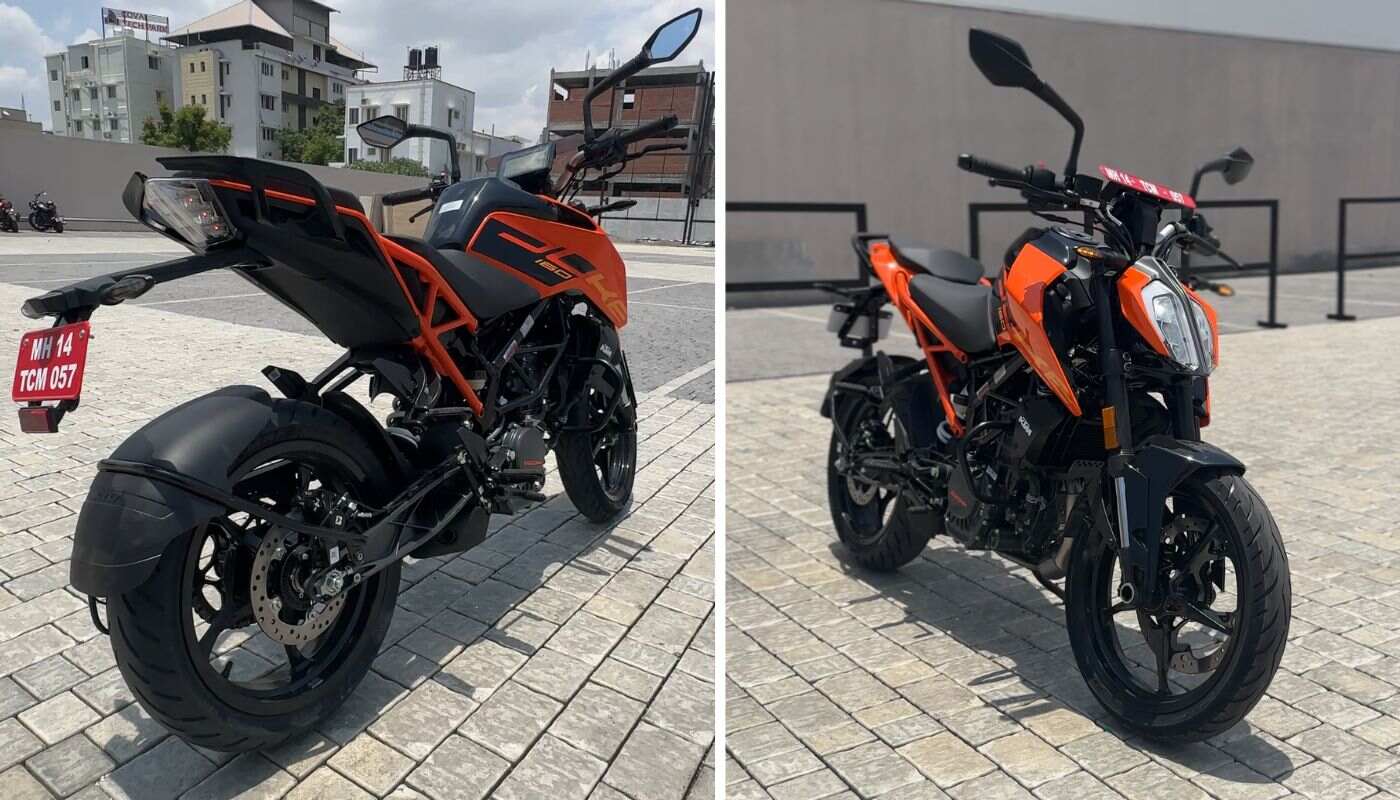
KTM also tuned the steering geometry: a 12 mm shorter front fork and a 0.5° sharper rake deliver even sharper handling than the 200 Duke.
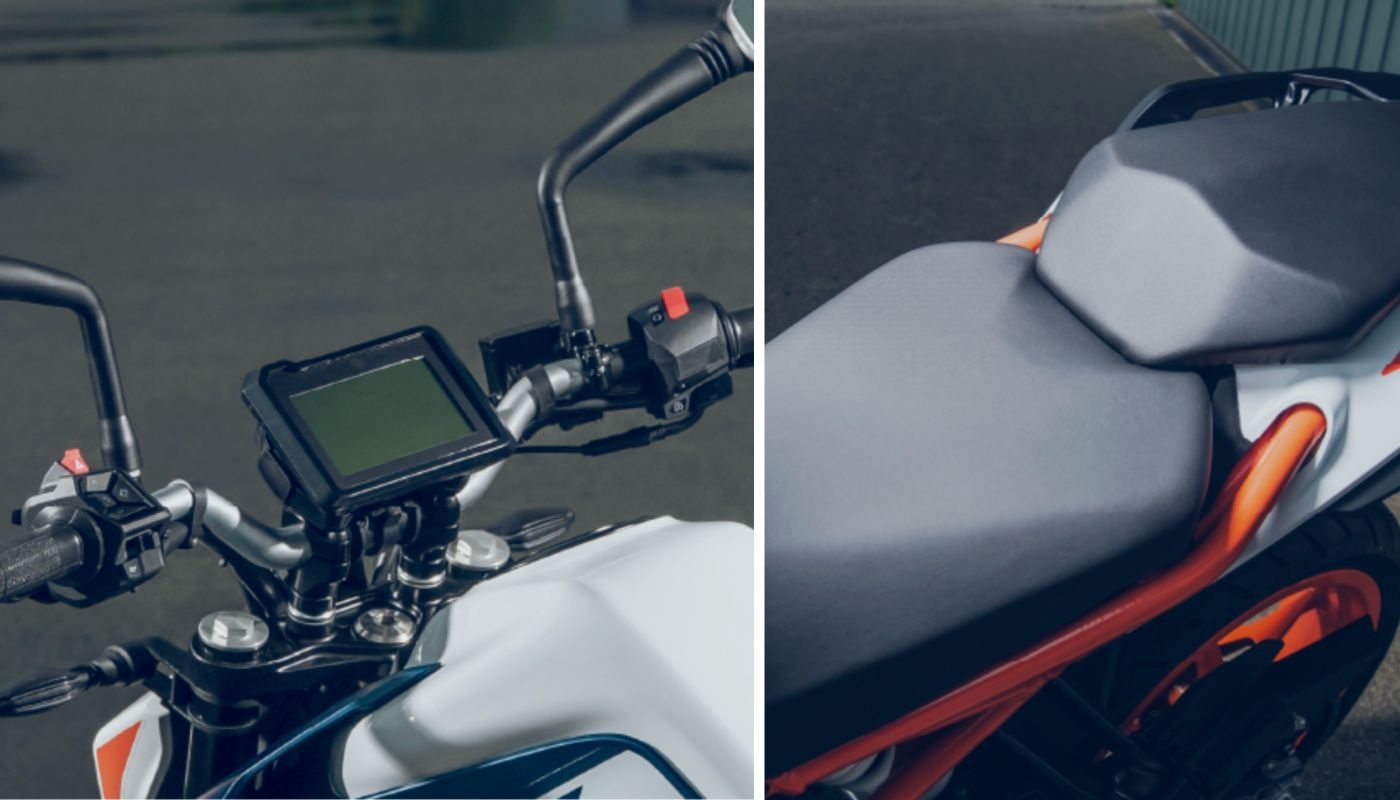
Other notable differences: a larger 320 mm front disc vs 300 mm on the 200, a reduced 815 mm saddle height, and slightly diminished suspension travel. The fuel tank holds 10 litres—less than the 200’s 13 litres—and the instrument cluster is simplified, foregoing a TFT in favor of a more basic display.
3. Feature Set and Practicality
Despite its compact size and lower cost, the 160 Duke packs premium components. It rides on a steel trellis frame, features 17-inch Bionic wheels borrowed from the 250 Duke, boasts a 37 mm WP USD fork, and tames speed with ByBre brakes all around, plus dual-channel ABS.
Feature-wise, LED lighting is standard, and KTM offers an optional Bluetooth connectivity suite (including turn-by-turn navigation and call/SMS alerts) for an additional ~₹5,000.
4. On the Road: Performance & Refinement
The engine delivers smooth, refined performance throughout the rev range—in stark contrast to KTM’s usual buzzy demeanor, especially reminiscent of the 390 Duke.
Thanks to a larger 45‑tooth rear sprocket, acceleration off the line feels punchy, particularly useful in stop-and-go traffic. Though this equates to shorter gearing and limits top speed, the engine remains composed around 80–90 km/h.
One minor quirk: above 7,000 rpm, there’s a slight buzz, but it’s not overly intrusive—some riders could even interpret it as character.
5. Handling and Ride Quality
KTM’s setup delivers an impressive blend of comfort and agility. The suspension absorbs bumps, potholes, and rough tarmac without harshness or softness, striking an exceptional balance for an entry-level sporty bike.
6. Braking: An Area That Needs Improvement
The front brake offers decent feel and progressive bite, though the organic pads result in a subdued initial response. But the real issue lies with the rear—on the test unit, braking power and feedback were underwhelming, bordering on non-existent. That’s a tangible shortfall in an otherwise well-rounded machine.
7. Verdict: Almost a Complete Package
In summary, the KTM 160 Duke delivers exhilarating performance for a 160 cc motorcycle, a well-calibrated ride and suspension, sharp handling, and the premium aesthetic and components of its larger siblings.
Critiques? A lackluster rear brake, modest tire grip, absence of TFT display, and add-on cost of Bluetooth connectivity (~₹5,000). Pricing could also benefit from being more competitive, especially given these optional extras.

Yet, does it evoke the excitement of the Duke DNA? Yes—with one caveat: if your budget allows, splurging ₹23,000 more for the Duke 200 gets you more power, more features, and arguably a better overall package. So, KTM, consider aggressively pricing the 160 as a “gateway Duke.”
8. Why It’s Called “The Almost Perfect Package”
- Design: Carries a heavy Duke pedigree with no compromises.
- Chassis & Ride: Light, nimble, and plush without sacrificing sporty feedback.
- Engine: Smooth and refined—maybe too polite, but still gratifying.
- Premium Bits: Upside-down forks, steel trellis frame, ByBre brakes, ABS—rare in this class.
- Drawbacks: Rear braking needs attention; tires could be better. Optional features raise cost. A more aggressive price strategy would seal the deal.
All things considered, the KTM 160 Duke offers a thrilling entry into the Duke lineup—perfect for new riders or budget-conscious enthusiasts who crave KTM flair. A few tweaks and clearer value positioning could turn this “almost perfect” model into a category-defining gem.