
Here’s an in‑depth article on the issue of learner drivers being forced to wait five months for a driving test slot—primarily focusing on Britain in 2025—along with a detailed FAQ section:
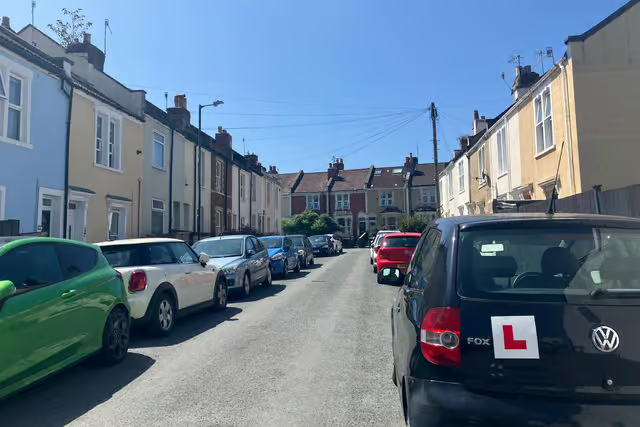
🚗 Learner Drivers Face five-month Waits: what’s going on?
As of early summer 2025, four out of five UK driving test centres are listing wait times of 24 weeks—the maximum allowed by the DVSA—for practical driving tests. That translates into roughly five to six months of delay for most test candidates.
- The average waiting time reached 22 weeks by May, rising from about 14–15 weeks a year earlier.
- Nearly 81 % of test centres had already hit the 24‑week ceiling as of May 5, up from 161 centres at the start of the year.
Root Causes of the Backlog
- Pandemic backlog: The COVID‑19 shutdown of test centres created a huge pent‑up demand that the system is still struggling to clear.
- Examiner shortages: Many qualified examiners left the service, and pay and conditions aren’t encouraging replacements.
- Government technology issues: Outdated booking infrastructure has made it hard to crack down on bots and black‑market resellers exploiting the system.
- Demand spikes: More learners and attempts to rebook after failures are putting pressure on slots.
Black‑Market Booking
With slots scarce, users have turned to unofficial brokers, some of whom are willing to pay £200–£500 for a cancellation slot via instructor-controlled access or automated bots.
Government Response and Planned Fixes
In April 2025, Transport Secretary Heidi Alexander announced a package of reforms intended to clear the backlog by mid‑2026:
- Add 10,000 extra test slots per month.
- Expand overtime incentives for examiners and ask retired or inactive staff to return.
- Recruit and train 450 new examiners, doubling trainer capacity.
- Introduce a ban on the resale of test slots and clamp down on bots.
- Implement stricter rules around booking swaps and cancellation notice periods (see below).
A new rule introduced on 8 April 2025 now requires candidates to give 10 working days’ notice to cancel or change a booking without losing the fee (up from 3 days).
Despite these efforts, target wait times of seven weeks are not expected to be met until summer 2026 at the earliest.
Real‑World Experiences
- A Reddit user in May booked a five‑month wait and had to use their parents’ car to keep practising.
- Another recounted stories of needing to search across multiple regions to find even one earlier slot.
These reflect wider concerns that delays are harming confidence, increasing costs (resulting in more lessons), and forcing people into stress-filled strategies, such as using bots or traveling across countries.
🚦Why This Matters
- Economic and life delays: Without a licence, young drivers face restricted employment options and higher transport costs.
- Financial burden: Longer wait times mean more practice lessons and potential repeats.
- Inequality: Those who can’t afford to game the system—like full‑time workers or less tech‑savvy learners—are disproportionately disadvantaged.
- Service pressure: Businesses and instructors report booking systems “ground to a halt” and widespread frustration.
FAQ: What learner drivers want to know
Why am I being asked to wait five months?
Because the majority of test centres (around 81 %) have reached the DVSA’s 24‑week booking limit, meaning no sooner slots are available. The national average wait is about 22 weeks.
Is a five‑month wait normal?
Yes, extremely common. With record-high demand and chronic examiner shortages, it’s become the norm in most areas.
Can I book elsewhere to get an earlier date?
Yes—checking other test centres in less busy towns or rural areas can yield shorter waits. Many learners travel regionally to secure earlier slots.
What if I fail my test—how long before I can rebook?
Currently, you’d often face the same backlog. With longer notice rules and limited open slots, rebooking may take just as long unless you’re flexible across locations.
Are bots and brokers legitimate ways to get a test?
They’re technically unregulated and in many cases banned or under a crackdown. Some instructors still offer early slots via insider access—but this can cost hundreds of pounds and is discouraged by official guidance.
What fees are involved if I cancel?
From 8 April 2025, you must give 10 working days’ notice to avoid losing the fee (£62 weekdays; £75 evenings/weekends). If you cancel later, you forfeit it.
What is the government doing to reduce waits?
Measures include:
- 10,000 new slots per month.
- Recruiting 450 examiners.
- Expanding over time.
- Cracking down on bot activity and slot resale.
- Raising the cancellation time limit.
- Potentially allowing booking beyond the current 24‑week horizon.
When can I expect wait times to improve?
Officials aim to bring wait times down to seven weeks by summer 2026, though early signs of recovery have been observed from increased testing volumes in mid‑2025.
How can I prepare while waiting?
- Use flexible centres regionally to book earlier slots
- Practice with a friend or family car if possible
- Take advantage of structured learning programs
- Use cancellation‑alert apps (bearing in mind fair access)
- Try to avoid failing by practicing thoroughly
Should I buy a test slot from an instructor?
It’s risky: it can cost hundreds, may breach DVSA rules, and is not officially recommended. Better to rely on waiting with geographic flexibility.
Final Thoughts
Learner drivers across the UK are experiencing unprecedented delays in booking practical driving tests—with waits of up to five months becoming standard. While the backlog reflects pandemic after‑effects, increasing demand, and staffing gaps, the government has laid out a multi-pronged recovery plan, including new test slots, more examiners, policy changes, and knighting technology enforcement.
For now, flexibility is key: consider booking at less busy centres, give proper cancellation notice, practice thoroughly to avoid retests, and stay informed on DVSA policy changes. If all goes to plan, wait times may gradually decrease over the next year—but for the moment, patience and strategic planning remain essential.