Here’s a detailed overview of Tesla Begins Testing Autonomous Drive System in London, including background, technical details, regulatory context, implications, and a FAQ section.
Tesla Begins Testing Autonomous Drive System in London
In late July 2025, Tesla started public trials of its Full Self‑Driving (Supervised) system on the streets of London, spotlighting an important milestone in the company’s push toward autonomous mobility in the UK and Europe.
The initiative follows a series of internal tests and much anticipation, especially given that Tesla has offered the FSD package to UK customers for years, but until now, it remained inoperative due to legal constraints.
What Happened
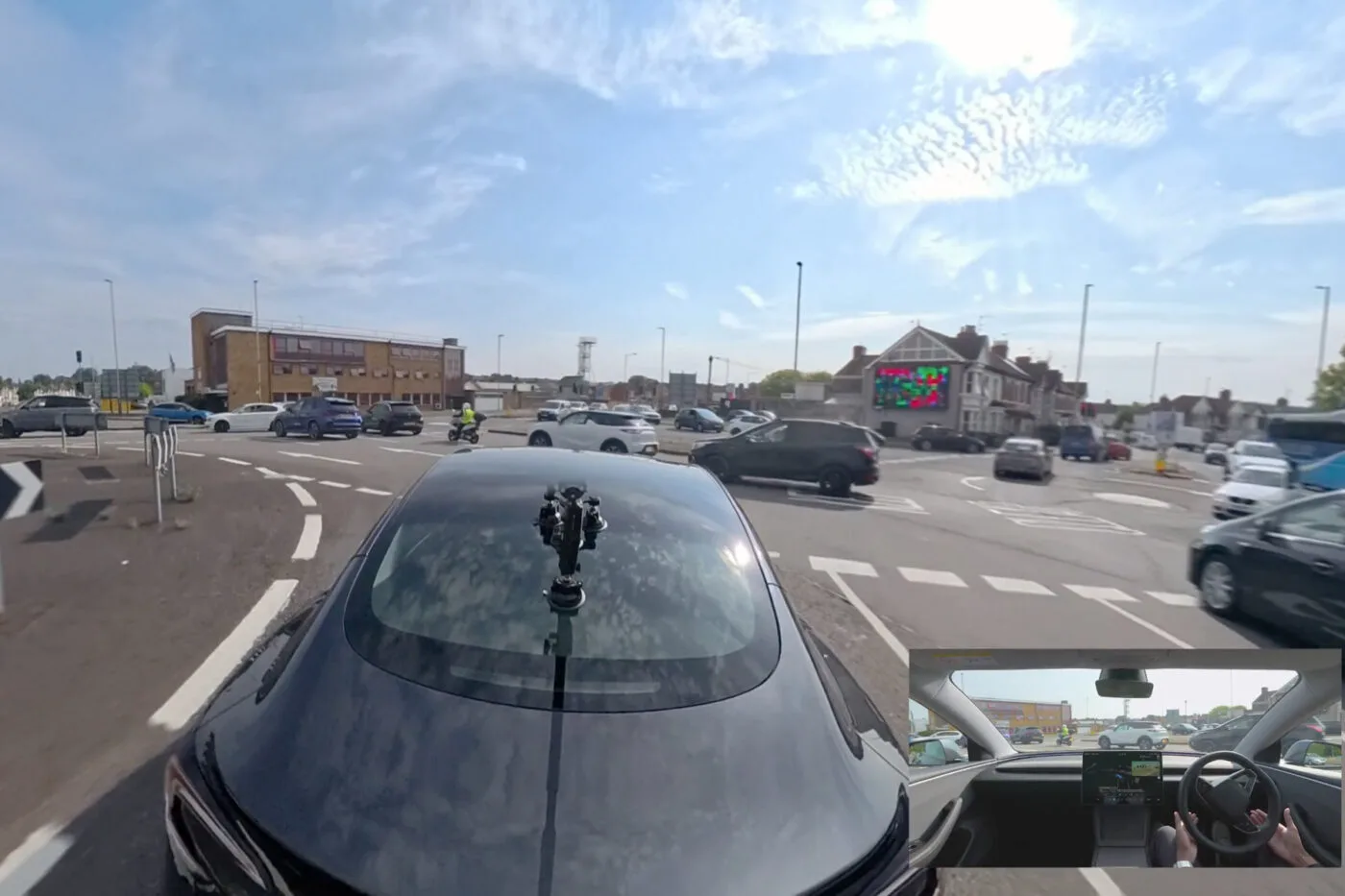
- Tesla released video footage showing a Model 3 Highland equipped with customer‑standard hardware navigating busy central London streets—passing Big Ben, Parliament Square, Whitehall, Buckingham Palace—without human steering input. A person remained in the driver’s seat but did not intervene during the drive.
- The same vehicle later tackled Swindon’s notorious “Magic Roundabout”, a complex junction of five mini‑roundabouts, and handled it successfully—an impressive test of the system’s situational awareness and decision‑making in traffic.
- Tesla clarified that while the hardware is identical to consumer vehicles sold today, the software is an engineering version not yet released to the public.
Technical Overview: FSD Supervised
- The system being demonstrated is FSD Supervised, formerly branded as “Full Self‑Driving Beta” and now reclassified under Tesla’s supervised autonomy model (Level 2 automation under SAE definition).
- FSD relies on a vision‑only neural network fed by Tesla’s suite of eight cameras for 360° situational awareness—avoiding dependence on radar or lidar, unlike some competitors such as Waymo or Cruise.
- It can perform city‑street driving, lane changes, stop‑sign and traffic‑light responses, Autosteer, Traffic‑Aware Cruise Control, Autopark, and Smart Summon features, though driver supervision remains mandatory.
Regulatory & Legal Context
- Although FSD packages have been sold in the UK for more than six years—costing around £6,800—they could only be activated once regulators approved Tesla’s software for use in local traffic conditions.
- Tesla aims to obtain regulatory approval by 2026, enabling customers to legally enable supervised self‑driving features in their consumer vehicles. However, recent UK government projections suggest full legal implementation of driverless vehicle legislation may be postponed to late 2027.
- The UK government’s Automated Vehicles Bill, introduced in late 2023 and updated in 2024, defines thresholds for safe, legal, and driverless systems. It sets the stage for Level‑4 autonomy deployment on public roads—but such systems are still under review.
Why London and Why Now?
- It also follows earlier trials in Australia and internal European testing, and hints at future broader rollout across EU cities like Paris, Berlin, Madrid, and Amsterdam.
Implications & Controversies
Safety and Public Trust
- Safety advocates and regulators remain cautious. Past incidents in the U.S. The system remains only Level 2, requiring hands-on supervision.
- Industry experts note that the UK environment—with narrow streets, pedestrians, cyclists, and unique junctions like the Magic Roundabout—tests capabilities that many ADAS systems struggle with.
Market and Competitive Landscape
- If Tesla secures approval, the company projects that FSD could be available across European nations by the end of 2025, potentially allowing it to claim up to 99 % market share in autonomous vehicle technology in the long term.
- It pits Tesla’s vision-only approach directly against competitors like Waymo, Cruise, and Mobileye (embedded in Lyft/Benteler), which use lidar and sensor fusion models still seen by some experts as safer.
Economic Impact
- Analysts predict the autonomous-driving segment could be worth around £42 billion and generate 38,000 jobs in the UK by 2035—though adoption depends heavily on consumer trust and legislation.
Frequently Asked Questions (FAQs)
Is this System Truly “Driverless”?
A: No. The current demonstrations use FSD Supervised, which is SAE Level 2 automation. A person must remain in the driver’s seat, ready to intervene; it is not classified as fully driverless autonomy (Levels 4–5).
Has Tesla Sold FSD in the UK before?
A: Yes. Tesla offered the FSD option to UK buyers for over six years, charging around £5,800–6,800, but until now, the feature could not be activated due to regulatory restrictions over local implementation.
What Hardware is being used in the tests?
A: A standard consumer Model 3 Highland, with no special hardware modifications—only the software is an engineering (test) build, not publicly released.
When will UK customers be able to use FSD themselves?
A: Tesla hopes to have regulatory approval by 2026, with the UK government aiming for legislative readiness sometime in the second half of 2027.
Why is London a Significant Testing Ground?
A: London presents a combination of heavy traffic, unique road layouts, pedestrians, cyclists, roadworks, historic narrow lanes, and dense junctions—ideal for stress‑testing FSD’s edge‑case AI capabilities.
How does Tesla’s Approach differ from other self-driving firms?
A: Tesla relies on camera-based vision only and AI-driven interpretation rather than lidar or radar. This contrasts with companies like Waymo or Cruise, which integrate multi-sensor fusion for redundancy and safety.
What About Safety and Public Concerns?
A: While Tesla cites billions of real-world driving miles logged to train FSD, critics warn of misuse and beta‑software risks. Public opinion in the UK remains cautious—some polls indicate many Britons feel unsafe traveling in driverless cars.
What Broader Impact could this have?
A: If approved and rolled out regionally, FSD could redefine urban mobility, spur investment in EV and autonomous tech infrastructure, and create tens of thousands of jobs—while reshaping ride‑hailing and shared‑mobility business models across Europe.
Summary
Tesla’s London demonstration marks a pivotal step in validating its FSD Supervised system under real-world urban conditions. Using standard hardware and test software, the Model 3 negotiated complex traffic, landmarks, and even Swindon’s famed Magic Roundabout, showcasing progress—but still within Level 2 driver‑assisted autonomy.
The company remains constrained by UK laws and awaits regulatory approval, anticipated by 2026, while government legislation is pushing for legal acceptance no earlier than late 2027. Success in this public trial could accelerate adoption across Europe, challenge competing technologies, and anchor Tesla’s ambitions for a robotaxi future.
Public trust, safety scrutiny, and clear regulatory milestones will determine whether Tesla’s autonomous dreams become a reality or remain a high-profile pilot in an evolving legal landscape.