

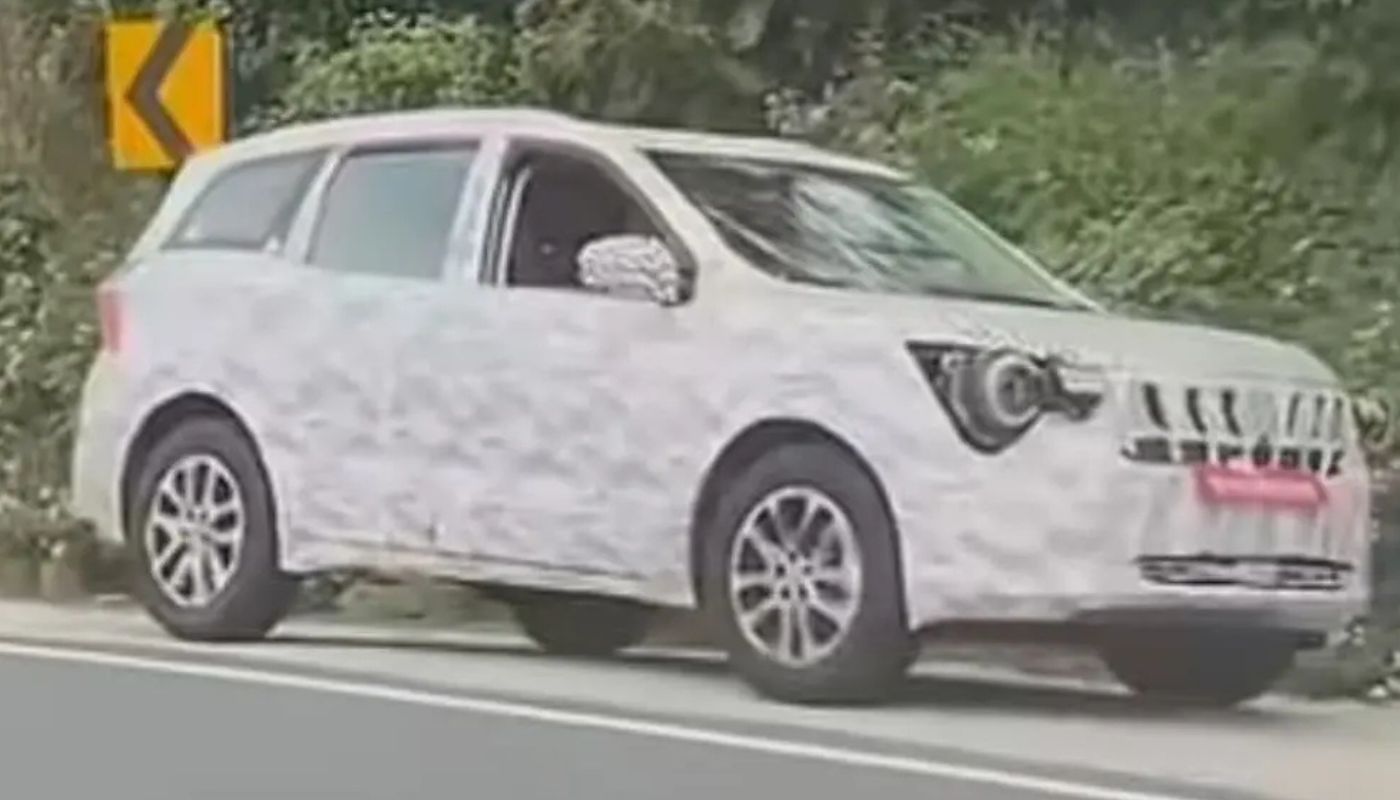
Mahindra XUV700 Facelift Spotted Testing blockbuster three-row SUV is closing in on its first big refresh, and the latest sightings make it clear: the XUV700 facelift is now wearing many of its production-spec panels and parts.
Recent spy shots show slimmer twin-projector headlamps, a redrawn grille, fresh alloy designs, and, inside, a tech-heavy triple-screen dashboard that lifts the cabin into premium territory. In other words, this is no minor nip-and-tuck; it’s a meaningful mid-cycle update aimed squarely at keeping the 700 at the top of India’s hotly contested D-SUV pile.
What the New Camo Reveals on the outside
Even through the camouflage, the nose tells a new story. The grille’s mesh and slat pattern look reworked, and the lower air dam appears wider, hinting at a more assertive stance.
Expect re-profiled front and rear bumpers and tweaked LED signatures at both ends; some test cars have also run different alloy wheel designs, suggesting variant-specific styling just like today’s car. Taken together, it signals that Mahindra’s clay models have made the jump to late-stage prototypes.
Around the side, the silhouette and flush door handles remain familiar, which is unsurprising for a facelift. At the back, lighting details are still masked, but multiple sightings talk about reworked tail-lamps and minor bumper changes.
A very Different Cabin Experience
The facelift’s headline upgrade sits inside: a full-width triple-screen layout—digital driver display, central infotainment, and a dedicated co-passenger screen—echoing Mahindra’s XEV 9e interface. This is a big step up from the current twin-screen setup and should allow richer UI, split-view functions, and passenger-side content.
There’s more: the brand appears to be switching from Sony to Harman/Kardon for the audio hardware on this facelift, with sightings of branded speaker grilles and revised placements. That aligns with reports of a higher-spec system potentially matching the impressive setups showcased on Mahindra’s newer concepts. If executed well, the acoustic upgrade alone could be a strong draw for buyers who prioritize in-car entertainment.
Mahindra seems to be using this update to polish everyday usability, too. Expect rear sun blinds, deeper ADAS integration, and, on captain-seat variants, ventilated second-row seats—features that bring the 700 in line with newer rivals and up the ‘living with it’ quotient for chauffeur-driven owners.
Powertrains: Why Fix what isn’t broken?
Under the skin, the XUV700 facelift is expected to retain the proven 2.0-litre turbo-petrol and 2.2-litre diesel engines, paired with six-speed manual and torque-converter automatics, plus optional AWD on select trims. That continuity makes sense: both motors are segment benchmarks for performance and drivability, and Mahindra’s recent focus has been on emissions updates and calibration polish rather than wholesale hardware changes.
Timeline and Positioning
Multiple outlets now peg the launch window at early 2026, with several pointing specifically to January 2026—a classic start-of-calendar-year landing for a refreshed bestseller. Given the added tech and cabin upgrades, a modest price bump over today’s sticker is likely. The facelift will continue to butt heads with the Tata Safari, Hyundai Alcazar, MG Hector Plus, and in-house cousin Scorpio N.
Reading the Strategy
Mahindra’s playbook here is textbook mid-cycle mastery:
- Make the exterior look “new” from driveway distance (lights, grille, alloys) without incurring the cost and lead-time of changing hard points.
- Transform perceived luxury via the cabin—screens, audio, materials—because that’s where buyers spend their time and where rivals have been moving quickly.
- Keep mechanicals familiar to preserve reliability, supply chain predictability, and performance credentials.
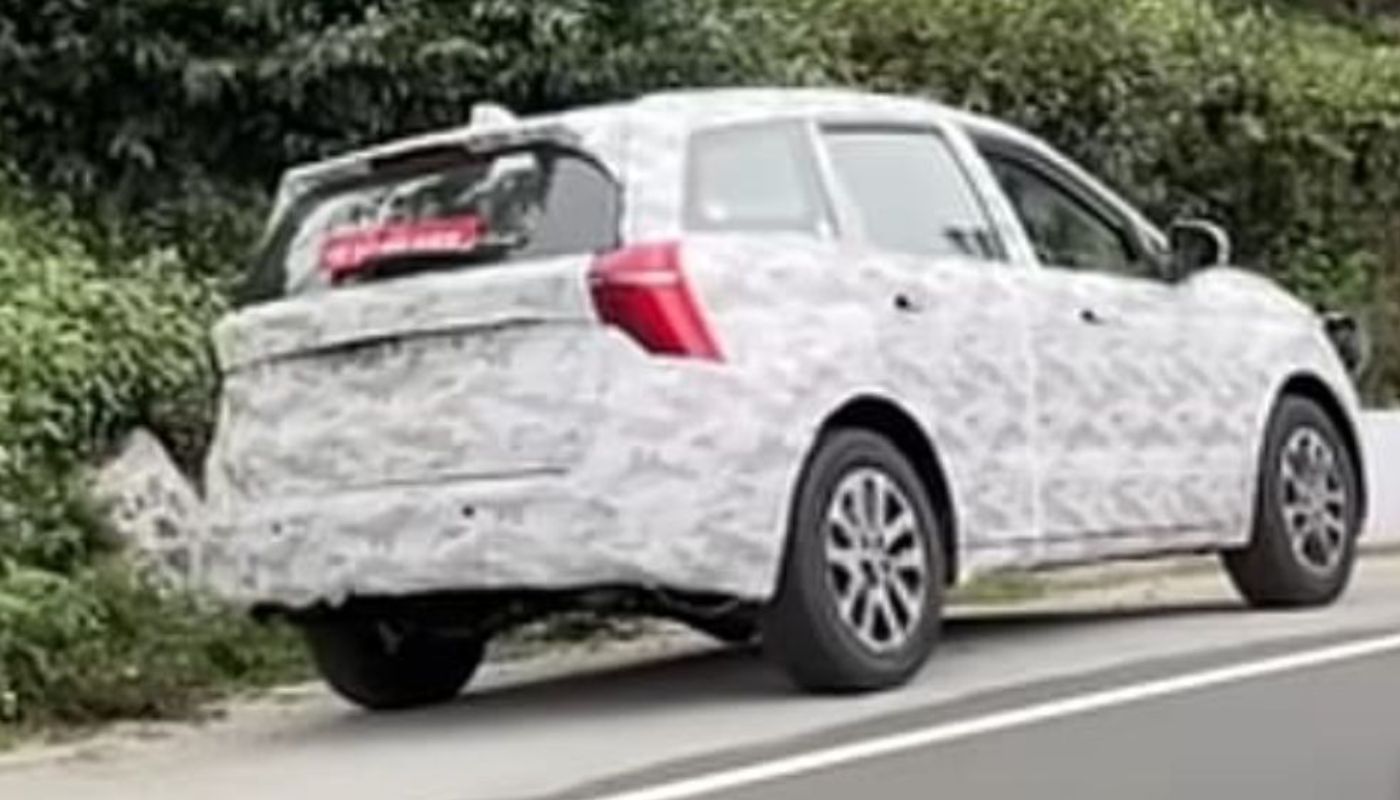
It’s also noteworthy that, despite early speculation, the facelift isn’t simply lifting the XEV 9e’s front fascia wholesale.
What the “Near-Production” Spy Shots tell us
The latest mules carry production-spec headlamps and alloys rather than placeholder parts, a sign that validation is now focused on durability, electronics integration, and final calibrations. The presence of finished interior panels (steering, displays, trim pieces) also suggests the tool-up phase is well advanced.
In past cycles, Mahindra has often moved from such late-stage sightings to showroom cars within a couple of quarters, which dovetails neatly with the early-2026 launch chatter.
Summary
The 2026 XUV700 facelift isn’t chasing radical sheet-metal change. Instead, it’s doubling down on tech, tactility, and touchpoints: a more premium cockpit experience, richer audio, better night-time usability (auto-dimming mirror), and exterior lighting that refreshes the face without alienating loyalists.
If pricing stays disciplined, Mahindra could effectively reset the bar for feature density per rupee in the segment—again. And with engines untouched, performance should remain a highlight, while incremental ADAS and comfort features keep the XUV700 feeling current against well-equipped competitors.
Likely highlights at a glance (based on spy evidence):
- Slimmer twin-projector headlamps, revised grille, updated bumpers, and alloys.
- Triple-screen dashboard (driver, infotainment, co-passenger).
- Harman/Kardon audio replacing Sony; redesigned speaker grilles.
- Retained 2.0-turbo petrol and 2.2-diesel with 6MT/6AT; AWD on select trims.
- Launch likely January–Q1 2026 with a small premium over current pricing.
If the timeline holds, expect a proper reveal with variant details and features in the coming months. For now, the spy trail paints a clear picture: the near-production XUV700 facelift is almost ready to roll, and it’s aiming squarely at elevating the in-cabin experience while keeping the nameplate’s punchy performance intact.