
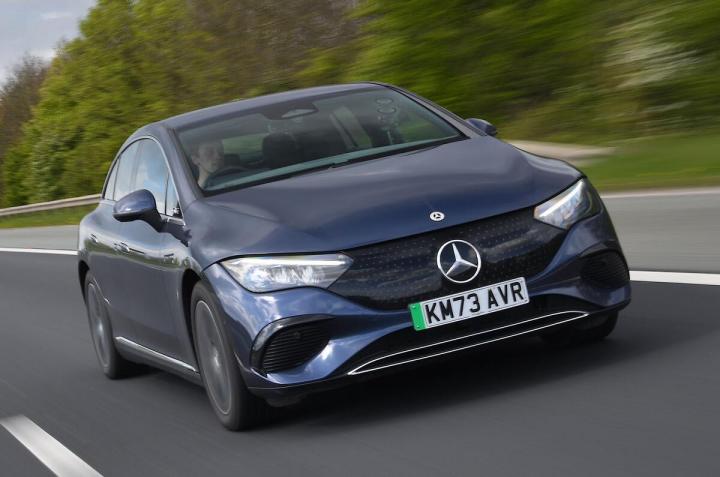
Mercedes-Benz EQE Sedan & SUV End in 2026 decision to cease production of the EQE saloon (sedan) and EQE SUV in 2026, exploring the strategic motivations, transition plans, technological implications, and market context.
1. What Mercedes-Benz Is Doing: Ending EQE Production in 2026
Mercedes-Benz has stated that it plans to discontinue production of the EQE saloon and EQE SUV in 2026. This move is part of a broader realignment of its electric vehicle portfolio, aiming to phase out overlapping models in favor of next-generation EVs built on a more advanced platform.
While Mercedes hasn’t officially confirmed the production end, a spokesperson cited the company’s “policy of not commenting on speculation” around future models. Nevertheless, predecessor media reports consistently indicate the shift.
2. Why the Decision Was Made: Strategic Realignment & Overlap Avoidance
a. Minimizing Model Overlap
The introduction of the electric C‑Class EQ (a saloon) and the GLC EQ (an SUV)—both based on Mercedes’s new MB. The EA‑M platform with 800‑volt architecture has created a significant overlap in the EV lineup. These models promise better packaging, enhanced practicality, and similar chassis technology to that of the EQE models, making further EQE investment difficult to justify.
b. Technological and Cost Efficiency
Mercedes initially planned a facelift for the EQE models—including upgrading their platform from 400V to 800V and introducing Silicon-Carbide inverters and new eATS2 electric motors. However, these upgrades are now being redirected exclusively toward the larger EQS saloon and SUV.
c. Factory Reconfiguration for Future Models
Ending EQE production allows Mercedes to retool factories—such as the Bremen plant (EQE saloon) and the Tuscaloosa facility (EQE SUV)—for future models, including the E‑Class EQ, targeted for a 2027 launch.
3. What Will Replace the EQE Models?
a. C-Class EQ Saloon (2026)
Set for release in 2026, the C‑Class EQ will bridge the gap left by the EQE saloon in terms of technology and offerings. It will feature options such as air suspension and rear-axle steering, experiences similar to those in the EQE.
b. GLC EQ SUV (Debuting 2025)
Additionally, it promises a towing capacity of up to 2,500 kg.
c. E-Class EQ (2027)
An electric version of the E‑Class (E‑Class EQ saloon) is already under development and expected to arrive in 2027, again built on the MB.EA‑M platform.
4. Broader Trends: Nameplate Shifts, Platform Strategy, and Market Realities
a. Strategic Platform Evolution
Mercedes once planned an expansive electric platform—the MB.EA Large—to support future EQE and EQS models. However, this plan was scrapped due to subdued sales and shifting priorities. The company is now focusing on evolving the EVA2 platform and the more scalable MB.EA Medium architecture.
b. Changing Branding Direction
Mercedes-Benz is retiring the stand‑alone EQ naming strategy for its EVs. Future models will adopt an “EQ Technology” suffix (e.g., G580 with EQ Technology), signaling integration within their broader vehicle lineup, not a separate sub-brand.
c. Industry Context & External Pressures
This decision mirrors global auto industry challenges: cooling EV demand, shifting regulations (especially in the U.S.), supply chain volatility, and evolving incentives. Several automakers—including Ford, Honda, and Nissan—have recently canceled or delayed major EV programs or full electrification goals.
5. Implications: For Consumers, Market, and Mercedes
a. For Consumers
- Pros: The newer C-Class EQ and GLC EQ promise improved practicality, better architecture (800 V), and potentially more competitive pricing and range.
- Cons: Existing EQE owners or fans may see resale values impacted or feel caught in Mercedes’s transitional strategy.
b. For the Market & Dealers
- Dealers must adapt inventory and sales strategies, especially as EQE models phase out.
- Markets where EV demand is weaker (e.g., the U.S.) may feel the changes more acutely.
c. For Mercedes-Benz
- The move reduces complexity and manufacturing inefficiencies.
- It enables focused investment on newer platforms and vehicles aligned with market demand.
Summary Table
| Aspect | Details |
|---|---|
| End of EQE (sedan & SUV) | Planned for 2026; not officially confirmed but widely reported. |
| Reason | Avoids overlap with incoming models, optimizes investment, and enables platform evolution. |
| Replacements | – C-Class EQ saloon (2026) – GLC EQ SUV (debuting 2025) – E-Class EQ saloon (2027) |
| Platform Strategy | Shift to 800 V MB.EA-M platform; scrapping MB. EA-Large; moving toward MMA and evolving EVA2. |
| Broader Trend | Reflects industry-wide EV re-evaluation amid market and regulatory changes. |
| Consumer Impact | Better future tech, but current EQE ownership context shifts. |
| Strategic Benefit | Streamlined EV portfolio, efficient manufacturing, focus on next-gen EVs. |
Summary
Mercedes-Benz’s plan to end production of the EQE saloon and SUV in 2026 provides a clear window into the evolving strategies major automakers are adopting in response to rapid shifts in the electric vehicle market.
Their path forward—anchored by the C-Class EQ, GLC EQ, and eventual E-Class EQ—reflects a commitment to platform rationalization, customer-focused innovation, and operational agility. For buyers, the promise is of smarter, better cars; for Mercedes, it’s an opportunity to refocus and adapt in an increasingly competitive EV landscape—especially as policymakers, markets, and consumer behaviors continue to fluctuate.