
Nissan’s decision to close its Oppama plant, the “tough but necessary” move at the core of its global restructuring:
🏭 The Decision: “Tough But Necessary”
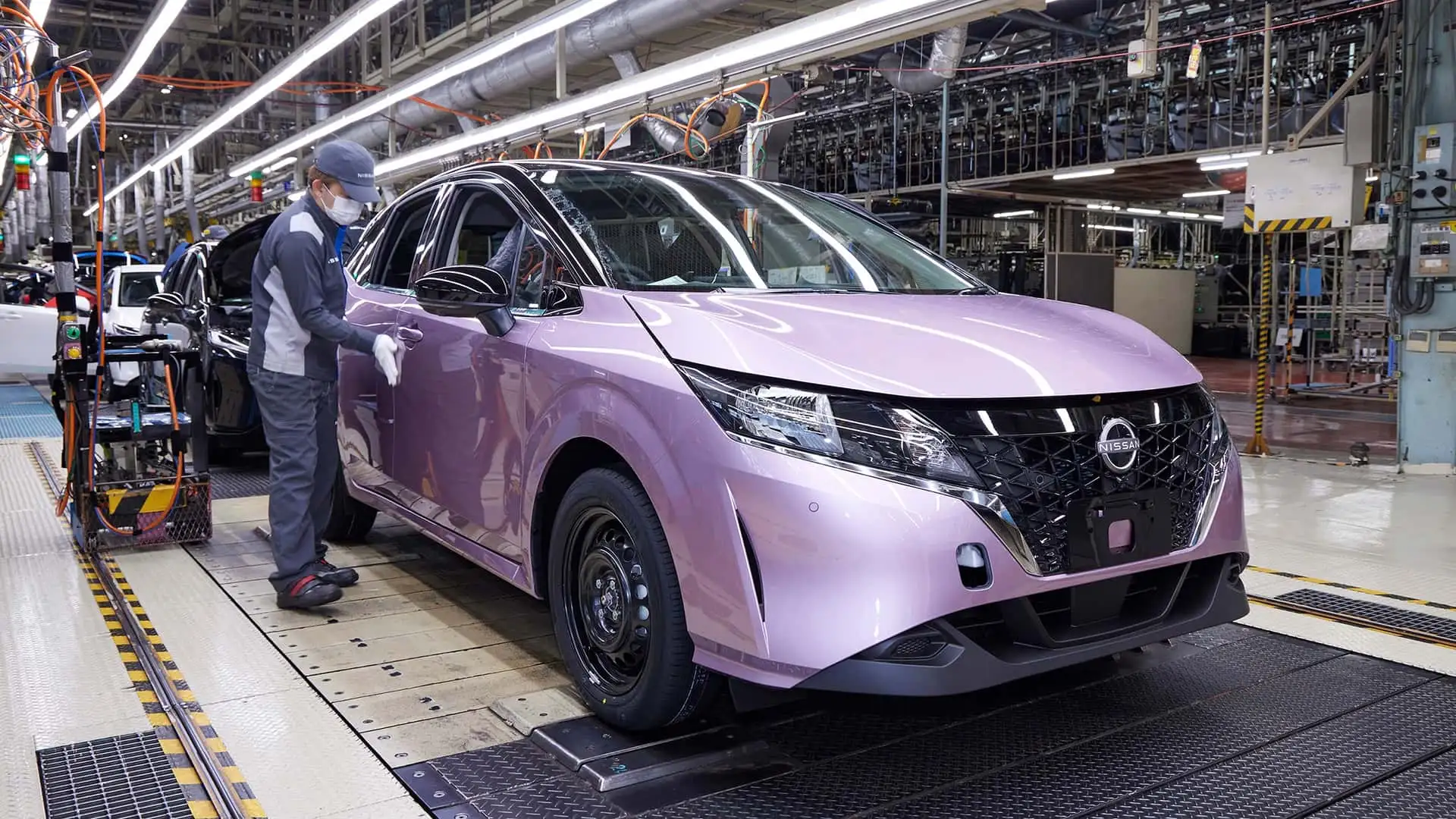
On July 15, Nissan Motor Co. announced a pivotal step under its Re-recovery plan: ceasing vehicle production at its flagship Oppama factory in Kanagawa Prefecture by the end of fiscal year 2027 (March 2028).
New CEO Ivan Espinosa, who assumed the role in April 2025, described the move as “tough but necessary.” His statement underscored the difficulty of closing a plant with a 64‑year legacy producing nearly 18 million vehicles—before March 2028, it will have been home to the Leaf EV, Cube, Micra, Note, Note Aura, and NV200.
Why Now? The Strategic Realignment
1. Re: Nissan Plan Goals
- Reduce global production capacity from 3.5 million to 2.5 million vehicles annually.
- Scale down manufacturing sites from 17 to 10 worldwide.
- Cut approximately 20,000 jobs (~15% of workforce).
2. Operational Efficiency & Capacity Utilization
- The Oppama plant has been operating at low capacity (~40%).
- Transferring production to the Kyushu plant consolidates operations and raises utilization closer to the target.
- Savings from consolidating manufacturing sites are expected to bolster profitability.
3. Financial Pressures
- Declining sales in China and the U.S., rising inventory levels, and restructuring costs exacerbated the financial strain.
- U.S. tariffs also reduced Nissan’s global profit margins.
Oppama Plant: A Storied Past
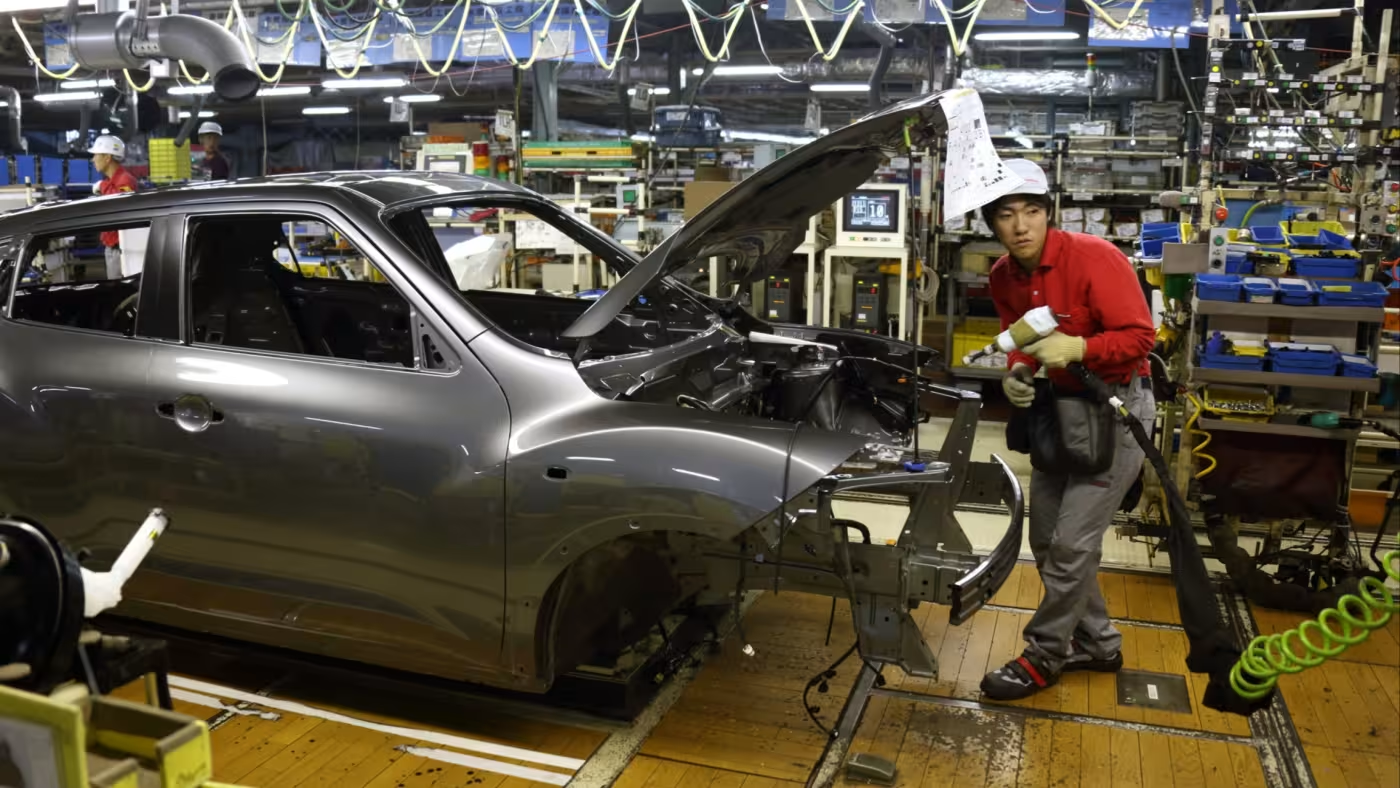
- It produced 17.8 million vehicles over its lifespan, including models that shaped Nissan’s image: Leaf, Cube, Micra, Note series, NV200, etc.
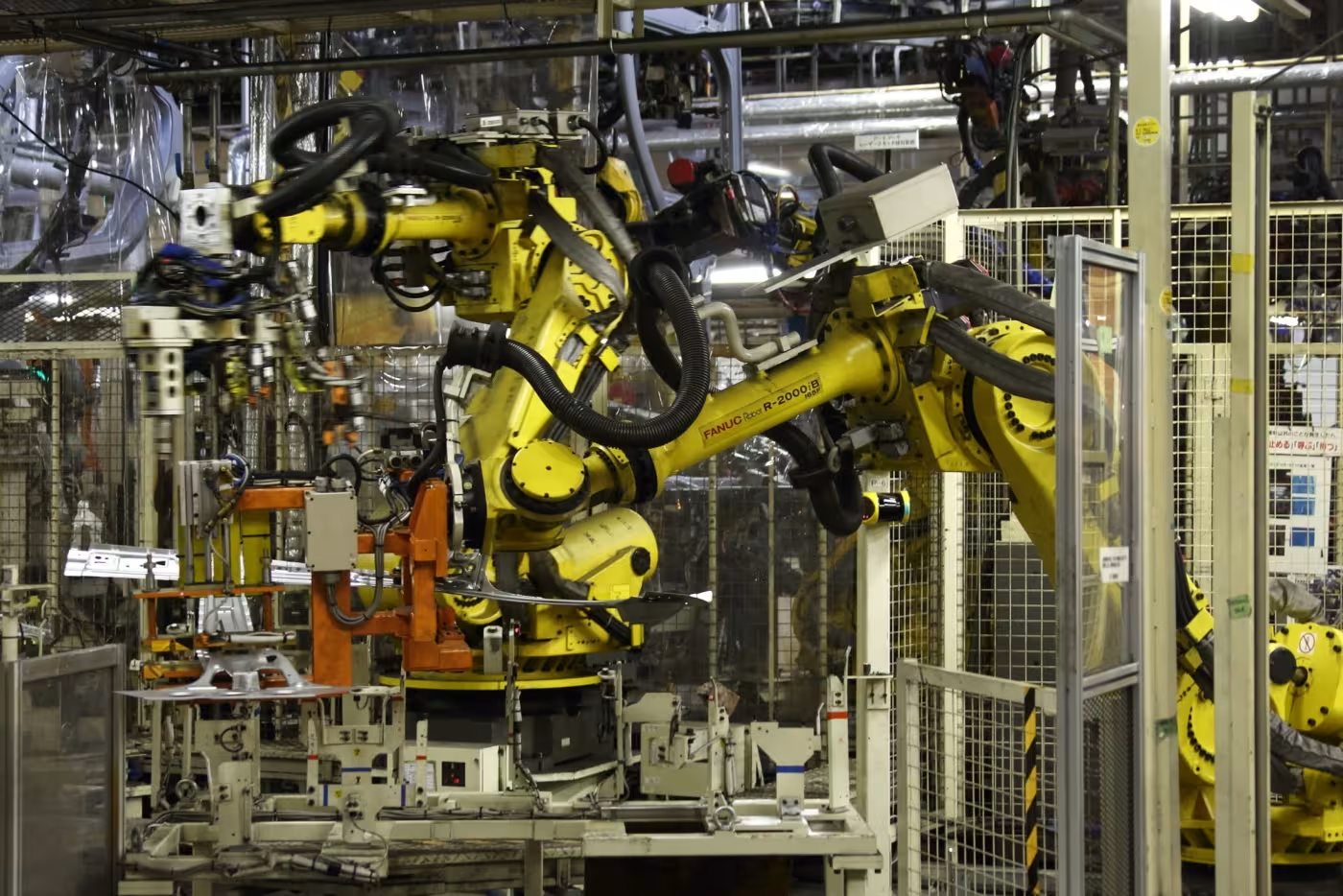
- Known as Nissan’s “mother factory,” it witnessed several milestones: first robotic welder deployment (1970), Leaf EV production launch in 2010, and serving as a bedrock for innovation.
Human and Community Impacts
Workforce
- The plant employs 2,400–3,900 workers, depending on the source cited.
Local Economy
- Yokosuka and the broader Kanagawa region will be hit by this decision—subcontractors and local businesses tied to the plant are vulnerable.
- Nissan plans to explore options for the land, including sale, third-party use, or repurposing, ensuring the shutdown is “irreversible,” even if no buyer appears.
- Nearby facilities—the Nissan Research Center, crash-test facilities, and Oppama Wharf—will remain in operation.
Broader Implications & Industry Context
Global Restructuring
- Oppama’s closure is one element of a broader global consolidation: Nissan will close seven plants (a total of 17→10) and cut 20,000 jobs across markets, including Argentina and India.
- This positions Nissan as the third-largest Japanese automaker, trailing Honda, after restructuring.
What Happens to Oppama Next?
- Nissan is weighing land sale or allowing a firm—like Foxconn—to use the plant for EV production, though Espinosa ruled out current active discussions.
- Even absent a buyer, the closure will proceed; the site may be transformed or repurposed in the future.
- The fate of subcontractor businesses, the local economy, and workers depends on forthcoming carve-ups and consulting efforts with unions.
Long-Term Outlook for Nissan
Financial Stability
- The closures support Nissan’s ambition to save roughly ¥500 billion (~$3.4 billion) over two years and return to profitability by 2026.
- Lower costs, fewer redundant sites, and leaner operations are essential to reduce debt (~¥4.8 billion) and rebound after recent financial losses.
Production Efficiency
- Consolidating in Kyushu aligns with Nissan’s 100% utilization goal; facilities operating below the threshold are being closed.
- Streamlined, flexible manufacturing supports faster response to market shifts, especially in the EV/hybrid transition.
Market Positioning
- Cutting excess capacity helps reallocate resources to EV/hybrid R&D, responding to intense competition.
- Strategic flexibility remains critical: Nissan continues dialogues with Honda and Mitsubishi, exploring partnerships to bridge future gaps.
About Nissan Oppama Plant:
Address: 1, Natsushima-cho, Yokosuka-shi, Kanagawa
Started operation: October 1961
Land area: 547,606㎡(plant area only)
Number of employees: Approximately 2,400
Current models under production: Note, Note Aura
Summary
Nissan’s closure of the Oppama plant is far more than a cost-cutting exercise. It’s a symbolic pivot—from once-celebrated site of innovation to a renewed focus on efficiency and financial health.
Espinosa’s “tough but necessary” decision reflects the harsh realities facing traditional automakers: shrinking margins, EV competition, and the need for leaner operations. Whether the transition succeeds depends on execution, employee support, asset repurposing, and keeping core engineering hubs intact.
While the said “iconic” plant ceases production, its legacy lives on in the efficiencies and resilience Nissan hopes to achieve, lest the company fade amid a rapidly evolving global auto landscape.