
Tata Motors is actively exploring the expansion of its alternative-fuel and electrified powertrain portfolio — specifically, introducing CNG (compressed natural gas) and strong-hybrid variants for its more premium and larger vehicles (i.e., models over 4 metres in length).
Below is a synthesized overview of this strategy: what’s driving it, how Tata is positioning itself, the technical and commercial challenges, and what it means for the upcoming models in India.
Why Tata is Doing This: Context & Drivers
- Growing demand for alternative-power trains – In the Indian market, CNG vehicles are growing strongly, aided by rising petrol/diesel prices and consumer interest in lower running-cost vehicles. Tata reports that in FY2025, the CNG powertrain segment grew ~35 % year-on-year, while hybrid adoption grew ~15.4 %.
- Regulatory pressure — CAFÉ3 norms coming – India is preparing for stricter fuel efficiency/emissions norms (CAFÉ 3) from 2027. By adding more clean-fuel or efficient powertrains, Tata aims to meet regulatory compliance and lower its fleet average emissions.
- Diversification of powertrain portfolio for premium segments – While Tata has already rolled out CNG variants in its sub-4-metre (compact) models (for example, the Tata Nexon CNG), it has not yet extended this to vehicles above 4 metres (which tend to be larger SUVs). Tata is now “closely watching” the 4.3-metre segment for CNG, and sees larger models as natural candidates for hybrid systems.
- Competitive advantage & market opportunity – As other OEMs also eye electrification and cleaner fuel alternatives, Tata is positioning itself to offer more choice (CNG, hybrid, and EV) across segments, including higher up the ladder in terms of size and price.
What Tata is Evaluating/Intending
- CNG for >4-metre vehicles: Currently, Tata’s CNG offerings are confined to sub-4-metre models (e.g., Tiago, Tigor, Punch, Nexon). The company says it is “very closely watching the 4.3-metre segment” to decide whether to extend CNG into that space.
- Strong-hybrid powertrains: For larger SUVs and premium models (over ~4.3-4.6 metres), Tata is actively considering strong hybrids (i.e., internal combustion engine + electric motor(s)). These are seen as the “natural starting point” for such big vehicles.
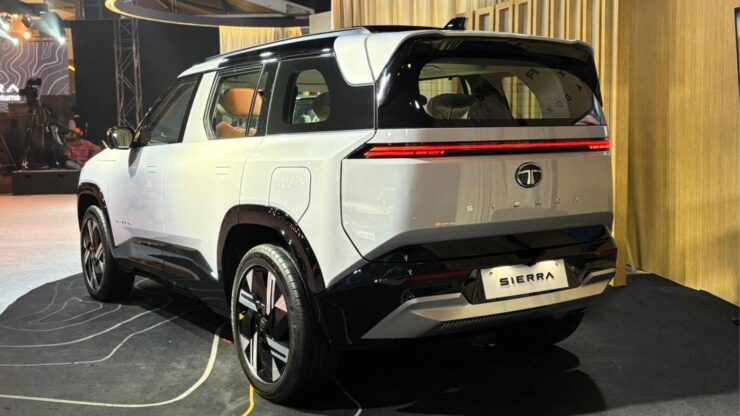
- Target models: These discussions mention models such as the Tata Harrier, Tata Safari, and upcoming Tata Sierra — all of which are over 4 metres in length and in the SUV/midsize SUV segment.
- Timing & demand-based roll-out: Tata emphasises that the move to CNG/hybrid will depend on demand scaling up and business case justification (i.e., cost, packaging, powertrain suitability). They are being “reactive” rather than committing to an immediate launch in all segments.
Technical & Commercial Challenges
- Performance and packaging: CNG systems typically reduce power/torque compared to petrol/diesel, which makes integration in heavy/larger vehicles (SUVs) more challenging. Larger vehicles require higher output engines to deliver acceptable dynamics. Tata notes that extending CNG to over-4-metre vehicles “presents several technical and market challenges.”
- Cost vs benefit: For hybrid systems too, cost addition is significant; for premium models, the extra investment must be offset by consumer willingness to pay and adequate volume to amortise the cost. Tata is watching segment competitiveness.
- Market demand & infrastructure: Although CNG infrastructure is decent in many Indian cities, for large SUVs, the fuel/refilling convenience and performance still matter. Similarly, hybrids need servicing and consumer awareness.
- Regulatory environment: While hybrids help with emission/norm compliance, Tata is also leveraging its current CNG + EV portfolio to stay within compliance. They need to ensure that any new variant fits into the overall fleet strategy.
What This Means For Customers and the Market
- More Choice For Premium Segment Buyers: If Tata goes ahead, customers looking at bigger SUVs, but wanting lower running costs or alternative-fuel options (CNG or hybrid) may get a broader set of variants.
- Potential Price Advantage: CNG often carries a lower fuel cost; hybrids may offer better fuel economy; Tata’s move might make premium SUVs more cost-efficient to operate.
- Brand Positioning: Tata is reinforcing its “cleaner mobility, alternative powertrains” credentials not just in the entry/mid-segments but in the premium segments too.
- Impacts on Competition: Other manufacturers may accelerate their hybrid / CNG strategies in this segment; consumer expectations may shift.
- Decision-Making Timeline: The company emphasises “if demand scales up” and “business case justifies investment”. So while the intention is clear, actual market launch may depend on many variables (segment demand, cost of technology, regulatory push).
Key Takeaways
- Tata is actively exploring CNG and strong-hybrid powertrains for its premium/large vehicles (above 4 metres) — a clear extension of its existing alternative-fuel strategy.
- The push is motivated by market demand, regulatory norms (CAFÉ3), fuel-cost advantage, and brand portfolio diversification.
- Execution is not guaranteed overnight; technical, cost, performance, and packaging challenges exist.
- For the Indian buyer, this could mean within a few years, premium SUVs from Tata may be available not only in petrol/diesel/EV trims, but also in CNG and hybrid variants — offering more fuel-efficient choices in that space.
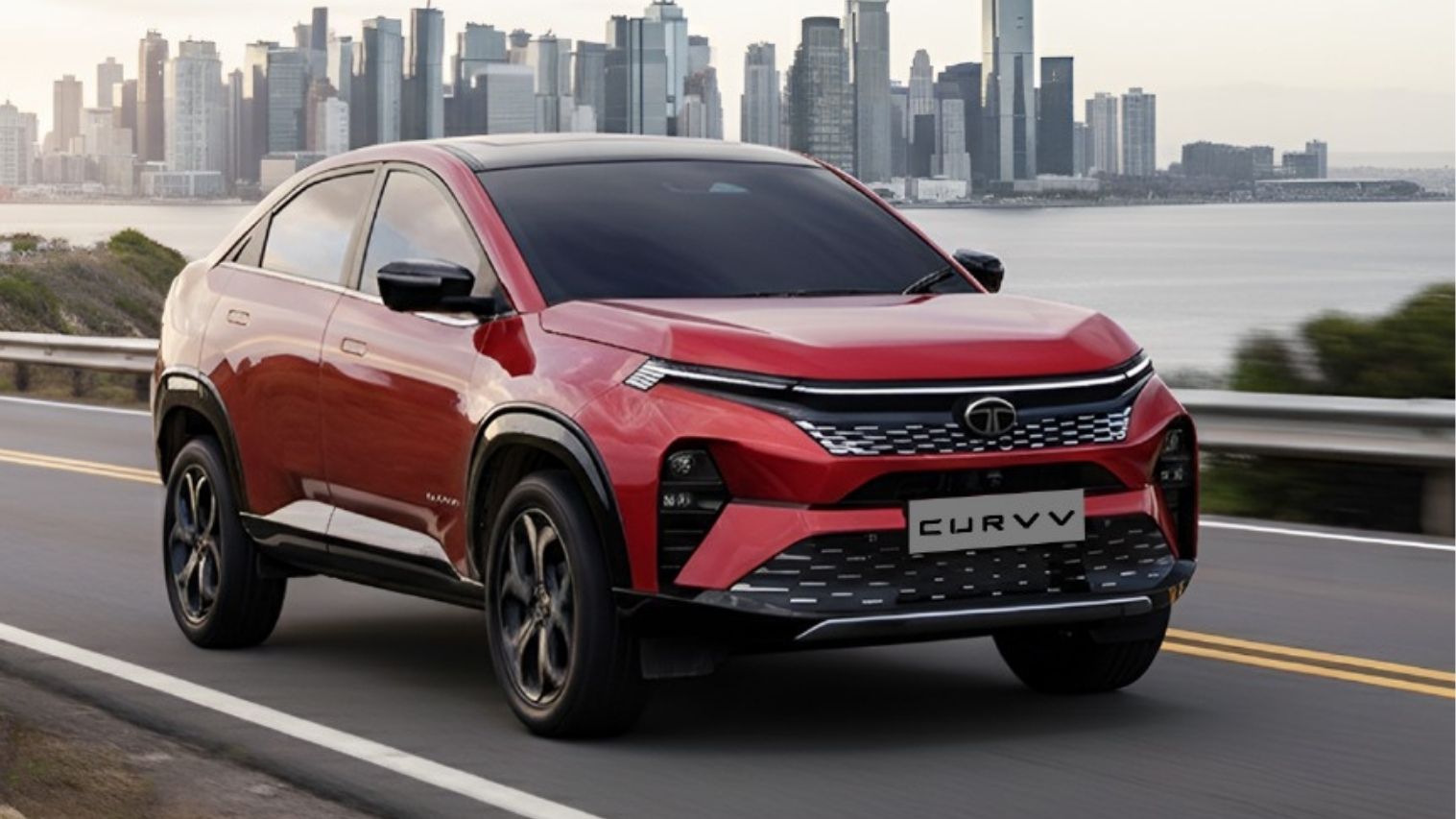
- The exact models likely to receive these variants include Harrier, Safari, Sierr, and the mid-size SUV/coupe Curvv. The timeline remains fluid.
Summary
In summary: Tata Motors is gearing up to move beyond its current compact-car CNG offerings and bring alternative-fuel (CNG) and hybrid powertrains into its larger, premium SUV models — a strategic move to stay ahead of regulation, satisfy evolving customer preferences, and differentiate in a competitive market.
The decision will hinge on when the business case and consumer demand align, but when it happens, it may reshape the premium SUV segment with more fuel-efficient choices.