
Here’s a detailed summary of what we know so far about the Toyota Urban Cruiser BEV (Electric Vehicle) — specs, design, features, markets, timings, etc. Let me know if you want a specific focus (India, Europe, etc.).
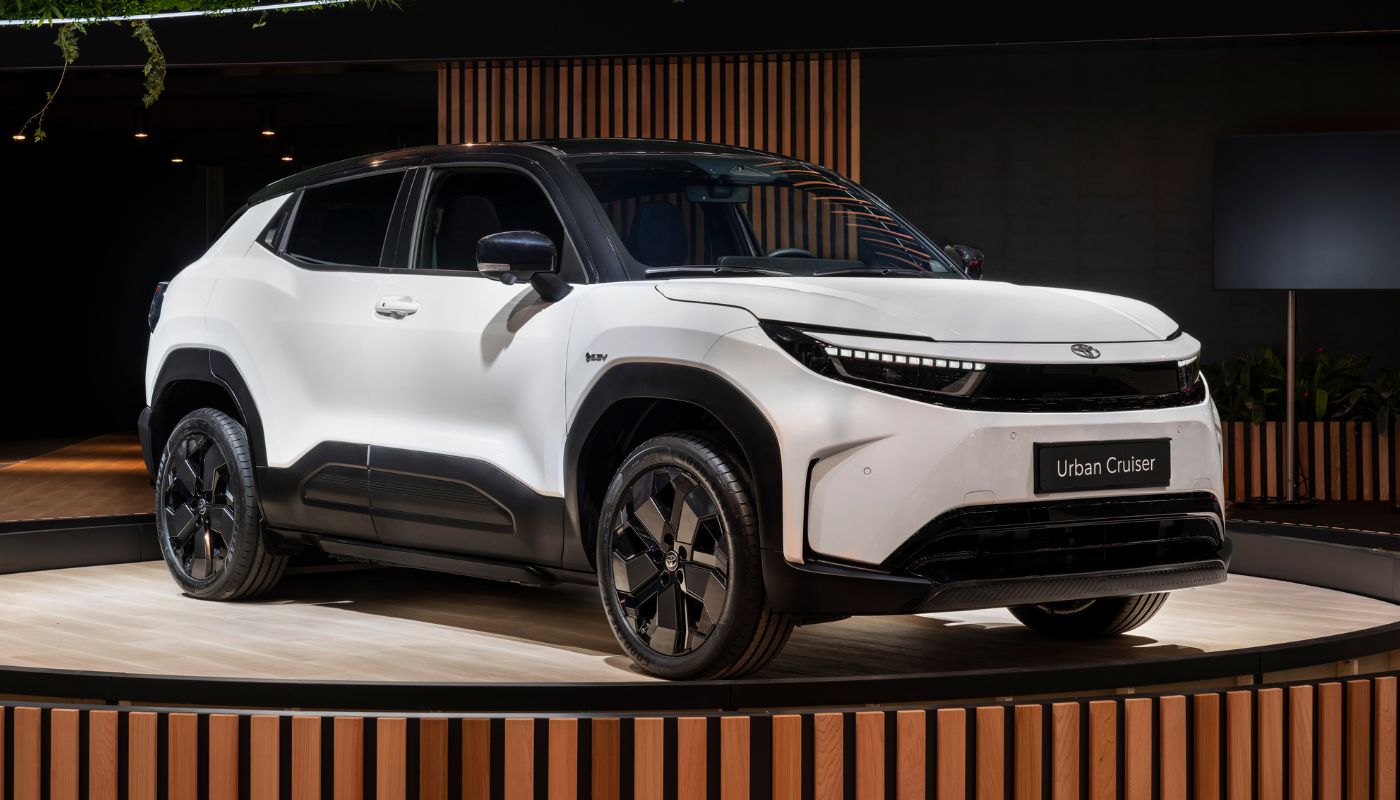
What is the Toyota Urban Cruiser BEV
- The Urban Cruiser BEV is an all–electric B-segment SUV from Toyota (also badged “Urban Cruiser EV” in some markets).
- It shares a platform and many components with the Suzuki eVitara, since Toyota and Suzuki have collaborated on this global EV.
Platform, Design & Dimensions
- The BEV uses a dedicated EV platform (often called a “skateboard” style under-floor battery layout) designed for BEVs: low centre of gravity, space optimisation, good crash protection, etc.
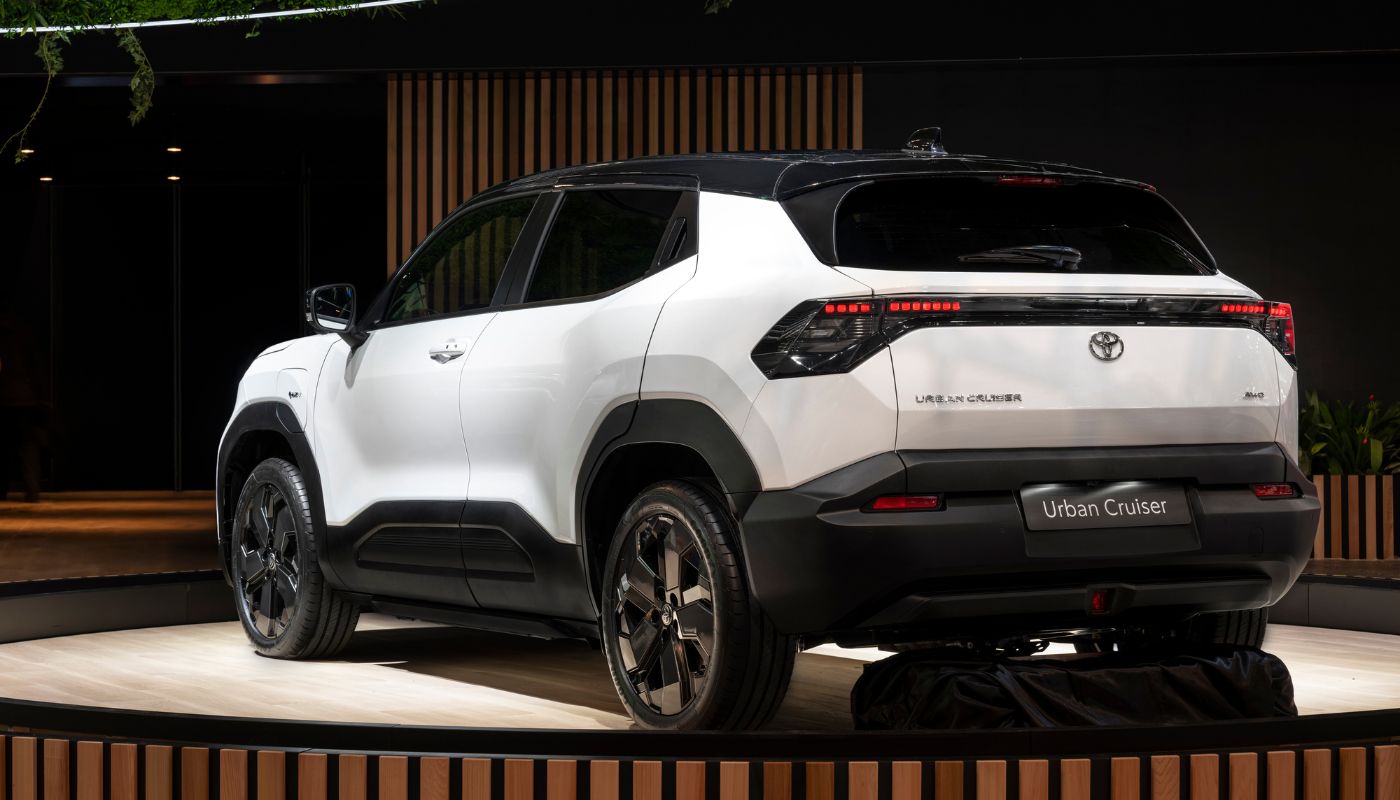
- Exterior design is “bold and mature,” with SUV styling cues: robust wheel arches, strong lower body cladding, an aggressive/unique “hammerhead” front fascia, slim LED lighting signature, and an LED light bar at the rear in many markets.
- Dimensions compared with Toyota’s existing compact SUV (Yaris Cross) are slightly larger: longer length, wider, taller, and significantly longer wheelbase. E.g., wheelbase is ~2,700 mm.
Powertrain, Battery & Range
There are two main battery options and drive layouts:
| Variant | Battery Size | Motor / Power Output | Torque | Drive | WLTP (or estimated) Range* |
|---|---|---|---|---|---|
| Entry version | ~ 49 kWh (LFP battery) | ~ 106 kW (≈ 142-144 PS) | ~ 193 Nm | Front-Wheel Drive (FWD) | Up to ~ 214 miles (≈ 344 km) WLTP combined in the 49 kWh FWD version. |
| Higher version | ~ 61 kWh (LFP battery) | ~ 128 kW (≈ 172-174 PS) | Still ~ 193 Nm in FWD; AWD versions may get higher torque. | FWD & AWD options possible, depending on market/trim. | Up to ~ 265 miles (≈ 426 km) WLTP combined range for the 61 kWh FWD version. |
Note: WLTP = the standard European driving cycle. Real-world range will depend on conditions etc.
- Battery chemistry is lithium iron phosphate (LFP), which is chosen for better durability, safety, and cost advantages.
Charging & Other Performance Features
- DC (fast) charging: From approx 10-80% in about 45 minutes under suitable fast charging conditions.
- AC charging: 11 kW (three-phase) charging takes around 6 hours; single-phase (~7 kW) about 9.5 hours for a full charge.
- Efficiency & thermal management: The Urban Cruiser has active systems to keep battery temperature in an optimal range, features like a heat pump for climate control, grille shutters for aerodynamics, etc. These help in hot/cold weather or in high-load driving.
Interior, Features & Practicality
- Spacious cabin: Because of a long wheelbase, the rear legroom and general interior space are quite generous for the segment. A sliding & split-folding rear seat (40:20:40) with recline functionality.
- Load/boot capacity: With rear seats in place and slid to maximize passenger room, and fold-down options, practical flexibility is good. (Exact boot volume numbers vary; not all have been released yet.)
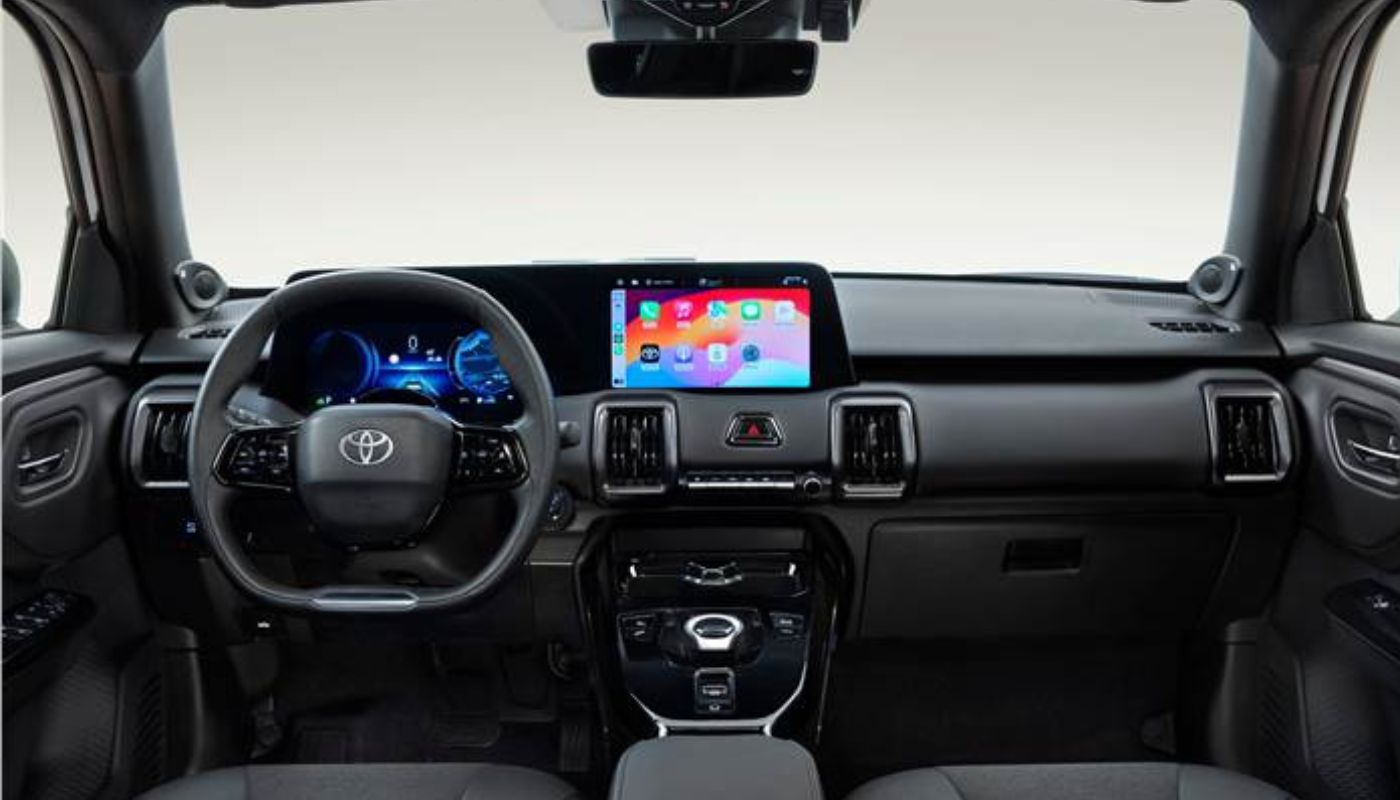
- Styling & ergonomics: Digital instrument cluster + central touchscreen, ambient lighting (various colours), wireless phone integration, multiple USB ports, wireless charging in higher trims, etc.
- Drive Modes: Different drive modes to suit eco, normal, sport, etc. Also, the “Pedal mode” allows deceleration via accelerator releases. Some models may get snow mode for traction control on slippery surfaces.
Market, Launch & Price
- Europe: The Urban Cruiser BEV will be sold in Europe, including the UK, from around mid-2025 / third quarter of 2025.
- India: Expected launch around October 2025 (tentatively). Production for the India/global markets will be from the Suzuki Motor Gujarat plant in Gujarat.
- Price in India (expected): Around ₹20–25 lakh (ex-showroom) for the EV.
Pros & Considerations
What looks good:
- Competitive range for the segment, especially with the 61 kWh version.
- Two battery options make it flexible.
- Modern styling, good cabin space.
- Strong safety and feature list expected.
- Shared development with Suzuki likely helps cost and scale.
What to watch out for / unknowns:
- Actual real-world range in Indian conditions (heat, traffic, etc.).
- Charging infrastructure in many markets may limit fast charging potential.
- Pricing vs subsidies/tax benefits will matter a lot.
- After-sales maintenance, especially around battery health, etc.