
Here’s a detailed look at the newly launched Ultraviolette X-47 Crossover electric motorcycle — what it offers, how it stacks up, its strengths, potential drawbacks, and what it signals for India’s EV two-wheeler market. If you want, I can also compare it to rivals.

Overview & Pricing
- The Ultraviolette X-47 Crossover has officially been launched in India with an introductory, ex-showroom price of ₹ 2,49,000 for the first 1,000 customers.
- After that limited-offer batch, the base price for the 7.1 kWh version will rise to about ₹ 2,74,000 ex-showroom.
- Deliveries are expected to commence around October 2025.
Design, Style & Positioning
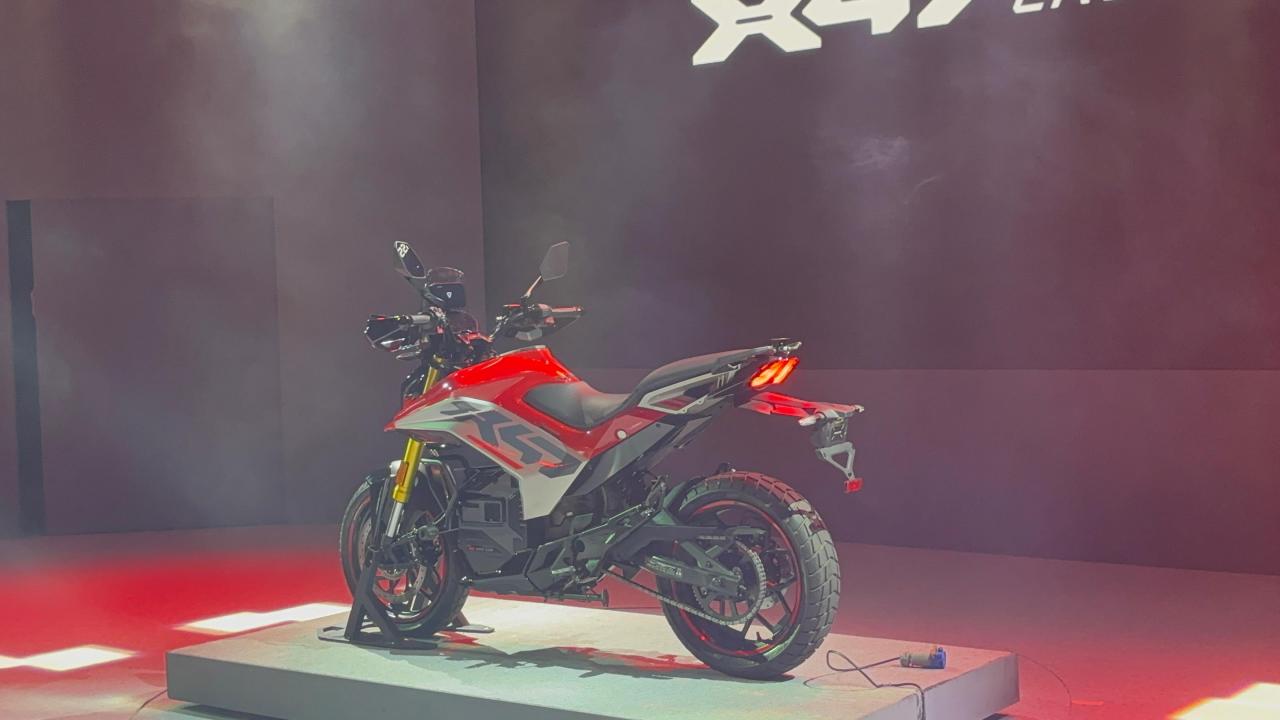
- The X-47 is positioned as a crossover dual-purpose electric motorcycle — blending elements of adventure/touring bikes with street usability. Ultraviolette describes it as being born out of its “X Concept” showcased at EICMA 2024.
- It is built on the F77 platform, but with a new/different chassis and sub-frame, suited more toward rugged styling and versatility. Key visual cues: beak-style front fender, sculpted tank, windscreen, high handlebars, knuckle guards. These make it look more adventure-ready while retaining some street flair.
- There are several colour/variant options: Laser Red, Airstrike White, Shadow Black, plus a special Desert Wing edition (which adds touring-oriented bits like luggage rack, panniers, etc) as standard or as accessories.
Key Features & Tech
One of the biggest talking points of the X-47 is the tech and safety features. Ultraviolette is pushing this as not just a high-performance EV bike but one equipped with modern rider aids and connectivity.
- It gets UV Hypersense, a radar-based Advanced Rider Assistance System (ADAS) as standard across variants. The radar is rear-facing, 77 GHz, offering a 150-degree front view, 68-degree rear vertical field of view, and is able to track up to 200 metres. Features include blind spot detection, lane change assist, overtake alerts, rear collision warning, etc.
- Cameras: dual front/rear cameras acting also as dash cams. There is a secondary display (above the main instrument cluster) to show camera feeds and ADAS alerts. Storage for camera feed is standard 32 GB, expandable to 256 GB.
- Other rider aids: dual-channel switchable ABS, three levels of traction control, nine levels of regenerative braking, dynamic stability control, and ride modes.
Motor, Battery & Performance
- Battery options: two battery pack sizes — 7.1 kWh and 10.3 kWh.
- Range: The larger 10.3 kWh gives an IDC range of about 323 km. The smaller 7.1 kWh version gives around 211 km under IDC.
- Power / Torque: Peak output is about 40.2 hp (≈ 30 kW) and 100 Nm torque. However, at the rear wheel, the torque figure quoted is 610 Nm.
- Performance numbers: 0-60 km/h in about 2.7 seconds, 0-100 km/h in about 8.1 seconds. Top speed capped at 145 km/h.
Chassis, Suspension, Brakes & Other Mechanicals
- Suspension: Gives upside-down (USD) front forks and a rear monoshock. Travel and ground clearance are decent for mixed use. Front/rear wheel travel is quoted similarly.
- Brakes: Front and rear disc brakes; front disc is large (~320 mm) with a multi-piston setup; rear ~230 mm. Supported by dual-channel ABS.
- Weight: The heavier version (10.3 kWh battery) weighs around 207 kg, while the lighter 7.1 kWh model is slightly lower.
Strengths
- Rich feature set: The inclusion of radar-based ADAS, cameras, multiple safety aides, etc., puts it ahead of many rivals in this price bracket.
- Good range with a higher battery: 323 km. IDC is compelling if the actual usable range is reasonably close in real-world conditions.
- Strong performance: Swift acceleration (0-60 etc.) is likely to appeal to riders used to strong pull.
- Design & versatility: Looks purpose-built for both street and light adventure/touring, with accessories & variant options adding flexibility.
- Value proposition: The “introductory first 1,000 units” at ₹ 2.49 lakh makes it a strong option if one can get in early.
Potential Weaknesses / Things to Watch
- Weight: 200+ kg is substantial. Handling, especially agility at low speeds, could be challenging.
- Real-world range vs IDC claims: As with most EVs, the claimed 323 km could drop significantly depending on riding style, load, terrain, weather, etc.
- Charging infrastructure & time: On-board charger is 1.6 kW — useful, but slow compared to faster DC-charging. Fast charging availability will matter.
- Price escalation: After the introductory 1,000 units, the base price steps up, which may affect affordability for some potential buyers.
- After-sales support & network: As with any newer EV brand/model, how good the dealer service, parts availability, etc, will be, especially in non-metro / smaller towns, is always a question.
Comparisons & Market Context
- The X-47 slots below Ultraviolette’s F77 range in terms of ex-showroom price (F77 models begin higher).
- It competes with internal combustion and EV bikes in the adventure / dual-sport / crossover segments. Rivals may not yet offer comparable ADAS features or electric torque/range in this exact package.
- For many riders, this could be a compelling “step up” if they want an EV bike with off-road styling, longish range, and modern safety features.
What It Means for India’s EV Bike Market
- The launch is another signal that Indian manufacturers are pushing EV two-wheelers with more premium tech rather than just basic commuters.
- Radar-based safety aids integrated into bikes at this price, setting a new benchmark — potentially pushing competitors to add similar features.
- Wider acceptance of electric adventure / crossover bikes could grow, especially as range improves and charging infrastructure becomes denser.
- Early adopters may benefit from good value, but longer-term success will depend on how real-world ownership plays out: maintenance, battery life, service & spares, resale values, etc.
Conclusion
The Ultraviolette X-47 Crossover is a strong entrant in India’s electric motorcycle scene. At the special introductory price of ₹ 2,49,000, it offers a premium mix of tech, performance, and design. Even when priced higher later, its combination of features (especially the radar ADAS + good range + ride dynamics) makes it a serious option for riders who want more than just the basics.
If you’re considering this bike, key questions will be:
- How does its real-world range hold up?
- What’s the charging experience (where, how fast, infrastructure)?
- How does it handle, especially weight, in city traffic vs open roads?
- Support & reliability over time.